
Who Owns the African Blogosphere?
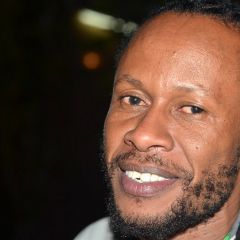
The second Digital Citizen Indaba took place on September 9, 2007 at Rhodes University in Grahamstown, South Africa. Discussions during the Indaba centered on issues of blogging, cyber-activism, language and identity. The first Indaba, which took place last year, provoked a heated debate about the racial composition of participants.
Who owns the African blogosphere?
During this year’s Indaba, Daudi Were of Mental Acrobatics and the co-founder of the Kenyan blogging community, KenyaUnlimited, carried on the debate by asking, “Who owns the African blogosphere?” He made his case by telling a funny and an illustrative story of how colonialists took land from Africans thinking that it belonged to no one:
Colonialists would often turn up at an African community and ask, “Who does that land belong to?” pointing to the vast fields around the village. Many times the reply from the villagers would be, “It does not belong to anyone.” The colonialists would then promptly set about fencing and craving up the land amongst themselves, which would enrage the Africans, which, in turn, would confuse the colonialists as, after all, they had been told that this land did not belong to anyone.
These exchanges highlight the differences in the cultures involved and the different understandings of what initially looks like a very simple situation. When the Africans tell the colonialists that this land does not belong to anybody, the colonialists would take that to mean that the land is unoccupied. “It does not belong to anyone” is taken to mean it is ownerless. That was a misunderstanding of what they had been told.
But who did the land belonged to? Daudi continues:
For when the African said, “This land does not belong to anyone”, what they mean is this land does not belong to any single person or family. This land is the property of the community under the stewardship of those who currently occupy it. The Elesi of Odogbolu, a Nigerian chief, told the West African land commission in 1912, that he “conceived that land belongs to a vast family of which many are dead, few are living and countless yet unborn”. In other words, “this land does not belong to anyone” meant this land belongs to everyone. It is occupied by us, but we do not own it, we are merely the current stewards holding it for future generations.
His conclusion:
In my opinion the internet is a space through which discussion takes place and blogs are the tool through which we utilise that space for discussion. In other words this space we have carved on the internet is our land and bloggers are the occupiers of that land. Like our ancestors I believe that this land does not belong to any of us, it belongs to all of us.
Best stories remain untold
When it comes to issues of identity and representation, blogs have provided a space for groups and individuals who have always been marginalized by the mainstream media:
For example those who feel unrepresented in the main stream media can use this space to get their message across. Those who feel left out of the national conversation can use this space to get their message across. Ndesanjo in his keynote address emphasised this highlighting that several Africans who happen to be gay had used this space to express themselves through blogs, several Africans who happen to be white or of Asian origin had used this space to express themselves through their blogs.
However, as pointed out by Ansbert Ngurumo, a Swahili blogger from Tanzania, rural stories remain untold:
Africa’s best stories remain untold, because journalists and bloggers have concentrated in urban areas and neglected rural areas, said Tanzanian journalist Ansbert Ngurumo.
Ngurumo called for African bloggers to develop more local content and to “villagize” the Internet:
In developing local content, Ngurumo argued Africans have to develop the civic will to blog more because “it does not take political will to start and maintain a blog”. Ngurumo told the Indaba that Africa has to “villagize” the internet and make sure that people in the rural areas blog, podcast and tell their stories to the world.
On why he blogs in Swahili:
Speaking about lack of a critical mass of African languages on the internet, Ngurumo said he chose to blog in Swahili because that is the language he knows best and is spoken by about 100 million people in east, central and parts of southern Africa.
“Why would I want to blog in English yet 100 million Africans communicate in Swahili?” asked
From rock paintings to Mental Acrobatics
During the keynote relationship between social media and African cultural practices and values was highlighted:
In his speech “From rock paintings to mental acrobatics”, Ndesanjo Macha kicked off the 2007 Digital Citizen Indaba in Grahamstown on Sunday saying that Africa already had social media before the emergence of the digital age. Africa has a strong tradition of collective storytelling, of taking thoughts and ideas and putting them in a public space. In prehistoric times, Africans used rock paintings to bring their thoughts into the public space. In essence, rock painters were the bloggers of their time; rocks were their blogs.
David Kezio-Musoke of Highway Africa wrote:
To him it [blogging] is simply an art of story-telling. Rock painters were bloggers of that time. The only difference he said is the technologies the two distinct worlds used.
Words of advice for cyber-activists and journalists
Brenda Burrel of Kubatana warned activists to check their metadata and made the case for spam as a useful tool for activism:
But today an activist who once worked there believes there's sometimes no alternative but to use spam in order to get the message out – especially to cellphones.
The person is Brenda Burrell, who now runs the award-winning Zimbabwean civil society site Kubutana.
She made the case for spam at the DCI, but also warned that today’s ease of publishing poses real dangers for cyberactivists.The risk lurks in the metadata of documents and images hastily posted online.
An example is the anonymous testimony of a victim of state violence, where the author’s identity, or the computer used, unintentionally shows up when the document's properties are inspected.
Despite her country’s difficulties, Burrell concluded with a famous quote: “If it were not for hope, the heart would break.”
Nigerian blogger and journalist Remmy Nweke talked about ways in which journalists can benefit from blogging:
Journalists can benefit from blogging. This is according to a senior Reporter in a daily newspaper in Lagos, Nigeria, Remmy Nweke. He has been speaking at the Digital Citizen Indaba (DCI) on Blogging held at Rhodes University in Grahamstown.
Nweke says now journalists can put their local stories online for international audiences. He says putting stories online for public comment and scrutiny has made him a credible global journalist. One other benefit is archiving of news material.Nweke points out that online archived stories can be accessed anywhere, anytime. Nweke emphasised that blogging is now a tool that journalist should use for their development.




3 comments
Ndesanjo – thanks again for your presence at DCI this year. And thanks for the summary here: the discussion was deep and rich and I think moved on quite dramatically from where it started at the first Indaba.
We’ve already started planning for the third Digital Citizen Indaba – and, as you know, this is a collaborative process. I’d like to invite anyone with comments and suggestions – or feedback from DCI 07 – to email me at a.taylor at ru.ac.za.
See you next year!
Asallamu Aleikum. Thank you. The discussions is very pertinent. It appears to me to be an issue of ACCESS and of CULTURE. The rural/urban divide remains an important hurdle. Apart from being a matter of a shift in culture (the tendency people have to approach an issue in a certian manner), crucial also is an economic shift in order to address ACCESS.
What can we do to hasten these changes? Am I blogging issues that appeal to an African audience? Am I linking to articles that are being read by Africans? Of course, bloggers by their nature try to push peripheral issues into centre stage, making an argument for this shift in the hope that issues are debated. African netizens derive from a minority and usually hold a certain “conservative” political view, with an interest in keeping peripheral issues where they are. Activists must do more to address these issues (of culture, access and activism) from the ground on up, instead of relying only on the virtual terrain.