April 24th, 2008
Around 6,000 African refugees escaped the horrors in their countries, and seek refuge in Israel. Many of them live in harsh conditions and can be spotted shivering cold on the streets of southern Tel-Aviv. Earlier this month, the Physicians for Human Rights clinic was forced to shut down, leaving many with no access to healthcare. The insensitive behavior from the side of the Israeli government comes only tens of years after the holocaust, when Jews came to the same plot of land, seeking refuge from the horrors of Europe.
An active internet campaign has been stirring the Hebrew blogosphere, aiming to raising public awareness for the African refugee's basic rights for healthcare among other basic services in Israel. They call for the government to allocate immediate funding for a medical clinic run by the Physicians for Human Rights association, which was forced to shut down earlier this month. The clinic provided foreign workers and refugees with free healthcare services, but ever since the surge in numbers of African refugees seeking medical care, the clinic could no longer bear the heavy burden. It shut its doors in hope that the Ministry of Health and the Israeli government would be forced to publicly recognize the refugees basic right for healthcare.
Internet Campaign
Over 95 bloggers have already joined the campaign advocating for refugee healthcare, requesting the Ministry of Health and Israeli government to take responsibility. Bloggers have been writing about the topic, sending letters to political delegates, raising public awareness, expressing public solidarity and joining forces with the goal of influencing. The list of bloggers and links to their articles can be found in Shuki Galili's post. In addition, a Facebook group has been created, aimed at raising public awareness.
Shooky (Hebrew) has been organizing Israeli bloggers and encouraging them to express their opinions and and send letters to the government. He writes:
A defining characteristic of the time and place we are living in is people's disbelief in the possibility of change; that they can make a difference. The purpose of expressing your opinion is not only for reasons of change. There are cases when taking a stance is a moral duty!
Ten days ago the refugee clinic in Tel-Aviv closed down. The Physicians for Human Rights association who operated the clinic is demanding from the State of Israel to recognize this problem, and provide refugees (and foreign workers) with healthcare treatments…
In order to keep this topic on the agenda, I asked a group of selected bloggers to write a few words and express an opinion. I am asking every blogger who reads this post to act in the same manner. Even if you do not think you will have an effect, even if you think you have nothing to say, add your opinion.
And ask others to do the same.
Bloggers are encouraged to use the image below. Its text translates to: ‘diseases do not discriminate between humans'… *doctors statement: refugees are humans too!'

Elishva Milikovsky writes in the Israeli political blog, Black Labor:
Physicians for Human Rights, one of the most amazing organizations in Israel, opened a clinic in Tel-Aviv ten years ago. The clinic began its operations after one of the volunteer doctors met a working immigrant who suffered from a simple injury which developed into a serious infection, as it was not treated in time. The immigrant later died from this infection.
The PHR clinic offered services to any person in Israel who did not have health insurance, but throughout its time of service, the clinic made it clear that it did not have the financial means to provide medical support for every uninsured person. The organization's goal was to point to the fact that there exists a population in Israel under serious threat because of lack of medical insurance, and to fight for people's right and entitlement to healthcare services…
Muhammad, a Sudanese refugee in his 20s, suffers from a brain tumor. It is not cancerous, but its position in the brain makes it impossible for him to control his swallowing muscles - thus he cannot eat. His situation is becoming more and more critical. He drastically lost weight in the past weeks. An operation will cost tens of thousands of NIS, which of course, he does not have. If he had health insurance he could have already been healthy. But since he does not, he may die soon.
The Ministry of Finance stated that allocation of a budget for the refugees will have to wait until 2009. But these people's health cannot wait until then! We must not forget that the right for healthcare - is actually the right to life.
Arguments
The arguments against providing refugees with medical care are diverse. One claims that the State should make the refugee's lives difficult in order to signal others not to come. Another common voice calls for the use of the word “infiltrators” instead of “refugees”, portraying their lack of rights. This way, those asking for help are turned into criminals, making it is easier to for the State to withdraw its responsibility, as it is responsible for refugees but not infiltrators. The decision makers did not take into account that the refugees never had the possibility to enter Israel legally. For obvious reasons, they had no choice but to “infiltrate” into a secure country while seeking protection.
Following the closure of PHR Israel's Open Clinic, Health Minister Yacov Ben Yizri asked the Director General of the Prime Minister's Bureau Ra'anan Dinur for an immediate of a NIS seven million budget, designated for treating Africans who have infiltrated Israel illegally, many of whom suffer from contagious and chronic diseases. The purpose of the requested budget is to treat African infiltrators and refugees, vaccinate them, test them for HIV and AIDS, hospitalize those suffering from tuberculosis, hepatitis and cancer and to deliver babies. The Health Ministry estimates that among the infiltrators currently in Israel, some 100 of them suffer from AIDS, and dozens have cancer.
Personal Accounts
city blond describes a personal account and connection to a group of these refugees. She begins her post with a moving email that her mother had received three weeks beforehand. It was a personal email from a friend, describing the dire refugee situation in her neighborhood in central Tel-Aviv:
I want to confess. Like everyone else, I had heard about this topic, the refugees from Darfur and its neighbors in Africa. I acknowledge that I heard it on the radio, read every piece of text in the papers and saw it all on television. And yes, I shifted uncomfortably on my couch, but thought to myself that Africa is far away (even when it lives in moldy cellars in the south side of the city near the central station). And… I continued onwards. Even though I am usually one who cares, am active and volunteer in various places. But c'mon, how much can we handle?
It all changed last week.
A few days ago, someone spilled (literally!) one hundred Africans from buses (from Eritrea and the Ivory Coast) into my street and disappeared. They were all led to an old, unutilized building down the street. The middle of Tel-Aviv, 2008, center of hip Tel-Aviv culture, and one hundred young African refugees aged 18 to 45 are there, when all they have are ragged clothing and the good-heartedness of the neighbors. They have nothing! They have no food, no water, no blankets. They sleep on the floor. No clothes. Nothing!!
It took us several days to realize that they were simply abandoned and that nobody was taking care of them. It took us three days to understand. Three days they did not eat!! And they, with their charming politeness and venerated behavior, sat quietly, and looked at all the passers-by in the street.
Ever since then, we are doing everything we can to help them. Neighbors bringing food and picking up clothes. But for the long-run, it is difficult to feed one hundred people every day. I thought that a hungry refugee's eyes is something my mother left in Europe 60 years ago. But I found this right in front of my eyes, literally in my house; and I cannot take it.
I cannot sleep in a comfortable bed and eat my daily breakfast when 50 meters away, one hundred people are hungry and shivering.
The Hebrew blogger continues to describe how this letter touched her and led her to volunteer with this group of refugees. She tells of a personal connection formed with an Eritrean refugee who was caught in a bureaucratic mess while trying to receive his temporary work permit. She contemplates the hardships of getting close and personally involved:
I am concerned about this. I try to shake this feeling, it has no use. I need to believe that this situation will resolve quickly. My spontaneous volunteering which started unplanned after that email, turned into a deep personal involvement that caught me completely by surprise. I have no doubt that I am lucky for having this chance to help. I am sure that in the future I will be thankful for every moment that I spent with the wonderful refugees and the fantastic volunteers whom I met in the park. I am certain that my acquaintance with Moses will last many years, and I am hopeful that he will live here happily and securely - at least until the situation in Eritrea will change and he could go back without facing prison or death.
But at this moment I am worried. Concerned what will happen if he will not receive his work permit.
And yes, there is the annoying little voice in my head, saying “why did you need all this? Why did you take this matter so personally? Was it not better to leave the help on a general refugee group level? Such that would end when they were taken from the park? Why do I need this hurtful worry towards a specific person?
I could not avoid it. It's easier to stay distanced, to help, give, volunteer, but without being sucked into personal acquaintance…
I am staying away from all the dumb arguments on ‘why we need them here', and ‘we have enough problems of our own' and ‘they are not refugees but illegal immigrants', and other offensive comments I read. The UN recognizes them as refugees. They are running away from a harsh daily reality of political persecution, torture, imprisonment and death. And above it all, fact is they are here. In the meanwhile, our country is not banishing them. We cannot be indifferent to the hunger and repulsive living conditions in the central station. They are humans, in distress. They are here right in front of our eyes.
How can we ignore all this?
Another personal perspective is shared here:
A Sudanese refugee has recently started working in my company… Michael. A great guy, whom one of my work colleagues picked up hitch-hiking in Tel Aviv. After their conversation, he decided to help find Michael a job in our company… Great guy, smiling and laughing constantly. Even through all that he has gone through, and the fact that he is here alone. In my department, we decided to adopt him and care for anything he might need. He has already picked up words in Hebrew and can read bits here and there. If those opposing the support for Darfur refugees would meet Michael, they would quickly understand that it is not an “enemy of the State” that we're dealing with. I wish there were more people like him in this country.
Resources

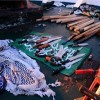
One of the refugee makeshift basement shelters (source)
Refugees marching from the park to the central station in Tel Aviv (source)

300 African refugees celebrate an alternative Passover Seder (source: activestills.org)
Video on the refugee situation in Tel Aviv.
Anyone who can help is asked to get in touch through the following email - laplitim@gmail.com
The following materials would be happily accepted: mattresses, blankets, towels, games, toys, pampers, cooking utensils and food - rice, pasta, any canned foods.
Additional GVO article on African refugees in Israel - Israel-Sudanese Refugees: Like Darfur, as Auschwitz
7 comments · »»April 15th, 2008
Hiyam Hijazi-Omari and Rivka Ribak wrote a paper called “Playing With Fire: On the domestication of the mobile phone among Palestinian teenage girls in Israel”. In their research, they analyzed mobile phone practices among Palestinian teenage girls in Israel. The Paper constructs a detailed account of mobile phone use among Palestinian Israeli girls who, at the time of the fieldwork (2003-2006), used mobile phones given to them by their illicit boyfriends, unbeknownst to their parents.
danah boyd writes on the Shift6 blog:
Palestinian boys give their girlfriends phones for the express purpose of being able to communicate with them in a semi-private manner without the physical proximity that would be frowned on. At the same time, girls know that parents do not approve of them having access to such private encounters with boys - they go to great lengths to hide their mobiles and suffer consequences when they are found out. While the boys offered these phones as a tool of freedom, they often came with a price. Girls were expected to only communicate with the boy and never use the phone for any other purpose. In the article, Hijazi-Omari and Ribak quote one girl as expressing frustration over this and saying “I did not escape prison only to find myself another prison.” These girls develop fascinating practices around using the phone, hiding from people, and acquiring calling cards.
No doubt mobile communications technology is enabling teens in the Middle East to bypass cultural norms by providing them with access to private communication channels. More examples:
April 5th, 2008
On Friday, March 28th, an online newspaper called “Zimbabwe Online” published an article accusing Cogniview, an Israeli startup company, of helping Robert Mugabe rig the Zimbabwean elections. Tendai Biti, secretary general of the Movement for Democratic Change (MDC) party, told journalists in Harare that Cogniview was offering technical support and that “Mugabe and his cronies intend to steal this election through the use of sophisticated software provided by the Israeli company with Mossad (Israeli intelligence agency) connections.”
A lengthy response was published on Cogniview's blog, denouncing the story as blatantly false, and proposing a possible scenario of how their Open Source PDF converter was linked to Zimbabwe's elections. Below are two excerpts from Yoav Ezer's response, From Programmer to Puppet-Master: How I didn't Rig the Zimbabwean Elections with a PDF Converter:
The article continues to claim that my company has secret ties to the Israeli Mossad, and that the accusations came directly from the General Secretary of the MDC, Zimbabwe’s largest opposition party.
Before I go on with the details of the story, here’s my official response … this story is NOT TRUE. In fact it could have only been more fictional if we were accused of using alien technology. Here are some more facts:
* We have no ties with Robert Mugabe’s party. We have never met or dealt in any way with him or any of his people.
* We have no connections to the Israeli Mossad.
* No Cogniview employee has ever been to Zimbabwe.
He continues to write how he thinks his company got caught up in this story:
About a year ago we developed an Open-Source PDF converter called CC PDF converter. This converter (which is available for download for anyone that has an internet connection) allows one to convert anything printable into PDF. It also allows adding a Creative Commons license as the last page of the document. And at the very end of this page there is a link to Cogniview’s website.
I also learned (from the people that called to chastise us) that the voter-roles that were provided to the MDC by Zimbabwean officials were in PDF format and had a link to Cogniview’s website.
My guess is that the people at the MDC wanted to get the voter data in a format they could easily handle (like Excel) and instead got it in a PDF file (that was produced by our converter). They got (justifiably) angry and concocted a story about the Israeli Mossad and my company (this part isn’t justifiable).
Thanks Denis for the link!
1 comment · »»March 11th, 2008
Adnan Gharabiya, 34, lives in Wadi al-Na’am, a Bedouin community adjacent to Ramat Hovav in the south of Israel. The place is not connected to the electricity grid or to running water. While working on his thesis, Gharabiya discovered that instant messaging applications are extremely popular among Bedouin youth, the poorest, most neglected segment of Israel’s population. Girls find IM service extremely useful as it allows them to bypass cultural prohibitions and not be scrutinized for chatting with boys, or even falling in love.
Quotes and link from an interview with Gharabiya below:
“The tribal structure is very strong, and a teenage boy up to age 18 is almost constantly around the tribe and the community,” says Gharabiya. “The Bedouin are usually isolated and cut off also from the rest of Israeli society, from the rest of the Arab sector, which lives mostly in the north, and from Arabs in other countries. Chat rooms open a window.”
The Internet made the greatest change in the lives of young girls. “In Bedouin society there is rather strict separation of the sexes, and a chat room is the only place where they can talk with members of the opposite sex,” says Gharabiya. “It is especially significant for the girls, because their social circle is even smaller, and their freedom of movement is limited. Not all of them can leave their parents’ community. Unlike the boys, girls are not allowed to go to town after classes, or to visit friends. In this respect, technology is very important.”
“In our society, the girl must be respectable and act moderately, because what’s important for a girl in this society is her reputation,” said A., one of the girls interviewed for the research. “In Bedouin society, it is forbidden to talk to a boy, to send him letters and to fall in love with him … but in a chat room, no one knows if you’re talking to boys there. They think you’re a good, respectable girl, and that’s the main thing. You write to people while no one sees you, but you and your real-life behavior are always under scrutiny.”
Chat rooms let them bypass customs and prohibitions, and overcome the strict limits in traditional society, primarily the separation of the sexes and the severe restrictions imposed on women. “There is a lot more freedom in a chat room,” says Gharabiya. “Among the family, it is not common to discuss all subjects, primarily when the children are adolescents. In a chat room, you can discuss everything, if you find someone who is receptive.”
(source)
6 comments · »»March 10th, 2008
A gunman entered the prominent Jewish seminary, Mercaz Harav, in the heart of Jerusalem on Thursday night, killing at least eight students and wounding some nine others. It was the deadliest attack on Israeli civilians in nearly two years and the first attack inside Jerusalem in four. The attack comes at a time of increased Israeli-Palestinian tension, after a rise of violence in Gaza that has seen longer-range rockets reach the Israeli city of Ashkelon, a medium-size Israeli military operation in Gaza, and the deaths of nearly 130 Palestinians since February 27. Four Israelis have died, including a soldier last Thursday.
In Gaza, the radical Islamic movement Hamas did not take responsibility for the yeshiva attack but praised it. In a text message, Hamas said: “We bless the operation. It will not be the last.”.
Police confirmed that the Palestinian terrorist who opened fire at Jerusalem's Mercaz Harav Yeshiva carried a blue Israeli identity card and came from East Jerusalem. Daniel Seaman, head of the Israeli government press office, said: “Jerusalem is a town where Jews and Arabs live together. The terrorist took advantage of the fact that he could move freely in west Jerusalem.”
Doberman's reaction:
When I was in High School I remember an event where a terrorist stabbed a soldier to death in the Old City. Schools were stopped and instead we held discussions on the topic, on the attack, life in Jerusalem and coexistence. Instead of the usual broadcast, there was constant programming coming from the ground, accompanied by moving songs and discussions. Almost like memorial day.
Nowadays? There is an attack, and three hours later the broadcasts stop. Except some headlines in newspapers and talk show interviews of bereaved parents, we easily return to our regular routines. From the amount of terrorist bombings, shootings and missiles, we developed elephant skin and created a filter. We learned to repress. We are angry and sad only as long as the topic hits the headlines. The next day we chat about American Idol while sitting at cafes.
And only families of the dead cannot move onwards.
There is a saying in the army that goes: “whatever doesn't kill you makes you stronger. Whatever kills you makes your mother stronger”.
Well, from our blood-drenched experience we learned that we might be “stronger” from one attack to another, but a mother who loses her child will never get stronger.
Ze'ev writes:
A wedding and an attack. Happiness diluted in sorrow.
This was supposed to be a very happy post in which I tell about my good friend's wedding.During the seven blessings, the person next to me said “fire” and “mercaz”. I thought perhaps a fire broke out in the Mercaz Harav Yeshiva. I looked at him as he was immersed in his mobile internet and suddenly realized: a terrorist opened fire in Mercaz Harav… I decided against stopping the celebration. When the couple entered the designated room, everyone else already knew. We called our friends who study there. A friend's brother is fine. Another friend is also fine. A third is not answering, his phone closed. But in his house they say he called and that he is fine. Then the bride and groom return, and you need to enter a wedding atmosphere - dancing and anything to make them happy in their big day. They did not know about it until the end of the evening.
I am so sad about the attack. It took me time to comprehend. But when I did, I walked upstairs and started reading the book of psalms.So sad about the dead.
Many voices, such as this one, request the government to react harshly to the attack:
There is a strategic importance for such an attack in the Israeli capital. The other nation (Palestinians) consider the success of the Jerusalem attack a day of celebration. In any case, when someone succeeds to hurt your capital, it is as if they are harming the head of your country.
I think the IDF needs to react harshly to this event. All the people in Israel shall call out and say - no more silence!
On the opposite side of the scale, in his article published in Haaretz, Gideon Levy provides context regarding the Yeshiva's extreme right wing views, and the Rabbis which were educated and educate there:
It is still unclear if the terrorist knew exactly where he was heading when he entered Yeshivat Mercaz Harav and killed eight of its students.
“The flagship of religious Zionism” was among the used phrases, along with “holiest of holies” and even an exaggerated comparison to the Al-Aqsa mosque in terms of its holiness as a location. Some of the crowns tied to the school's name are indeed appropriate. There is nothing that can justify the horrid killing of youth in a library. But it is important to remember, even in this difficult hour, what came out of this school.Many Rabbis who led some of the more damaging steps in the history of Zionism were educated there. Many right winged, Arab-hating instigators came from this “flagship”. Religious leaders such as Moshe Levinger, Haim Drukman, Avraham Shapira, Yaakov Ariel, Zafania Drori, Shlomo Aviner and Dov Lior, all admired by their students, were raised and raised generations of nationalistic youth within the walls of this school. For instance, how do we grasp Rabbi Lior's words from the past, who ruled in 2004 that the IDF is permitted to kill innocent people? That only we can? Lior declared that “one must not be blamed for the ethics of gentiles”. He ruled that the Knesset cannot decide to evacuate settlements, and that soldiers can refuse to obey orders to evacuate settlers. Rabbi Drukman made similar claims. Rabbi Aviner, another graduate of the school, called out to kill those refusing the compulsory draft. At that time there were mostly refusals from left-wing youth. In addition, Aviner claimed that soldiers who die in wars are not a reason for national mourning, and requested to cancel the Memorial Day. He compared the “road map” plan for peace as if conceding to Hitler. Evacuating settlements, he claimed, is an unlawful sin.
My heart is torn with the killing in the yeshiva. No one deserved it. Not the innocent in Gaza and not those dead in Mercaz Harav, Jerusalem. They all died in vain. They already paid the heaviest price. Their families and surrounding will surely gain more radical views, which will continually lead us through this never-ending cycle of bloodshed.
Palestinian defense sources estimate that the gunman was acting on instructions from Hamas leaders in Damascus, in coordination with Hezbollah. Pinhas Inbari describes a collaboration between Hizbollah, Islamic Jihad and the Al-Aqsa Martyrs Brigade in planning the attack:
According to current data, it is reasonable to assume that behind the attack at Yeshivat Merkaz Harav in Jerusalem stand several terrorist organizations: Hizbollah, Islamic Jihad and the Fatah's Al-Aqsa Martyrs Brigades.
Immediately after the attack, IDF acted against Islamic Jihad foundations in Bethlehem, carrying out house searches and arrests. Initially, it did not seem to be connected to the attack since the Islamic Jihad took responsibility that day for a previous attack in which an IDF soldier was killed. It became clear that the main target was Muhammad Shehada, who was not captured, but whose home was demolished by Israeli security forces. Shehada, who recently converted from being Sunni to Shi'ite, is directly linked to Hizbollah. This proves direct involvement of Hizbollah with the Islamic Jihad, through the connecting factor, Shehada. Usually, Hizbollah prefers to operate within Israel in a discrete manner, but Shehada's connection with this attack makes their involvement clearer than they had wished for.The Kalashnikov rifle used by the Palestinian terrorist in the attack most probably belongs to the Palestinian Security Forces, which brings us to Fatah. One must not reject the possibility that the Al-Aqsa Martyrs Brigade, who operate closely with the Islamic Jihad, helped get the weapon to the terrorist's hands.
Hanan Cohen posts a piece he wrote five years ago after a lethal terrorist attack in a Jerusalem cafe, which is still astoundingly relevant today:
It is a moral declaration, which you do not hear these days.
The right wing accuses Arabs of violence. The left wing accuses the Israeli government of occupation. Both sides justify death on one of the sides, every one with a different excuse. The Israeli left and right react similarly to the expression ‘death does not justify death' by saying “true, but…”They are both morally rotten. The left justifies those “fighting against occupation” and the right supports the IDF actions. Both left and right justify the killing of people - of babies or soldiers. As the conflict escalates, we will see an increase in their moral stench, which will prevent any opportunity to find a solution.
“Death does not justify death” - this is the moral foundation for a solution. Both left and right wings must remind themselves, so they can reach an agreement… We need Jews and Palestinians to understand and internalize this fundamental difference between justifying violence and explaining its reasons. The move from “justifying” to “explaining” is complex and difficult, yet hidden within is true hope for a solution.
Throughout the many pessimistic voices reacting to recent events, Yohay carries a dab of hope for the cessation of hostilities on both sides:
2 comments · »»Up to now, it seemed that our government just didn’t give a damn about those people living in the south. Their voice isn’t heard in Tel Aviv or in Jerusalem. Protests have done little to move Israelis that live outside of the rockets’ zone.
The media usually doesn’t find reports about Qassams to be news.It seemed convenient to live with a regular share of rockets and casualties, and to use this issue as an excuse for not making progress in any peace process.
The rockets on Ashkelon, the student that was killed in Sapir college and the rising frequency of rockets probably moved the media and the government. The action wasn’t the promised “Big Operation”, and I hope that such a big operation won’t go through.
I hope that the recent raid will trigger some talks about a cessation of hostilities as some Israeli politicians have suggested. These suggestions are now spoken by the politicians and also voiced by the media.
These voices wouldn’t be echoed without the raid on the weekend.Will we see an end to this war of attrition?
February 29th, 2008
Missiles have fallen in the city of Ashkelon, one directly hitting a residential building, and another very close to a public school. This is a substantial shift as Ashkelon, a major city in Israel, had been off-limits to the Gazan missile attacks until recently. The attack, caught the city's residents by surprise, as it has yet to install its “color red” missile attack warning systems.
On Wednesday this week, a harsh qassam missile attack hit the south of Israel, killing a 47-year-old student, father of four, at the Sapir College campus. In response, IDF escalated its attacks on targets in Gaza, in which four Palestinian children were killed. This led to rocket launches, hitting the city of Ashkelon. Many worried bloggers from Ashkelon react, describing their experiences with terror and fear, within this deteriorating situation that seems ever more hopeless:
Ashkelon… Today this city is on the map. But not because of an impressive accomplishment, but because of Grad missiles that Hamas sent over as presents. A Grad rocket fell in my neighborhood (I heard its whistling as it passed my house, right before the explosion), and 4-5 more around town. But this is peanuts for our prime minister. And our mayor is too busy dealing with the sexual harassment case, that I'm doubtful if he can improve on anything.
So what are we doing? Maybe we'll just stay in our houses and live in fear. Maybe we will move from Ashkelon to another place, where within 5 years we'll realize that rockets also fall in Tel Aviv, where our honorable aristocrats live.
Did we not learn from past generations? The powerful Israel, with this amazingly shiny army, peer brotherhood - all this destroyed. Youth turning against each other, while the saying ‘to die for our country' is considered from an ancient time, passed onto us only by stories from our grandfather, who now also says ‘damn it'!
Here, Abu Mazn, our moderate partner, is not opposed to resuming the armed struggle against Israel. This hopeless situation seems to have no resolution. While it is easy to say that the government does not do anything and that this is an outrage, there is not much that can be done against such simple weapons. True, there exists a laser system that intercepts, but it does not promise 100 per cent success. When 100 rockets are launched per day, or even per week, it is only a matter of time before one causes severe damage.
Until this didn't reach us, I had not thought much about Sderot.
Every day there is talk about qassam missiles falling there; death, injury and anxiety. All that did not really get to me.
But now I understand it. I comprehend the fear and terror that lingers there, and our country that does not take them into consideration. Why should it do something for Ashkelon? A death here, or death there. Not to worry, only a person's life.
It tears me apart, cuts and forms a scab. I am torn after reading this(Israeli student killed by a qassam missile).
First Sderot, then Ashkelon and soon Ashdod (where I live). As I am a political science major, people constantly ask me “what should be done against the Qassam missiles? How do we make peace?”
I always answer “its not that simple…” and change the topic.The more I learn about this topic, the more I realize that I do not understand anything. So many layers and complexities which are keeping me from formulating a solid political stance. On the one hand, I was raised in a Russian home, preaching that Lieberman (strong right wing anti-arab views) needs to manage the country. But on the other hand, aggression only places the rest of the world against us. Receiving 40 qassam missiles per day as a routine is not acceptable.
The only thing I do know is that our leadership is extremely defective, rotten and must be changed!
I will finish with hope for the residents of Ashkelon and Sderot, that these terrible days will soon come to an end, and we will wake up from this nightmare.
They did not help Sderot. What about us?!
First of all, I am from Ashkelon, and this is frightening. I just got back home. Difficult to write. Only half an hour ago a qassam missle hit. I was in practice and went outside to find a friend. She cried. Was very stressed. Then we heard two little blasts and she started crying. Then there was a powerful ‘BoooooooM'! Really powerful, as if in the school. We immediately ran to the sports hall. Everyone was worried. Missiles fell close to where I live.
Tomorrow I am not going to school.
The south is red, not from flowers.
I cannot comprehend it.
Every 10 minutes at least, there is a siren sounding. At first, I was one of those who laughed at all the worried people. How did I become one of them?
Qassam missiles are falling without stop in the past couple of days. Two fell in my settlement today. One close. Yesterday another fell close, very very close.
Why do people only notice this issue when it reaches Ashkelon? What about us?
We are not a city so we are not important?
I'm dying to get out of here. This is becoming very frightening.Sad for me to think that yesterday I was not even aware of the situation, and now am baffled at how it was allowed to reach this point.
Here are links to our previous posts covering this topic:
Israel: Two Sderot Kids Severely Injured by Hamas Missiles
Israel: Israeli Bloggers Respond to Crisis in Palestine
Israel: Rockets Hit Sderot, Flame the Israeli Blogosphere
Israel: Sderot's Invisible Wounds
February 19th, 2008
Unilateral declarations have played a central role in Israeli politics over the past years. Israel's withdrawals from both the south of Lebanon and the Gaza strip have been controversial in the region's politics. On the one hand, Israeli leaders were awarded by major support both internally and internationally, resulting from withdrawal. However, Israel is still dealing with the consequences: Hizbollah arming in Lebanon and the daily escalating violence in the Gaza Strip. When diplomacy fails and all hope is gone, unilateral actions tend to follow.
Kosovo's recent declaration of independence results from the failure of both sides to reach common grounds over diplomatic talks. Kosovo's Albanian citizens are not willing to wait anymore. As major European powers, including France, Germany, Britain and the United States officially recognized Kosovo's declaration, countries like Spain, Russia and China have been reluctant to recognize the State, claiming that the declaration did not respect international law.
The Israeli government has not formally announced its opinion. However, several Hebrew bloggers have been reacting and comparing the political fatigue in the Balkans to that back home. Ilan Goren's post, in Hebrew, caught my attention for its descriptive comparison between the two regions. It is translated below:
6 comments · »»“If they continue to behave so wildly we'll simply cut off their electricity supply”, promises a senior politician to his supporters. “Lets see them behave that way in the dark and cold”. The audience applauds and flags are waived. National pride in its full force while all stand still. Foreign diplomats are far from thrilled.
The senior politician is not alone. This is an accepted tone in the wild east of 2008. At least 75 per cent of the electricity supplied to the stubborn region saturated with blood and hate comes from the larger, more powerful neighbor's power plant. The region is rebellious and stubborn, wanting independence and sovereignty as a country. The big war resulted with mass exile, killings and the war criminals on both sides declaring themselves as leaders. Now the local Muslims dream of independence; demand it. If by means of force, or even through heavy violence. Whatever price is necessary.
Nationalists from the big, powerful country, surrounded by enemies, will never concede. If necessary, they will limit the population's access out of the region. Also, a ban on trade and commodities will certainly be possible… As we are dealing with peoples' claim of right to the land of their fathers, we are also dealing with national rights of a poor and deprived population, including the right for refugees to return to their land. The local national party swears by this, and is willing to use terrorist methodology. From its point-of-view, this is a fight for freedom.
Yes. You guessed right. I am obviously writing about Serbia and Kosovo. I did not refer to Israel and the Palestinians (written in cynical font).
Serbia and Kosovo are not Israel and Palestine. There are many substantial differences. Over there, international military forces intervened, here only diplomacy. From some 50 years ago, the amount of death and exile is not similar. At least not in recent years. But one thing the conflicts do have in common: restraint is not in fashion. Politicians who want to succeed, especially in times of elections, choose the extreme: throwing inflammable material into the already existing fire is a sure sell. And what about the citizens? At first, they will be enthusiastic, but later scurry to purchase emergency lights and fire extinguishers.
In that sense, the Balkan is here.
February 11th, 2008
Every day the Hebrew blog portal Israblog hosts a discussion on a new topic, called the hot topic. This encourages bloggers to take part in the conversation around a specific topic. From politics to personal matters, submitting an entry tagged with the hot topic raises its readability, and places it on a relatively seen page; an incentive for people to participate.
The hot topic this week described the dire situation in Sderot, especially after the recent missile attacks which severely injured two Israeli children. This is how the topic was defined:
Ever since last week, the city of Sderot and other settlements near the Gaza border have been under heavy Qassam attacks, such that have not been seen for a while. An outstanding asymmetry between these settlements and the rest of Israel were prominent this past week when two kids aged 8 and 19 were severely harmed from a Qassam missile on Saturday, as the rest of the country was enjoying the blossom and sun. Today, outraged and angry residents of Sderot have blocked the main road leading to Jerusalem, aiming to gain attention to the situation in their city. They ask the government to raise the intensity of its response and to physically harm the leading political figures of Hamas.
What do you have to say.
Following are a variety of blogger's responses:
Its very easy to say: “if this had happened in Tel Aviv we would immediately react”. The truth is more complex. I imagine there are secret talks, intelligence information, secret activities in the depth of Gaza or some form of plan, on the government's desk. Perhaps there is restraint in order to finalize an agreement for Gilad Shalit's release. Perhaps we are waiting for the right time to react. Maybe this very moment a plan is crafted to attack which we are not aware of.
From being a primitive rocket that could only reach a short distance, the Qassam has turned into a concise missile, reaching relatively far, event harming a strategic factory in the north of Ashkelon. The blood is spilling and national morale becomes only a minor damage. Its time we stopped referring to these missiles as buzzing flies, and we provide the topic its deserved attention. Congratulations to these bands of terrorists! They have succeeded to wake us from our winter sleep…
The following blogger describes a personal story, when passing through the Honduras-Nicaragua border. He was stopped and interrogated solely for the fact that he held an Israeli passport. He describes feeling thankful for always having a home to return to - a country and family; a place he truly belongs to. He continues:
I am sure that every person who served in the army, or even just lives in Israel, understands what I'm writing about. Disgraceful treatment of soldiers towards residents of the occupied lands, belittling, destroying property and performing other actions not directly related to security measures. These are all a big shame for any country that defines itself a country. These complaints are not directed against our 18 year old soldiers, who are placed in a hostile, alienated environment, concerned for their lives, an so react accordingly. The address, obviously, is the State of Israel, in its entirety, which is not able to shake off a movement which started 31 years ago. A whole nation (referring to the Palestinians) cannot lead a respectful life, it has no authority to be called a state, and is constantly humiliated. This nation has no basic freedom, and cries out to us: Stop the Occupation!!!
Sderot is under fire and pressure, and the government does nothing. Everything is nonsense, dirty politician wordplay, spreading promises with no grounding. Everything else is more important; everything other than Sderot. International flights will not be postponed because one city down there in the south is in a state of war…
This post is hurtful and full of anger. But I still believe in the deep ideology of this country. Many will agree that the current situation is extremely bad, but this situation relates to all of us, and we all have to deal with it. The current lack of leadership should teach us the importance of education, and having good leaders.
4 comments · »»What is happening to the world? Children's legs are amputated before they have a chance to taste life. Yesterday, news channels showed ambulance workers wiping children's blood off the street. Olmert should be the one wiping. What would the powerful nations have done if their children's legs were amputated because of their neighbors? They would not stop to think for a second. And we? Too scared of public opinion, we give up the lives of our residents…
February 5th, 2008
Hundreds of thousands of Palestinians poured into the Egyptian side of Rafah as the wall on the Egypt-Gaza border was brought down by Hamas over a week ago. Egyptian attempts to revert the situation to its previous state where they hold little or no responsibilities, have failed. Many bloggers have been writing about this new reality in the Middle East, having immense implications on both Egyptian politics and Israeli security.
A recent post in the daily capitalist portrays the events in Rafah as a milestone in creating a reality of hope in Gaza:
Breaching of the wall in Rafah represents a new period in the Gaza strip and its relationship with Israel. Not a giant jail anymore, but a land with an open border, with residents that have something to lose. For many months Gaza residents have gotten used to a reality where they have nothing to lose. Life in the Gaza strip under Hamas rule has become intolerable, resulting from their ongoing Qassam missile policy, and non-recognition of Israel, whom in return forced economic and political isolation onto the Gaza Strip. Residents have stopped hoping and concentrated on surviving.
In his book, The True Believer, Eric Hoffer describes revolutions and the spread of mass movements. Hoffer recognizes the beginning of the end of every dictator. “Every government's enemy” claims Hoffer, “is the belief that things could be different. That there is an alternative reality; a better one”. When the Hamas engineers took down the wall for the benefit of their people, they sent Gaza's residents on a trip to a different reality. A trip from which they all return with a belief that things could be different.
A day after the wall came down, the Gaza strip is the most optimistic place in the world. The residents talk, compare, show-off and tell tales. About their new television, a relative they met, the food in El-Arish restaurants and their future plans to visit Egypt.
Our generals and politicians complain against the Egyptians, who left the border wide open. About the weapons flowing into Gaza, the terrorists who escaped, ammunition and guns. They do not consider the sudden positive change. They are mistaken…
The day after, Hamas will try to continue its usual policies. In the name of its blind fundamentalist belief, continue to send Qassam missiles to Sderot and destroy any chance for its residents to live a peaceful, normal life. However, Hamas will find out that Gaza is changed, as the hunched heads of its residents were replaced by optimism; people wanting to live their lives, people full of hope.

The picture above shows the torn down wall that used to separate between Palestinian and Egyptian Rafah (taken by Haitham Gabr).
However, little positive change is seen from the Israeli side of the border. In the past day a woman was killed and 40 others wounded when a suicide bomber detonated himself in Dimona. A second suicide bomber, stunned by the first blast, was killed by an alert police officer before he could explode himself, saving many lives. In addition, two Qassam rockets were fired into Sderot.
In a recent blog post, Yoav Karny describes how mainstream media compares the breaching of the wall in Rafah to that of Berlin in 1989. He strongly opposes Israel's decision to tighten the closure on Gaza, and portrays a picture of the Palestinian people as having two guns pointed at their temples - one from the Hamas and the other from Israel:
…How awful Israel looked at this day. How ugly and distorted. Malicious, evil and unjust.
How unfair. And how can one ignore the context? Who can forget the Fascist nature of the Hamas - a totalitarian organization which is inherently against any idea of peace with its neighbor.
After several days of open border policy, Mubarak declared that “this will never happen again”. In an attempt to shut down the border crossing in Rafah, an armed battle emerged between Egyptian security forces and Palestinians. As 38 Egyptians and 6 Palestinians were wounded, this prompted the border to remain open. Zvi Mazel describes the Egyptian policy and its implications on Israel's security:
Although the Egyptian economy received a boost with Hamas's planned breach into Sinai, reacting to Israeli blockade, it placed Egypt in an embarrassing position. Mubarak announced his blessing with the arrival of the “Palestinian brothers” and allowed them to buy all products they need. However, soon enough, this warm welcome turned into worry. Not only did the Palestinians undermine Egyptian sovereignty by infiltrating into Sinai with neither permission nor proper registration, but many thousands of them continued past the canal and into Egypt proper. Egypt currently holds 3000 Palestinians who made their way to Cairo and other cities in detention. In addition, Hamas terrorists were not deterred from opening fire on Egyptian policemen who tried to supervise over the crowds, making their way into the Egyptian side of Rafah, wounding over 30…
By taking down the wall and allowing the passage of Palestinian crowds, Hamas creates a cover story, hiding its pre-existing plan to use Sinai as a logistic base for infiltrating terrorists into Israel.
Mubarak can only blame himself for the grave situation which formed. He did not act against the smuggling of weapons, explosives and terrorists trained in Iran who returned to Gaza, as was signed in agreement between Egypt and Israel. As a result, Hamas and other organizations in Gaza gained strength, and continue shooting Qassam rockets into Sderot, while trying to place lethal bombs on its border.
However, Mubarak has alleviating circumstances. In order to prevent weapon smuggling through tunnels, his forces would have fought and killed Palestinians over a sustained period of time. As a consequence of this action, other Arab states would have condemned Egypt. Moreover, the Muslim Brotherhood would have taken advantage of such an event and acted to weaken the government's rule.
During the 12 days that Gaza-Egypt border was wide open, Hamas brought in significant numbers of long-range rockets and anti-tank and anti-aircraft missiles. This flow of weaponry into Gaza was already constant, through smuggling tunnels and other means. The destroyed border only added to the seriousness of the problem, claims the Jerusalem Post.
Meanwhile, Bondy writes:
Egypt's declaration that the situation at the border with Gaza will return to its previous state does not seem possible. Israel's recent indications that the responsibility over the Gaza strip should be handed over to Egypt truly alarms the Egyptians. Every day we hear their declarations stating that the current situation is extraordinary and temporary. In addition to an open border, Israel needs to deal with the threat along the Israeli-Egyptian border, where security measures and general alertness have been raised in concern of terrorists passing from Gaza through Egypt and into Israel, hoping to detonate bombs.
The full implications of this new reality with an open border between Gaza and Egypt are still unknown. Israel might be relieved to hand over some of the responsibility to neighboring Egypt, but both countries realize the dangerous cost in security and political stability. From worries to hopes, we will try our best to keep posting the different perspectives here.
2 comments · »»January 17th, 2008
Israeli web culture is known for having an active talkback (web commenting) scene. Every major news site allows users to submit comments for every single one of its stories. Israeli culture at its best and worst thrives through discussions held within these spaces; discussions which are planned to fall under future censorship, according to the Talkback Law, proposed by Knesset member Israel Hasson. The proposal passed initial voting in the Knesset yesterday, January 16th.
According to the proposal, a popular site, defined as one with an average of 50,000 hits or more per day, will be considered a “newspaper” and thus liable for the damage or harm caused to a person as a result from its user generated content (i.e. - comments). Ironically, the web post describing this case, published yesterday on the popular ynet news site, has already received over 200 comments.
Hasson's reasoning for the importance of such a law:
“It is unreasonable that a response, possibly anonymous, sent to a newspaper, will be held under the editor's responsibility, but a response submitted to the online portal of that same newspaper will be under nobody's authority… We must not turn the network into a vandalizing, evil tool.”
Gal Mor's recent post describes Hasson's argument as coarse and lacking reference to implications on the basic right for freedom of speech:
Israel Hasson's proposal, which imposes criminal responsibility on commentators, editors and operators of large websites, passed the preliminary vote today. 29 Knesset members supported and only two opposed this evil law proposal. Evil - not because those who slander will tremble before writing now, but because of the lack of reference to the thin texture of freedom of speech. The legislator's coarse treatment of the internet is similar to that of a Beitar (sports group) fan's visit to a museum.
It is hard to claim that Shelly Yachimovich, who opposed the proposal along with Gideon Sa'ar, saved the Knesset's dignity, not even that of the Labor party. But her vote and reasonings are definitely worthy of respect: “the internet works by a different code of conduct from those of traditional media. True, it is not pleasant to have slanderous talkbacks pointed at you, even I feel unpleasant sometimes, but not enough for me to lower the gavel as a legislator. I suggest to remove this proposal from the daily agenda. It harms freedom of speech and will not be effective. The immense advantages of the web outweighs its disadvantages by far.”
It is necessary now to think of an effective response to protest the continuation of this legislative process. For instance, set one day when all the websites block the option to insert a talkback in order to demonstrate what will happen if this proposal is accepted.
UvalS writes about privacy and posts a link to an online petition:
Part of what I like about the internet is anonymity… I do not like being forced to identify or expose of my information on the web. But I do it when I want to, and that is the big difference. No one forces me to identify and give my private information. And here essentially is your problem, Israel Hasson.
I don't really believe in petitions, but to sit and do nothing will never help. Nana created an online petition against the Talkback Law here.
Jonathan Klinger's argument notes the government's attempt to make private entities liable to censor data, and warns that a future implementation of this law will diminish freedom of speech and conversation, as in Iran:
I'd like to emphasize two major topics: death to the culture of discussion on the one hand, and forcing websites to report the amount of traffic on the other. It is clear to everyone that filtering content on the web leads to censorship. It is clear that forcing websites to be liable, will lead to them not supporting the conversation. I do not believe that, by Hasson's words, “we have progressed today a substantial step towards a culture of conversation and mutual honor in the State of Israel”. The only advancement that we saw today, after the approval of this law proposal in the government's committee, is towards a country where censorship is operated by private entities for the government… We will all pay the price for this censorship!
The real blow in rights is that of the websites and their right of property: they will be obliged to report to a government apparatus the number of hits on their pages, the information of their editors and their information stored in a site list. This is substantial damage to one's right of expression, especially when the person does not have the ability to open a website that will act as a stage because he/she will be subject to sign up with a government official. Israel will be like Iran, where website owners must register with the government and be fully liable (for their content).
Hanan Cohen describes his feeling of fatigue, constantly trying to protect Israeli democracy:
… I have a feeling that every time we shout about a new topic, from subject to subject, from law proposal to the next, we become tired. The struggle over a law or against censorship drown us with the little details. And in the meanwhile, the general trend is increasing. We need to start talking about the general trend and point to the forest, not just the trees.
Earlier in his post, Hanan relates to various law proposals which have been brought to the discussion board during the current government's reign in power:
The Talkback Law
The Internet Censorship Law
Communication information Law (Big Brother Law)
Censorship during the second Lebanon war
Daniel Friedman's reform in the legal system
Reduction of the strike's legitimacy as a method for protest
In the meanwhile, the Hebrew blogosphere braces for a fight. Various commentary cartoons and slogans have already been created to draw activists attention to the implications of the Talkback Proposal. Following are two images. The first, a slogan, designed by Liz Cugan and posted on Ma'ariv's site. This translates to “Talkback Now” and relates to a well-known campaign in Israel, rallying for “Peace Now”. The following image is designed with similar font, colors and wording.
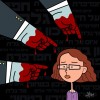
The illustration below was created by Roni, describing the possible result of posting comments on a site.
4 comments · »»
| Korea content supported by |
![]() |
Japan content supported by |
![]() |