May 10th, 2008
If you know your beauty products, you most likely have heard of shea butter – the natural fat extracted from the fruit of the karite nut. Shea is a natural moisturizer and its high levels of vegetable fats allow it to treat a host of skin conditions, from burns to eczema to rashes. Karite trees are mostly found in the African Savannah, and grow abundantly throughout much of West Africa, especially Ghana, Mali, Nigeria and Burkina Faso.
Western beauty companies have been falling over themselves trying to purchase fresh raw shea from cooperatives of African women. They see it as a win-win proposition: Buying shea provides cosmetic companies with this wonderful natural product while giving African women a chance to earn money harvesting and processing a natural resource.
Burkina Mom was recently handed an advertisement from a Western cosmetic company promoting its use of shea butter from Burkina Faso. While it explained how the women gather the karite nuts, the piece didn’t go into the detail how much work is actually required to process the butter. Burkina Mom fills in the facts.
Here's a few things about shea trees, nuts and butter:
They are trees that must grow for 15 years before they start producing nuts. Each tree produces only about 45 pounds of nuts per year.
When the nuts are ripe, they fall to the ground. So, gathering them is really not labour intensive. What IS very intensive is the amount of labour required to make butter out of the raw nuts. This labour is done exclusively by women.
It involves taking off the pulp, breaking the inner shell, roasting the nuts, then grinding and mixing the paste by hand. It is lots of work, and like many things done by women here, it doesn’t pay that much.
But the while article talks a lot about the “cultivation of shea butter nuts”, there's not one word about the labor actually involved. It is invisible.
Meanwhile, here in Burkina, more and more women are forming cooperatives for shea butter production and sales. Some of the bigger groups are even able to buy simple machines that make the work less backbreaking. So, I have been heartened by the increased use of shea butter in various beauty products. And I guess it’s nice to see West Africa in the media, but I wish they’d get it right. Especially if they want us to buy their over-priced products.
In April, National Geographic published a 5,700-word travelogue about a trip through the Sahel. It wasn’t lost on one blogger that the only Sahelian country the writer Paul Salopek failed to mention was Burkina Faso. She wonders why. It is because Burkina Faso is a quiet, boring country, not known for providing much news. Its AIDS rate is low, the malaria rate may be bad, but the country is very politically stable.
It leads her to wonder what she’ll remember from her two years in Burkina Faso when she returns home in a few months.
From Jill at Jill and Marcus in Burkina Faso:
So what's a girl supposed to do when she's just spent two years in what just might be the most boring country in a continent she really has no interest in? I guess I'll digest and reflect by reading what I've written about this place, talking to RPCVs, and looking at photos. I'm a little hesitant to look at photos, though, for two reasons. The first is that photos of this place have the eerie quality of changing the reality of things. I look out my front door and see my neighbor's pants-less kids playing with a bike tire. No big deal. then I take a picture and suddenly I have a photo of adorable little African kids playing with their little homemade toy, and oh look, they have no pants, isn't that just so cute?! It's very spooky. The other reason is I don't want my memories to be skewed by photos. Humans are so visual and so dumb that we make up stories that never even happened so our memories match our photos. So if I look at my photos that have that eerie AFRICAN quality to them, I'm going to think this place was way more interesting than it is. But that wouldn't be so bad, would it?
Speaking of preconceptions, Ex Africa was witness to his own – from someone also living in Burkina Faso.
From Ex Africa:
The other day I arrived in Ouahigouya. I went to Emily’s house and we shortly left to go eat at Maison de Jeune, a popular buvette. They got good benga (beans in Mooré), what can I say. There were three Japanese volunteers there. Emily knew 2 of them and we striked up a little discussion. I told them I lived in the Sahel, in between Djibo and Dori. The first thing one said was ‘al Qaeda?’ I was rather astonished but tried not to show it on my face. Al Qaeda, WTF?! Are you that prejudiced? She went on to talk about the muslims there. I really couldn’t believe what I was hearing. The muslims there treat me very nicely. Yes, they treat me curiously, but they are very kind people, Mossi, Peul, and Fulse people alike. I told her yeah most of the population was muslim. She then mentioned al Qaeda once again. We ended the conversation and Emily and I went and found our own table. We looked at each other like “What was that?” I didn’t like that exchange. I don’t think the Japanese volunteer meant anything bad, but I could feel the skepticism as she spoke. Muslims, for the most part, are wonderful, kind people. They are just like Christians, Jews, Animists world round. Most are beautiful, empathetic people. A few bad apples spoil the whole group some people think. Let’s stop the prejudice people.
Clay creates his own presumptions for his neighbors. That of the odd foreigner.
One of the most satisfying things I do each week is burn my trash. Or more specifically, watch it burn. I do this for two reasons, the first being that I like to. The second is that, if I don't, small children passing my house on the way to school will see what to them is a fresh bag of goodies and peruse through it. They will, without a doubt, be sure to taste everything they find. Jettisoned packets of velveeta-like Vache Qui Rit cheese will be licked clean, just like what I thought were empty tomato paste cans. I find the whole thing kind of disgusting; I prefer to burn. I'll even burn plastic bags: the more colorful the smoke the better! But the environment!!?? I too once felt your pangs of conscience. But I ride a bike as my sole form of local transportation, and I use hardly anything that leaves a wrapper in its wake. I'm probably the most carbon neutral I've been since I had the comfortable, if cramped, sublet of my mother's womb. And did I mention that I really love burning my trash? So one night I found myself with a full box of trash (this is where your boxes go when you send packages) and nothing else planned. Afire in my courtyard, I saw that it was burning quickly, too quickly. This was my whole evening! I can't reread Harry Potter 7 again! (Alas, yes I could, and yes I have). In a race against time, I ran to the field next to me and grabbed dried cornstalks by the armful, returning to feed the fire. I was doing this, going back and forth, a few times before I realized two elderly village women were staring at me, dumbfounded. Did I mention that they sincerely believe large fires at night attract cannibalistic flying sorcerers? Sweating, soot covered, realizing what I'd done, I thought only to say, “Ne t'inquiète pas! La madame ma voisine est chrétienne et a prié pour nous! Toute la domaine scholaire est bien protegé!” Or: Don't worry! My neighbor is a christian and has prayed for us, all the area around the school is well protected! And it is, or so she has told me multiple, multiple times. Thankfully, they probably couldn't hear me as the tall, contented flames crackled happily, noisily, into the night.
A few posts ago, we reported that Stephen Davies and his book, Sophie and the Albino Camel, was shortlisted for the Norfolk Shorts Award for short novels. The book didn’t win, but Stephen reprinted a letter on his blog, Voice in the Desert, he sent to the awards ceremony talking about his book and his love for African stories.
[Sophie and the Albino Camel is] set on the southern edge of the Sahara Desert, not far from where I live, and some of the characters are even based on real people. Sophie is based on a real nine year-old English girl called Milly who lives with her parents in Burkina Faso. Muusa ag Litni is based on a bandit who hijacked Gorom-Gorom's ambulance a few years ago and drove off in it, which in my opinion is even worse than stealing a camel!
I've always had a soft spot for African adventure stories. When I was ten, I used to love King Solomon's Mines (by Rider Haggard) and Sahara Adventure (by Wilbur Smith). Stories of exotic and dangerous places used to keep me up late into the night, reading by torchlight under the bedclothes. If you like African adventures, there are lots of recent books for you to choose from. The Door of No Return is very exciting, as is Ringmaster. Or if you enjoyed Sophie and Gidaado's first adventure, there are two more in the same series: Sophie and the Locust Curse and Sophie and the Pancake Plot.
For foreigners living in Burkina Faso, there’s always a time for conversations about bodily functions. Here’s one of those times. From GRITS heads to Burkina:
Upon arrival in Satiri it is obvious that it isn't the “bustling Metropolis” that is Banzon. Our food options are limited to beignets, REALLY salty rice and peanut sauce, and attieke (MY FAVE!). So, of course I chow down on a bowl of attieke (pronounced: uh-check-ay, made from fermented manioc) and some fried fish heads…YUMMY! Things were going great…I was feeling pretty good about the food. It was a little crunchy, and the oil had more of a black color as opposed to the lovely golden brown we are used to. But, hey, it's Burkina…I have seen worse. We eat our meal and head back to her house for a little afternoon nap. As we are walking over to finish drawing the grid lines on the world map I start to feel a bit woozy. Being that I rarely throw up, I almost never recognize the signs when it's about to happen. I attempt to help with the work, but finally give up and we commission a small child to show me back to Rose's house while she continues on the map. We start walking and already I know something isn't right. My mouth starts to water like crazy and I know what's about to happen. We walk past this large group of men sitting around drinking tea and doing pretty much nothing. They enthusiastically greet me and start yelling, “hey, toubabou, hey…how are you? Where are you going? What are you doing?” Well…in t-minus 2 seconds I was heading for the ground…and as for what I was doing…well, puking my guts out while they just stood there and watched. I heard them talking in Jula to one another, “hey…look, the white girl is throwing up.” The whole time I am thinking, “hey, where is that Burkina hospitality…get over her and help me!” At this point I have created a Jackson Pollock painting on the ground, but I catch my breath enough to tell someone to fetch Rose.
The story ends on a happy note:
Truly, after that I felt perfectly fine, and the rest of the week went wonderfully. I just had to avoid the one thing I actually enjoyed eating for the rest of the week. That night as I was talking to Rose about the whole thing we both agreed that while in Africa you can always say, “well, it could have been worse.” I could have had it coming out of both ends in front of all those people, I could have still be throwing up, I could have had wrenching pain…but I didn't. Eh, it's not so bad, and it could always be worse. NEXT!
Moco in Burkina Faso attempts to solve the mystery of the Canadian missionaries.
In addition to each of the two projects, I put in my time at the CSPS (health clinic) each day, assisting with prenatal consultations, weighing babies, and helping with monthly vaccinations. The rest of the time in village, I can be found reading , playing with my posse of little kids, visiting with neighbors and attempting to learn Siamou, or riding my bike to various locations. Cory, the health voluntee in the village of Serekeni, is my closest neighbor, and we've recently been trying to meet the ever-elusive Canadian missionaries who live in my village. The first time we located their house and prowled around, they had yet to return from a year-long trip back to Canada, so we had to be satisfied with a view of the house and yard alone. However, we marveled at the giant screened-in porch which is twice as big as my entire house, the huge water tank providing running water, and the solar panels for electricity. Then we were guiltily interrupted by the guard and made our exit. The second visit, we apparently just missed them by a few hours, they had gone to Orodara for the day. But their presence was evident by the newly-swept courtyard, car tire tracks, and various signs of habitation. After admiring the bouquet of flowers in a glass vase, complete with linen table cloth on the porch, we told the guard we'd try again another time and scampered off, visions of running water and good food flashing through our minds.
Charlie, from Blooming Rose, attempts to teach local women the mystery of embroidery.
I now have ten ladies doing embroidery with me. We sit on the veranda in the afternoons and there is much laughter, although I gather that most of it is at my Fulfulde. If it's not me saying words that sound like something rude, it's my regular announcement at 6 o'clock that ‘I'm finished'.
Their tenacity to learning has been impressive so far, but we're still a way from producing really good quality work. There is just one lady so far who has been embroidering sarongs that I am ready to sell…I'm hoping to use some of the profits to start a market stall to help the ladies to sell their work locally. It's a small idea but one that I hope will make a big difference to this particular group of stars.
Finally, more proof that Burkina is a little short of earth-shaking events. Here’s a weather report. The good news: in some parts of the country, the hot seasons is being forced out by the beginnings of the heavy rains.
From Lara in Burkina:
0 comments · »»This time of year involves a lot of trying to sit as still a possible with a really large bottle of water next to me, under the tree in my courtyard during the repo everyday. Even my students and colleagues have a hard time handling it. My male students wear uniforms with button down shirts and at about 10:30 in the morning when the room really starts to heat up, they start to unbutton them. That's right…it's so hot that my students were literally taking their clothes off! Ummm…Moumouni you need to keep your shirt ON during math class.
Well, that was the situation anyway, until a few days ago, when miraculously, a giant dust cloud blew out of the northern sky and was followed by rain, glorious rain, buckets and buckets of rain that lasted for hours. Who hooo!! The French describe someone who is lucky as having many chances, and in this particular case, nous avons eu la vraie chance. My burkinabes tell me that it's ultra rare for it to rain that early, especially so far north in Burkina. Now they can go out into the fields and start cultivating (virtually the only thing 90% of the population will do for the next four months).
May 2nd, 2008
April 20th, 2008
First, the news. In late March, Burkina Faso’s Prime Minister fired the long-serving minister of agriculture, and one-time right-hand of the country’s President Blaise Compoare, leading to a whole round of speculation and political second-guessing. Staying with Compaore, rumors have begun to swirl that the man who has spent more than 20 years as Burkina Faso’s president is sick – and, some say, journalists have been warned they will be punished for making continued reports on his health. Repercussions continue regarding what people feel is the government’s poor handling of price increases that have affected the country since the beginning of the year. On April 8, public and private sectors organized a general strike, which Burkina Mom reported was nothing much more than a quiet day (at least in Ouagadougou).
As much as Ouagalais love political intrigue, most people are much more preoccupied with the power cuts that have afflicted the city for the past five weeks or so. First, a galet poussoir, which translates as a roller tapet, failed at one of the city’s main power stations, forcing Sonabel, the local power company, to schedule rolling blackouts throughout the city every day for more than a week until someone was sent to France to pick it up a new piece.
That’s not all. March begins the hot season throughout West Africa, forcing people to use more electricity running fans, air conditioners, refrigerators, etc. The power company found that Ouagadougou’s burgeoning urban population has finally begun to outstrip the city’s once regular power supply. Pressure is now so great on the power grid that Sonabel has scheduled rolling blackouts through 2009, leaving people unsure if their power will be on when they return from work.
From a bloggers perspective, let’s check in with Burkina Mom:
Once again, I blog to you from a cybercafé in (way too) sunny downtown Ouagadougou. The power cut out in our neighbourhood at about 7am this morning and who knows when it will be back on… My technique is to spend the maximum amount of time out running errands in cool places like banks and supermarkets. My car (repaired now!) is also a nice place to be, as the air-con works really well. Nothing else does, mind you, but the air-con is fine.
I am just hoping that we're not headed for a long, hot, electricity-less wekend.
Curse you, Sonabel!
Peace Corps volunteers are always fond of bragging how tough they are, reminding the rest of us they live in villages that suffer blackouts whenever the sun goes down. Watch out, however, when these people congregate in large numbers in a city.
A post from Jill in Jill and Marcus in Burkina Faso:
To throw a good PCV party you need:
-several cases of beer
-so that you can get the courage to slaughter an animal
-so that you can have meat.That's it. We're currently in the middle of an Animal Slaughtering Cold War. PCVs try to outdo each other with bigger, squealier, bloodier slaughters. Chickens, turkeys, pigs, and sheep have all been victims of PCVs' blood lust. And there's talk of slaughtering a cow. After that it'll be a slippery slope until slaughtering camels and elephants becomes the norm. And if that's not bad enough, it's also become standard to video the slaughter and even post it on the internet. Vegetarians need not apply.
For those who can’t make it into town, the hair-dryer-like heat that is currently slow cooking the region makes it a good time to hunker down at home and catch up on domestic projects, like building more shade for your house. For Clay’s most recent project, we’ll go to Notes From Burkina Faso:
This weekend I'm building a hangar to give my courtyard some much needed shade. I actually bought the “ceiling” (branches and grass) a while ago, but of course I haven't gotten around to it. A few days ago my neighbor told me that they'll spoil with the rain if I don't do something soon, so to make good on my 4 dollar investment I'll try to do it this weekend. I'll take a picture once it's done and try to get it on here.
I keep trying to buy a canari (sp?), but each week at my market they're too small. I'm talking about a terra cotta type vase that you surround with sand and fill up with water to make your water cold. Everyday between noon and 4 it is so hot that I'm drinking hot water. Not warm, hot. It's best to drink water right when you wake up in the morning. It's cold. Or cool.
During my last post, we debated the realism of former Peace Corps volunteer Sarah Erdman’s book Nine Hills to Nambonkaha, which took place in Cote d’Ivoire. In this week’s installment, Clay gives his two cents on the book he feels truly captures the spirit of Africa:
If you're at all curious about Africa, I recommend Kapuscinski's Shadow of the Sun. It is the best book I've read on Africa since I've been here. Not only is his style the closest thing I've seen to great minimalist writing since Hemingway (Sorry Raymond Carver fans, I just don't buy it, not completely anyway), he lived and traveled throughout Africa for close to forty years. He was a Polish journalist and possible Soviet spy, and was present through most major coups and revolutions during the sixties and seventies. Now this shouldn't give you a false impression about what I live through day to day, but it is a great book on African social life, the countryside, and the “African” mentality, if there is one (Africa being so large and all - no one says there's an American mentality which includes everything between Canada and Patagonia). Most PC volunteers will recommend Dark Star Safari by Theroux, but I liked Kapuscinski a lot more.
One way to escape the Sahelien furnace is to simply leave. Of course, that’s easier said than done for many who live here. Peace Corps volunteer Mac Wisdom was lucky enough to book a trip with his family to Spain. Walking through Madrid’s Prado Museum, he found that his mind couldn’t help but wander back to Burkina Faso and reflect on his good fortune.
But, as I always do, I am going to harp on the fortunate people, comme moi. We can do almost whatever we want to do. My neighbors and friends here, the villagers, some will never set foot out of the reality, the harsh reality, that they live day-to-day. They are tough. Some tell me I am tough because I come here to live a communal life with them. Bullshit. I will be here for another 17 months roughly, that's much different than a whole lifetime spent sitting on a cart lashed to a donkey, steering the poor ass towards the water pump. There I was, one day, walking through the Prado, listening to the Red Hot Chili Peppers on my MP3 player. The next day, there I was back in Burkina. I realized how good I got it when I was flying over Aribinda. We probably flew really close to right over my village. Man, what a life I live. I am truly blessed.
From his blog Burkina Faso or Bust:
Having already had this ecosystem disturbance experience in the past, I had learned that spiders are our friends and can be allowed to live to catch flies, malaria carrying mosquitos and what not. Also, since I now had my protective mosquito net to sleep in, I had no worry of “bug attacks” throughout the night. I embraced my new ecosystem and integrated into it. After integration, I soon realized that it wasn't only the spiders that were helping out. If I killed something such as a centipede or roach, I left it were it met it's untimely end. Then, during the night, the other inhabitants of my house that either live in my walls or in my drop ceiling descend and dispose of the body and evidence by morning. It is like a well oiled machine. I believe it is the ants that are doing the majority of my dirty work, but now they have gotten to an annoying population level and have started to bite me, leaving welts on my skin that last for weeks. I need to introduce the lizards that live in my ceiling into the ecosystem to keep the ants under control, but then I would have a lizard problem. Eventually this wourld turn into an ”I know an old lady that swallowed a fly” type of situation and there would be no end in sight.
Changing subjects a bit, I recently recounted a tale told to me by a friend who had her house broken into. When her family awoke, they scared off the robbers, but not before they could make off with two laptops. The next morning, her husband went to report the crime at the police station, where he was asked a peculiar question: Did the robbers leave a phone number?
From Africa Flak:
Apparently, thieves have been breaking and entering into peoples’ houses, making off with their goods and then offering to sell the goods back to them. Rumors have it getting your laptop returned to you will only set you back around 100.000 FCFA, about $240. The reason for this, my friend says, is that thieves usually have to sell the purloined laptops out of the country to make a profit. So they may as well cut their losses and sell the computers back to their happy owners.
Needless to say no number had been left.
Let’s end with this, another crime story with a strange ending. It involves Girl Raised in the South, or GRITS, whose mother happened to be visiting when hey were about to take a bus ride down to Ouagadougou from one of the country’s secondary cities. After reserving two seats in the back of the bus, she went to put their luggage on the seats. It should be known that GRITS’s luggage contained the following items:
She placed the bag in her seat, walked off the bus to say goodbye to her host family. By the time she re-entered the bus with her mother, the bag was gone. Everybody was embarrassed – a crime that took place right in front of a visitor. After everyone excited the bus to help search for the bag, and a quick trip to the police station, GRITS and her mother continued on the bus ride. From Ouagadougou she made frequent calls to her host family, who had taken out an ad regarding the theft on the local radio station.
From GRITS Heads to Burkina:
A week and a half later I am still in Ouaga working on training stuff with the new volunteers when I get a call. The most magical words I have ever heard come out of my host dad's mouth…”Stephanie, we found your bag!” WHAT?!?! In a city of over 300,000 people you found my bag?!?! With everything in it?!?! Oh yes! Truly, joy can not describe what I felt at that moment. Relief, gratefulness….it was amazing. As it turns out, 2 kids heard my radio announcement, and when they saw the kid with my iPod they called the station. Additionally, a teacher at the local high school had been informed about the laptop with missing cord, and saw two kids with my computer walking around looking for a power cord. When the teacher saw them, he stopped them and questioned them about it. They didn't have any good answers, so the teacher took their name, and called the police. Truly, it was a joint effort…a community effort…that I don't think would happen in the States… Oddly enough, all my valuables were in the bag, but all the small cheap stuff was missing.
…The kid who stole it was 17 years old, and evidently had followed me on the bus, and gotten off shortly after me. Since I wasn't in Ouahigouya when they found the bag I can't tell you what his consequences were, or what happened with him (a lot of people are asking me if he got his hands cut off…and honestly I don't know…although I did ask them not to physically abuse him–for what that's worth anyway).
March 27th, 2008
Let’s begin with some old business. From Stephen Davis of Voice in the Desert: His book Sophie and the Albino Camel is up for the Norfolk Shorts shortlist of books under 150 pages. (For some reviews of Sophie and the Albino Camel, check here.) While he won’t know the outcome until April 16, he did expound on why he loves writing short fiction:
1) Novella sounds nicer than novel.
2) My writing style has always been on the lean/chiselled/tonguetied side.
3) You can write a short book in less than a month.
Speaking of book reviews, Jill from Jill and Markus in Burkina Faso, reviews Nine Hills to Nambonkaha by Sarah Erdman, a former Peace Corps volunteer who wrote about her experience living in neighboring Côte D'Ivoire. The short version goes like this: “It's scientifically impossible to have that positive of a Peace Corps experience.”
Here’s the longer, non-blurb version:
I let this book sit on my bookshelf collecting pounds of red dust before blowing it off and opening it because I thought it'd be a nice treat at the end of my service. Since it was written by an RPCV, I expected it to be well-rounded, with fewer descriptions of adorable black kids and more frank discussions of things that need improvement. Erdman does talk about many common problems in Africa like men having girlfriends in addition to their wife or wives and people in power stealing money. But these criticisms are dwarfed by descriptions of dancing at ceremonies and still more cute kids. I'm sure she glossed over the negative so as not to leave a bad impression of her beloved village. If I wrote a book about my experience, I'd probably do the same thing. I love Titao. It recharges me. But I would also mention the bad. Like the black bags littered all over the ground that, to me, are more “African” than baobabs and cute kids.
This brings up that certain dilemma for all sorts of foreigners: How does one write honestly to capture the real Burkina Faso? Rule number one: You can’t rely on the clichéd term “a land contrasts.” Rule number two: The title “Malaria Dreams” has already been taken. Like the Africa as portrayed in Western newspapers, how proper is it to rely solely on statistics, like Burkina Faso’s abysmal ranking in the 2008 Human Development Index?
Of course, Burkina Faso comes alive when you speak a local language. Here’s a good example from Will Mitchell.
A recent trip between my site and Bobo, a nice 70k ride on a narrow bush trail, summed up the different versions of life that exist in this country. Out in the bush, an old man in a dirty robe greeted me and asked where I was going. He sighed on hearing Bobo, as if disappointed by my predictable answer. Ala k'i nyuman don, he said, may God sweeten your arrival. That's a poetic thing to say to a stranger, isn't it? Much later as I entered Bobo and saw the crowds, dressed in filthy rags for work or stylin for hanging out and talking on cell phones, the thick fog of exhaust and noise, begging children and indifferent women driving motos, imported goods of all description for sale, good and bad food, everyone in a hurry, I was overwhelmed by the difference that exists between the life of that old man not so far away and the urban experience that his grandchildren are probably living. There was a transition zone, where instead of millet plantations I rolled through wastes covered in blowing plastic bags, then the dusty slums on the edge of town, women balancing loads of illegal firewood that they must have walked a great distance to find. I wonder how many generations have to live in the transition before they get The Burkinabe Dream- A moto and a cellphone for every man, gas and running water for every woman.
Burkina Mom has spent the last few years compiling a million such moments of transition in her warm-hearted honesty. Here’s one took place in front of her house, in a pretty fancy neighborhood, when she came outside and found her guards speaking to a Tuareg who happened to be perched on his camel.
And at least a few times each month, we get a Tuareg tribesman coming through. They come down from the north of Burkina, or Mali or from over in Niger. They're here to sell things they've made and to just check out life in the big city. And when they start to run low on money, they can usually pick up coins by going through the residential areas, where parents will pay a few cents for their children to ride a camel for a bit.
This man didn't speak much French or Mooré, but we did understand that he had come down from Gorom Gorom. I gave him a bit of money and then asked if he'd move the camel, so I could go run my errands today.
Gender is another complicated subject. Hanging out and playing sports with some co-workers, Christina in Burkina gets a little more information than she bargains for.
Volleyball in village continues… and we play almost every night! This is SO fun and I am so grateful to have started up this group. Unfortunately there aren't any women except me. At first one woman fonctionnaire/teacher joined us - she had the time to play because a female cousin lives with her to help take care of her son and cook. But Valerie decided to give up because she wasn't good, and wasn't in very good shape. Despite the fact that women here lead physically demanding lives, they do not have the habit of playing sports. If a woman didn't make it through a decent amount of school, she would never have played any organized game. Even when the men and I play volleyball in the evenings, the women are home preparing to cook. The men have said, if their wives started to come they'd have to hit them for not being home to cook. Is this slightly with tongue in cheek? Maybe. In any case, the women who could find the time to play, like my teacher friend, are often overweight because being big here means you are “healthy,” doing “well,” and “comfortable” in your life.
Age is also fraught with issues. Valentine from My So-Called Life in Africa found herself caught between two worlds at a bar with her mother not far from her house in Ouagadougou. On one side, standing on a stage, was a group of middle aged teachers from her school playing rock ‘n’ roll music while perched in the back was a group of fellow students.
I glanced back at the band - it looked like they were having fun. They acted like a group of teens in a rock band.
Yeah, I thought, A bunch of balding, wrinkled teens.Then I noticed an actual group of teenagers from my school, maybe about 3 years ahead of me. They were watching, some of them with an amused look on their faces and others with pure boredom. Just then I realized this was a twisted situation: Those teens should be the rock band playing. They should be the dancers in the mosh pit. And the adults should be the confused and bored group sitting at a table.
After living in a place for two years, you want to feel comfortable and that you're being accepted as an equal and not just seen as a wallet with legs. But you can never be that. All I want is to be in a culture where I'm normal again. I came here wanting to drink millet beer, eat tô, and get to know Burkinabe. Now, all I want is an Anchor Steam, some Taco Bell, and to blend in.
From Becca Faso
In Burkina, at least in village, a man's wealth is measured by his number of cattle and wives.
“Mr. Sawadogo has 5 wives and 15 head of cattle!”
“Dang!!”
Being an Arkansan this is not such a foreign concept for me. I will relate a conversation between myself and a student to all of you - one i have about every week:“Madame, will you take me back to America?!”
“Sure. You can stay with my parents until you learn english. But its expensive and I'm not gonna buy you a ticket.”
“That's okay Madame. I have ten cows!”
“1o Cows?! Why didn't you say so!”
For Josh from Burkina What?, however many differences there may be, it is the personal relationships that will always last. When a good friend was in need because his wife was sick and in need of medical attention, it was Josh’s friendship (and money) that came to the rescue…for the moment.
Is Peace Corps worth it? That gift to my host father would be called what, for many development workers, is a dirty word: unsustainable. It is a one-off gift that will hopefully help one family avoid one possible crisis this one time. But that money wasn’t what made today amazing. Today was amazing because I shared a moment I will never forget with a frail 60-year-old Burkinabe man who calls me son and who I call father. It was amazing because I felt like I caught a quick glimpse of a small part of God’s plan, and it overwhelmed me. I knew that my 2 years in Africa would have an effect on me. I never would’ve guessed that a single moment would touch me in such a powerful way.
I could end with something like “it’s just best to get out of your comfort zone.” But that would be kind of cheap, wouldn’t it? Charlie from Blooming Desert learns a lot through an embroidery club she started.
2 comments · »»
So far, I have six students of varying levels of ability although most of them have never done any sewing before. It has been a great way of making friends and improving my language – I now know many useful phrases such as ‘keep it tight', ‘they need to be all the same' and ‘it's wonky'. I'm hoping not to have to say ‘it's wonky' too much as it would be good to have some marketable produce soon. Hot season is also known here as hungry season, so I hope to be able to give them a means of earning an income to help them get by. For now, the women are enjoying learning and more are asking to learn every week. It's an encouraging start.
March 19th, 2008
Burkina Faso is the diamond stud near the middle of Africa’s meningitis belt, stretching from Senegal to Ethiopia, containing a population of roughly 300 people. The region’s dusty winds and relatively cool nights from December to June decreases peoples’ immunity to respiratory problems. This, along with the area’s high population density adds up to make bacterial meningitis “hyperendemic” to this area. And it’s Burkina Faso which often makes up the vast majority of meningitis cases and deaths.
From Moco in Burkina Faso.
….there has been a meningitis epidemic in the region of Orodara, where I live. About 250 deaths country-wide so far, so the ministry of health set up a huge vaccination campaign and I spent the past week assisting with vaccinations in Tin and the smaller villages nearby which our health clinic serves. After over 2000 vaccinations and almost that many screaming kids (they dont like shots), we're all done. Though it kept me really busy, it was nice to feel useful and hopefully there wont be many more meningitis cases in my area at least.
Also in the name of trying to get something done, Garrett decided as a teacher he would begin a HIV/AIDS statistics project for his students. They had to regard the prevalence rate of the disease in both Burkina Faso and throughout sub-Saharan Africa for men, women and children. Students also had to diagram their statistics and figure out why women are more affected by the disease then men; why some people can get it easily; and, why HIV/AIDS is more common in urban areas. At some point, the project then took on a life of its own.
I also supplemented it with a sex ed lesson, go me. There was laughing here and there, some of it intended, some of it not. The tough question was: why are women more likely to get infected if they use medicines to dry their vaginas for sex? I couldn't figure out a way to explain it so the class didn't crack up. The guy then asked me what a vagina is…grrrr.
Speaking of school: “Technically, primary-level education is free in Burkina Faso,” writes Joel Turner in Burkina by Joel. From there on, the issue of school fees gets complicated and a little confusing. Before long, you may understand why the number of children attending primary school still hovers around 30 percent. Joel explains.
There are, however, annual dues which are collected by each school’s Parent’s Association (APE). The annual fee comes to approximately $3 per student per school year. $1 per student goes to the APE, which is responsible for the maintenance of the school and teacher housing, among other things. $2 per student goes to the United Nations World Food Programme (WFP) which provides breakfast and lunch for all students in Pobé-Mengao (even in Burkina Faso, $2 for a year’s worth of breakfast and lunch is quite a deal). For various reasons, a significant number of parents fail to pay the school fees. Many grasp, obstinately, to the misunderstanding that primary education is gratuitous, as per the Government’s advertisements. Some hold to the suspicion that the APE and the teachers are pocketing the money. Others simply claim that the amount is too much. They cannot afford to pay. While $3 is pocket change in the United States, it must be said that for an average Burkinabé household with five children enrolled in primary school, $3 times five children can become a significant amount. But it is not an unrealistic amount. What lacks is both a vested interest on the part of parents in their children’s education and an effective accountable system of enforcement on the part of teachers and the APE. Between parents and the school there exists a crippling lack of communication and trust. What threatens to frustrate me more than the lack of concern on the part of parents is the defeatist’s approach the teachers and the APE takes to the problem. When I ask “What can we do to get the parents to pay?” the general response is, “It’s not easy” or “Parents, they just don’t understand.” Sometimes the absurdity is so immense, I know not whether to laugh or explode in a fit of anger.
It was a regular Wednesday evening for Becca Faso, who was out buying bread when she stumbled upon a group of people in her village.
There were many huddled in a huge circle obviously watching whatever was going on in the middle of the circle and also many others selling typical Burkina snacks and chatting etc. I asked one of my students what was going on and they told me. Masks! Burkina, indeed West Africa, has a long traditional history of mask festivals so I was excited to finally get to see some for myself. However, my students quickly warned me, “Madame, they will hit you!”
“Did you say hit??”
Yep, they said hit. Part of the dance of these particular entourage of masks was to hit the crowd gathered around with sticks. Okay, no. They dont hit hard. It's more of a playful whack. The Mask dancers are dressed in what essentially looks like a series of mop heads made of big fat hemp. The Mask itself is wooden (i'm told, made from baobob wood) and painted. As far as i could tell it wasn't a representation of anything, just a mask etc.
There are bongo drummers who do a flirtatious musical dance with the masks. The drummer advances and beckons a mask forward. Then, the interactive dance begins: the masked dancer stomps in tune with the elaborate drum music. Jumping and kicking and whirling and whacking the crowd. It was pretty cool. Then that masked dancer sits down and another is beckoned forth. I was pressed in with the pungent sweaty crowd and anytime a mask moved in close the crowd would jump away trying to avoid being smacked with a stick. I'm white and therefore obviously not from Tougouri so they wouldn't hit me . . . not that I think it would have hurt.
Alas, here’s Becca Faso’s take away message.
I always like it when I see traditionally “African” displays of culture. After several centuries of colonial rule so much of the traditional culture has become replaced by “francophone” culture. French bread, tea, language, education system, lots of things are distinctly “french” though always with an African twist to it. But it's things like the Masks and To which make my African experience, African. En tout cas, it was pretty cool.
On a chilly January day in Djibo, I stepped outside of Hotel Massa to go and check out Salif’s taxi-brousse for my trip back to site. First thing I see is the cute little African kids with their back packs. They are toting their lunch pails to school as well, being in Djibo most are well dressed. I step onto the cool earth, my flip flops smacking the ground. I round the corner next to the gas station and check out the early goings in the
marche . Then, I see the ultimate contrast: the destitute. The well-off versus the have-nots, the well-dressed versus the tattered-sporting, way oversize just-to-cover-myself-up kids trying to stay warm, the hopefully well fed versus the body-aching hunger that I hope I will never know. The truly hungry kids are following the women who precariously yet expertly balance a tray with gateaux or a large bowl with freshly-made rice inside. I myself received 7 packages that weekend, the kids and others gawking at me as I make my way to the taxi-brousse gare.
“I'm not big on camels,” writes Charlie from Blooming Desert. “They worry me, with their sheer size and legendary ability to scalp a man or at least spit at him.”
Nevertheless, I do admire them - from a distance. You see them often in Burkina, loping alongside the road to Djibo, a turban-swathed rider perched on top. Sometimes you come across them grazing out in the bush, doing their best to demolish prickly trees while pitifully hobbled. Or my personal favourite – pulling cart loads of people through the town, formidable as double-decker buses next to the usual donkey carts. I always give them a wide berth.
I was surprised, then, to find myself not in the least bit intimidated by the lofty giraffes of Niger. These elegant creatures are the last left in the wild in West Africa. Their snake-like necks, sloping backs and legs like sculpted bar stools give the animal an alien-like demeanour, which is enhanced by the pair of funny stumps between its ears. Maybe it's their huge almond eyes and long, feminine lashes (apparently used to protect their eyes from prickles) that make them seem friendly. Anyway – I was very pleased to come within just a few metres of them recently on a trip to Niamey.
However, for one weekend, Barani was the focus of the entire country. “Horses in Burkina Faso have always been symbols of royalty, nobility and wealth, and today's shenanigans are sure to bring out the kings in droves,” he writes. “For all its reputation as a ceremonial and sporting occasion, Feshiba is fundamentally a power-fest.”
Here is why:
In Burkina Faso, horse-riding is more than a leisure pastime - it is the tradition, love and lore of an entire nation. It is no coincidence that the country's coat of arms depicts a horse, that the coveted first prize of Ouagadougou's pan-African film festival is the ‘Etalon d'Or' (Golden Stallion), that the nickname of the national football team is ‘Les Etalons' or that the most common surname here is Ouedraogo (which means stallion in the predominant more language). In countries populated by dozens of different ethnic groups, national identity is often an elusive quarry, but here in Burkina Faso one thing is sure: that quarry has a mane, a tail and four hooves.
It’s a brilliant post, and a summary won’t do it justice.
Finally, it was unfortunate circumstances that Burkina Mom had to have her passport photos taken on the one day that bone-dry Ouagadougou became balmy and humid in preparation for the mango rains, the one small shower, as locals say, that allows the millions of mangoes drooping from trees around Burkina Faso to draw to finish up the ripening process.
0 comments · »»Well, we waited all day for the Mango Rain, but all we got was the Mango Spit. Mango Spit contains little actual water and much dirt. It does not give you any desire to go out and frolic in it, even if you haven’t seen precipitation since October. So, the day was a bit of a disappointment, weather wise.
It was midnight when the real Mango Rain came. It poured down for about an hour and cleaned things up nicely. When I woke up this morning, everything was cool and freshly rinsed.
So, that’s done. The dry season will really set in now. Things will heat up dramatically and there won’t be another drop of rain until June.
I miss weather. All we have here is climate.
March 5th, 2008
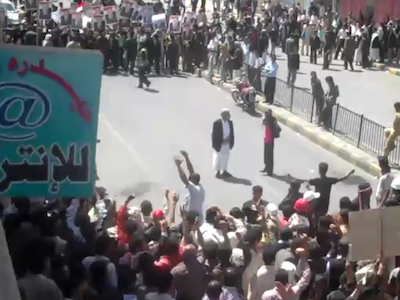
Although somewhat overshadowed by the larger – and more dangerous –demonstrations in Cameroon last week, at least four cities in Burkina Faso also witnessed strikes over skyrocketing prices that descended into violent demonstrations.
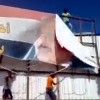
First, on Wednesday, February 20, protesters in Ouahigouya and Bobo-Dioulasso, the country’s second largest city, marched against increasing costs of oil, sugar, soap and other staples. These marches turned violent as protesters smashed signs, targeted government offices for vandalism, including demolishing the office at the government customs agency and damaging gas stations. All told, one hundred people were arrested in Bobo. The next day, demonstrations continued in Banfora, in the country’s south western corner, where protestors also vandalized offices and some ended up burning a statue dedicated to women.
Here’s a few impressions of the demonstrations in Bobo-Dioulasso, recounted by Mrs. Guevin in Africa, a Peace Corps volunteer visiting from Benin:
[W]e noticed large groups of men congregating on the streets and determined that this must be part of the strike. The shops on the streets were all closed and locked up. The men did get rowdy at times… they refused to let cars pass through the streets and I saw some guys trying to pull down the Stop sign on the corner. They barricaded the street with big rocks and groups of people would come running down the street as if fleeing something. At one point the air became full of a stinky odor and the waiter at our hotel insisted we move inside because they were gassing the protesters. Luckily for us we not harmed and the street we were on was not witness to the most violent acts of the day. In other parts of town, people broke windows, and took out street lights with rocks. They also tore down a statue of the Burkinabe President.
Usually it’s Ouagadougou, the country’s capital, where demonstrations begin and then move out to other parts of the country. Even as the downtowns’ of Bobo-Dioulasso and Ouahigouya were still smoldering, organizers in Ouagadougou announced a march against high prices for the city on Thursday, February 28. With the government on notice, police and military clogged the roads, protected important businesses and attempted to keep groups from congregating that morning. It was all in vain.
Here’s a very good recap of the day’s events by Burkina Mom:
By 9:30, people had started burning piles of tires and trash out in the streets near the [downtown] Rood Woko market. The usual way of getting these fires going is for the demonstrators to grab people trying to pass by on motor scooters. They are forced to watch as their gas tanks are emptied onto the barricades. The vehicle is usually returned, as long as the person hasn't protested too much about their “donation” to the cause.
At the same time, things started up in the Patte d'Oie neighborhood, near Ouaga 2000. When I write “things” I mean: destroying traffic lights, tearing down billboards (especially the fancy electronic ones), burning tires and trash in the streets, blocking the roads and throwing rocks at vehicles that try to pass by. When you get down to it, it's not all that horrible. Yes, stoplights are expensive to fix, but at least they aren't trying to harm anyone. Most of this very minor vandalism is done by students- young men mainly.
Soon after, the northern neighborhoods like Tampouey and Dapoya errupted into similar bouts of mild vandalism. Some of the demonstrators were as young as 10 years old. In fact, the news accounts and the accounts of my friends all say the same thing: the protests here were unusual because there were many very young children involved.
“[T]here seemed to be an awfully high number of riot-gear clad police around the city as David and I set out on the truck to get a few jobs done,” writes Chrisanga, who was visiting Ouagadougou.
… after ,managing to secure Senegalese visas for the 4 pax who needed them we headed off to get some diesel… as we got closer to the service station we noticed a large amount of pillars of black smoke around the city… one next to the Shell where we were headed…. closer still we saw rocks being thrown and something that looked a lot like fighting… “I think I should turn the truck around” said I to David… “Good idea” he replied… by the time we got back to the hotel there was a fair few burning tyres on the street, alot of rocks around and multitudes of army and riot police swarming around the place.
From my blog, Africa Flak, I recount a story from a friend who, by chance, returned to town right in the middle of the demonstrations.
The group came in on the Ouahigouya road…but immediately after passing the toll booth, saw “a mass of black smoke in front of us…and ahead of us was a bunch of tires people were burning.” The group decided to turn around and circumvent the city to the north and attempt to enter from a different direction. However, they were also stopped by burning tires in the middle of road. They finally entered on a dirt road where tires were burning, but gingerly drove through them. “There were lots of people standing around, but I didn’t see any violence or anything.” Near one of the barrages…there was a large post blocking the road. The group also passed a group of soldiers protecting an office of a neighborhood mayor from any violence. After dropping the group off, the driver attempted to circumvent town on the beltway called “route circulaire” past Dassasgo and Wemtenga, but was eventually blocked by rioters. Eventually, and this is third-hand, he made his way to Gounghin where he ran into other demonstrators.
In all, some 200 protestors were arrested in Ouagadougou Thursday and one reported death (but still no confirmation of that mortality).
In the aftermath of any violent protests in Burkina Faso – they take place about every 18 months or so – expatiates living here begin playing a favorite pastime: try to read between the lines of the protestors’ stated objectives to decipher their real objectives. This is where the anger of Burkinabé can be compared with people from Cameroon. Previously pointed out, both countries share the fact they are stable, former French colonies with leaders who came to power back in the 1980s. Both Presidents are nearing the end of their constitutionally mandated term limits. The 75-year-old Paul Biya and his supporters have proposed to modify Cameroon’s constitution to extend his mandate to one more seven-year term. Blaise Compaore, in power since 1987, may win one more five-year term. (Fun fact: both presidents are married to women named “Chantal.”)
Let’s start with the stated objectives, which are easy to list, but numerous. From Girl Raised in the South, who lives in a village near Bobo-Dioulasso:
The price of goods (soap, sugar, cooking oil, gasoline) has been rising dramatically here. In my village I have heard grumblings about this. Evidently, the rumours had been spreading for days that people were going to hold a demonstration to protest the rising cost of living, or in their words, “le vie est chere” (The life is expensive).
From Under the Acacias:
The riots appear at first glance to be a popular uprising, the spark for which was recent increases in prices. We have all noticed these price rises and the word on the street accuses the new prime minister, Tertus Zongo of being behind them.
However, while steep price rises have indeed occurred recently, and the government should probably have acted earlier, all may not be as it seems. Zongo has been trying to crack down on corruption, and insisting that import taxes owed to the government – often avoided by “special arrangements”- be properly paid. This is one factor that apparently has been behind the rises.
Taxes on the wealthy are supposed to help the government pay for education and development and decrease dependence upon external aid. However, powerful and wealthy traders who offer bribes to avoid paying heavy taxes are not happy that their scams are being scuppered.
The day before the Ouagadougou protests, February 27, government ministers met the press to attempt to divert public anger about instituting new taxes, the recurring theme of high prices of foods and goods (along with government inaction) and to hopefully head-off the demonstration. The ministers pointed out that food prices continue to rise around the world and they announced to fight these increases with a three-month suspension of customs duties on such goods as powdered milk, rice, sugar, salt and pastas, costing the government roughly $6.6 million in revenue.
Burkina Mom pointed out that more than a few saw through the limits of this three-month moratorium.
But the government plan for peace and order was defeated because- guess what? It looks like [Politician and demonstration organizer] Thibault Nana (and probably lots of other smart folks) know how to read. Foiled again, Blaise and fat cat pals! Nana and others no doubt listened to the radio, read the newspapers and immediately realized that the Burkinabé people were being thrown a bone. An insultingly tiny rotten bone.
As the country’s political parties met yesterday to hash out an agreement to bring down prices, Ouagadougou’s Mayor Simon Compoare was manning the barricades. A photo in the local paper showed the city’s diminutive mayor with a cell phone in one hand and a walkie-talkie in the other, surrounded by security police and presumably barking out orders. When a pair of local reporters approached him for a quote, he barked: It will have to be later, I don’t have the time.
It provided an interesting contrast between a somewhat distressed Compaore out on the streets and a meeting that look like it could have taken place at some Disney World hotel.
The governmental meeting – and the photo of Simon – showed to me the divide between those in power (including those standing next to men with guns) and those without power seemed about as insurmountable as could be in its present iteration. For all the bluster from the opposition about how the government had done nothing but watch prices rise these past few months, where were other parties and their ideas even two weeks ago. Even after last week’s riots, ideas were scarce. Like administrators, they only jumped during a time of crisis. Is that what we would call exhibiting good leadership?
English-language Bloggers living in Ouagadougou noticed the alacrity at which workers tidied up and repaired the downtown district. In the outlying neighborhoods, however, where damage was most likely worse because of less police presence, you can still see the scars of burnt tires, smashed stoplights and broken signs.
It’s too early to tell the residual effect these demonstrations will have on the political culture of Burkina Faso. However, in the short term at least, few people and few members of the local media are happy about the role played by the security services during the demonstration in Ouagadougou. Burkina Mom argues that their behavior made the situation worse:
The police arrived and made a show of force. The demonstrators threw stones. The police replied with tear gas. Cecile (our cook) says it was terrible.- the CRS in trucks, chasing down the people (many of them children!) as they fled the gas. The worst thing was that the huge clouds of gas affected even the people who stayed home, closed up in their courtyards.
It seems that this very violent reaction (approved by the mayor of Ouagadougou, who was on the scene) set off a much more violent chain of protest- The parking lots of two government offices were immediately attacked and many vehicles destroyed. Some bank builings and other office buildings were attacked. Lots of other cars and small stands were targeted.
As the city turned to calm almost immediately, a demonstration post mortem from Africa Flak:
2 comments · »»Someone told me that if word gets out that the police abused some of the 200 people who had been arrested; they will start protesting against them. This is in opposition against the minister of security’s speech last night commending the work of the police. The front page of one newspaper showed a soldier grabbing a young protester; a second picture showed another being pushed down in the back of a truck by a bunch of riot police. Let’s just say he has a look of fear on his face. It’s hard to tell if there is another person already lying in the bed of the truck.
One group that may think of striking: Students. A majority of the demonstrators appeared to be young, and they may have been the targets of police brutality. Even if not, the students are much better organized than most other groups. And, at 16,17, 18, who didn’t mind a day off from school?
February 25th, 2008
Pity the school teachers of the Peace Corps. While their compatriots toiling in health clinics or with micro-credit programs pretty much work loose hours and come and go from social events in the capital city at their leisure, teachers are stuck at home with a inflexible schedule, classrooms full of hundreds of students and loads and loads of homework to correct each night.
It is especially hard this time of year. February is too soon for the school year to be over, but students are teachers are too far along for learning to still be a novelty. For Peace Corps teachers, some working without any previous classroom experience, this may be the time when those new skills are becoming quite honed.
Here’s a post from a Peace Corps’ teacher on one of those early “teaching moments.” It’s from Will Mitchell’s Journal:
School is going well. I am getting to be competent enough at teaching that I am no longer the main roadblock to my students' education. The huge classes, the lack of materials and equipment and staff, and the overly theoretical curriculum are now bigger barriers than my still-apparently-hilarious mistakes in French. I have become more confident and friendly and learned my students' names, which minimizes discipline problems. The school built a blackboard on the outside of my house so I can deal with the crowds of students who come to ask me questions, which is rewarding. One student, a Coulibaly, actually laughed in delight when the points I had him calculate from a linear eq ended up in a straight line on a graph. Why does that happen, Monsieur?
One early lesson teachers learn is that no matter where they hail from and what their backgrounds are, students act the same everywhere.
For Lara in Burkina:
[P]eople (myself included) always assume that just because there's rampant poverty in Burkina the kids will all be angels or something like that anyway. Not true. They do everything that we did when we were in school. There are really motivated kids who ask for more homework, but also the kid who sits in the back and doodles until I call on him in the middle of the lesson (yes I am that teacher). In the end though I'm kind of relieved because it makes it easier to relate to them.
Like I said, though, sometimes the school year becomes a little too long and the mind starts to wander. For Joel in Burkina, it opens to such reveries on his next career.
When I'm not busy teaching children the importance of not pooing on the path I take to school each morning or perfecting the art of small talk with the men in the market (I can out-talk any meteorologist about the weather. I guarantee it), I've been preparing for my future. This week I have decided that I want to become a newswriter for The Onion. Perhaps you've heard ot it? Here are a couple of articles I recently wrote, yes, in my spare time (Lately “spare time” = between books). Do enjoy.
I am going to stay with this bizarre sub-theme for a few minutes, so please be patient. For someone writing these round ups for the past few months, I have to say this is one time a very odd theme just descended upon more than a few blogs.
“People keep on pissing on my house,” protests the Dabbler in Burkina. “It really bothers me, but I have no idea if that action is as much a cultural taboo here as it is in America, so thus far I have not made a big deal of it.”
To continue:
The first time it happened (to my knowledge), a couple weeks ago, the guy chose a spot right next to my back window. I happened to be inside at the time, and when I heard the familiar pattering of liquid hitting a surface I looked out and there he was, not 2 feet away from me, relieving himself on my wall. I was so surprised at his brazenness that I said nothing for a while, merely stared at him, slightly embarrassed for violating his privacy, but simultaneously outraged that he was exercising said privacy against my wall. When he had finished, I almost apologetically accosted him, speaking to him from my window (again, not 2 feet away). There was no anger in my voice, and I bashfully requested that “next time” would he please find another spot? The man glared at me in sullen irritation, whether from the disrespect of my demand or the fact that he understood no word of the French I was speaking, I cannot say.
Like Joel’s thoughts about the future from above, village living allows the mind plenty of time to wander and come up with all kinds of cultural and political implications of such an apparently brazen act. Here’s what the Dabbler came up with:
Is this some sort of symbolic gesture, a middle finger of defiance extended by the African man to the Western system that routinely pisses on him? I doubt it. In my experience, it is the American that is more likely given to passive-aggressive, abstract gestures. No, I would wager a guess that these individuals simply have the need to “go”… and apparently, my house is ideally situated in the village for that need.
When in actual need of a bathroom out in the bush, most foreigners in Burkina Faso will put away their sense of propriety and decorum. This, of course, usually happens on car trips.
From Burkina Mom’s Life in Africa:
Here's the truth:If you are a person possessing two X chromosomes and an even minimal sense of modesty, the first rule of travel by car in Burkina is: Don’t Drink Anything. Drinking leads to peeing and the highway rest area “facilities” consist of roadside shrubs. Small, scrawny, practically leafless shrubs that could not even provide Paris Hilton with sufficient cover.
And while the countryside may seem deserted and traffic minimal, I guarantee you that the minute you step out of your car to enjoy a moment alone, a couple of young boys herding cattle will appear as if by magic. Then an old guy on a bike will pedal past with almost painful slowness. Finally, a bus from Mali will trundle by, the roof covered in bikes, bags, chickens, baskets and young men who couldn't get a seat inside, but have a great vantage point for being entertained by the sight of half-dressed travellers lurching around out in the bush.
If I could choose a second sub-theme from these posts, I’d have to name it “motor vehicles and their dangers.”
From My So-Called Life in Africa:
Driving here is hard, especially if you’re not used to it! . Maybe it wouldn’t be so bad if only two things weren’t true:
1.The police are hardly ever directing the traffic. And even when they are out, it’s useless because no one listens to them. Everybody just does their own thing. And when the street is full of bikes, cars, scooters, donkey carts, hand carts, pedestrians and even a few horses and camels, it doesn’t work out too well.
2. People drive completely CRAZY!!! You see at least one smashed motor bike or one wrecked car in the road a day. At least.
People drive so badly that you wonder if they even took the driving test (Let me tell you, I bet that most didn’t!)
This all adds up to some touch-and-go moments on the streets of Ouagadougou, population around 1.3 million and rapidly increasing. Let’s go back to My So-Called Life in Africa:
Besides all the crazy driving, there are obstacles to dodge. Take today, for example. We saw: a group of little 9 year old girls coming home from school on foot and crossing the road right when the light for the car lane turned green! A gum-chewing kleenex vendor weaving his way through the motor bikes to get his latest client’s change from his pal on the other side of the street. Plus a taxi stopping right in the middle of the lane to pick up someone. Then we saw saw a donkey cart with no donkey blocking the road. Where was the donkey you ask? A little ways further…laying there DEAD in the middle of the street!
I witnessed a certain road incident, also. As I was sitting down at a macquis – an open-air bar – with friends a few Saturday nights ago, I saw what happened when a young man crossed the busy boulevard in front of us on a small motorcycle and promptly got hit by an oncoming truck. The sound of metal striking metal is something I won’t easily forget; nor will I let go of the sparks that flew as the truck screeched to a halt. It was the sight of the moto driver that stirred something strange in me, however. It wasn’t compassion, but anger.
I continue on in AfricaFlak:
I don’t think of myself as a cold person, but there was no reason, not one, for the moto driver to be anywhere near those car lanes. Actually, there was one explanation: he didn’t look. Some days, when I am more generous and understanding, I do think it’s kind of cute to watch the two million motos of Ouagadougou driving around on all sides of your car at all speeds, zipping in and out of traffic, running stop lights and generally having complete disregard for the rules of the road. If you can learn to drive here, you can drive anywhere, I often tell my guests.
But, when these moto drivers – and we are not only speaking of teenagers on a joy rides – take their lives into their own hands, they also place it directly into ours. And that’s not fair. Auto and truck drivers become ultimately responsible for their safety. It’s us who have to live with the consequences of their actions, not only legally – for West African justice often deems that those who can pay for the damages are at fault – but morally and emotionally.
…
Driving is a responsibility, and Ouagadougou’s winner-take-all system of road rules only keeps people in the hospital and families visiting cemeteries. I’ll be harsh here: For such a naturally mellow people, too many Burkinabé drive with a ferocious aggressiveness and a complete disregard for others once they get behind the wheel of a motorized vehicle.
File this last bit under: Facts you need to know.
From Moco in Burkina Faso:
0 comments · »»Q: Does Mayonnaise really have to be refrigerated? (clearly this question has been foremost in your mind)
A: No, this is a lie propagated by the refrigerator industry in the Western world. I keep mine on a bookshelf in my house after opening it, and despite the 90+ degrees temperatures, its good for weeks. This applies to pretty much all condiments. Dont be grossed out, its the truth….
February 24th, 2008
At the tail-end of U.S. President George Bush’s six-day, five-country farewell tour of Africa came the announcement the Pentagon’s plans for a second U.S. military base on the continent of Africa is dead.
While the U.S. military presently houses about 1,500 soldiers in Camp Lemonier in Djibouti, the Pentagon has spent much of the past year searching various locales in Africa for a second base.
This story begins one year ago when the United States military announced the creation of AFRICOM, a separate command structure to oversee all U.S. military operations in Africa (except Egypt). AFRICOM was meant to provide the military with a more efficient approach to Africa because previous responsibility for the continent had fallen under three separate command structures.
People soon realized that AFRICOM stood for more than streamlining responsibilities. Enmeshed in AFRICOM’s DNA from day one is what the Pentagon refers to as “capacity building”: The idea that if the U.S. military can assist African nations build democratic institutions and establish good governance, some of the pockets of poverty and disorder that remain fertile grounds for terrorist groups would disappear. Also, if U.S. soldiers could work with local populations and show their softer side, it may reduce the appeal of extremism and curb Africans’ mistrust of American intentions.
U.S. soldiers training African armies is one thing. So is digging wells and vaccinating cattle for villagers. But rumors persisted that the U.S. also wanted to place a second military base on the continent. Eventually the Pentagon admitted it was searching for real estate that would allow it to better serve local soldiers, provide development work and respond quicker to crisis and contingencies. That’s when the