feed

Leonard Chien

Stories

June 2nd, 2008

Taiwan: Bridging Digital Divide with Puncar This is a Photos post

Leonard Chien · 09:51 · East Asia
lingua → mk · mk · fr

While Taiwan is well developed and people enjoy relative equal opportunities compared with other regions around the world, the digital divide between urban and rural area is still wide. Several projects are ongoing in the island with an attempt to reverse the trend. Project in Recycling and Transferring Used Computers [zh] (二手電腦回收轉贈計畫), founded and executed by Environment Protection Administration (行政院環保署), for example, collects, repairs and sends used computers to remote areas and schools. Digital Community (數位好厝邊), established by Chunghwa Telecom Foundation (中華電信基金會), is also introducing digital learning resources to deprived communities.

It is, of course, insufficient to have computers and internet access as people need basic skills in using technology. To help people in remote villages and tribes learn and understand internet tools and applications, such as blogs, Twitter, Google Maps, Facebook, etc., Association of Digital Culture Taiwan (ADCT) [zh] (台灣數位文化協會) starts a new project named “Puncar” (胖卡) [zh].

This 10-year-old second-hand car, although can only ride 80-90 kilometers per hour, is well equipped with cameras, computers, portable solar panels, and so on. In May 2008, volunteers have spent three weekends organizing training courses in five distant villages and tribes in southern and eastern Taiwan.


Participants in different age groups gather in the community center for the event.

One local participant A-shan (阿珊) records the event in her blog [zh]:

徐兄在台上跟大家解釋著部落格是什麼…怎麼弄…又如何使用。
[…]
伯伯轉動著滑鼠…重覆著剛才課程內容,讓自己進步每一分鐘。

Tim (CEO of ADCT), standing on stage, introduces and explains what blog is, how to use it and what can be done.
[…]
Participants move their mouses, repeat what are taught, and try to improve step by step.

Philsu(阿寬), joined the tour in the second week, reflects on his experience [zh] with Puncar:

在跟小朋友互動的舉手投足、言語交流間,
體會了好多好多事情。
那是一種內在性的衝擊,撞擊著自己習慣性的思考,
進而延伸出好多的問題跟反思。
哪怕只是短短數小時的相處,
哪怕我們只是將簡單的網路地圖&部落格使用方法帶給你們,
但我似乎獲得了更多的東西。

I have learned so many things through interactions with these children. The experience has affected my old habits and thoughts, followed by many questions and reflections. In fact we only spent a few hours with them and taught them how to use online maps and blogs, but it turned out that I have learned more from them.

Qweaz (陳力), driver and photographer of Puncar project, offers a complete photo record in his Flickr album.


Tim Shyu (徐挺耀), CEO of ADCT, says [zh] in the Puncar blog:

部落格行動車將集結優秀及熱情的師資人才,設計活潑實用的網路教學課程,以實際走 訪的方式,運用該社區已有的硬體設備,協助解決「軟體」上的不足。並進一步發掘各偏遠地區的經濟特色,給予資訊科技方面適合的建議與支援的可能。

Puncar will recruit more members with passion and skills, and design more interesting and practical internet learning programs. We visit different villages, make use of existing facilities, and help solve the problem of skill insufficiency. Through the tour, Puncar will look into the economic characters in these rural areas and provide suitable IT advices and supports.

Puncar project will last for at least three years. Carrying on with its experiences in May, Puncar will be on the road again in July. For further details, please contact ADCT through adct DOT npo AT gmail DOT com .

All pictures are used under Creative Commons license

1 comment · »»

February 13th, 2008

East Asia

With the upcoming presidential election in Taiwan on March 22nd, televised debates will be held on February 24th and March 9th.  Following the Youtube example in the United States, at the first debate, two presidential candidates will answer 20 video questions selected from Peopo website[zh].  Voters in Taiwan are welcomed to make their own 30-second videos, and upload directly to the website.  So far hundreds of questions have been posted, with issues ranging from education reform, relations with China, infrastructure, economic development, environmental protection, death sentence abolition, foreign policies, nuclear energy, LGBT rights, and so on.

October 19th, 2007

Taiwan: 2007 Taiwan Pride Parade 

Leonard Chien · 14:30 · East Asia
lingua → zht · zhs · pt · jp

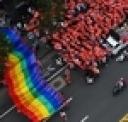
On October 13th, the fifth Taiwan Pride Parade took place in the eastern district of Taipei. Close to fifteen thousand people joined in this activity. The theme this year is “Rainbow Power.” Participants are divided into seven groups, wearing and holding seven different colors to form a huge rainbow on ground. This is the embodiment of LGBT pride!

rainbowlandscape.jpg
Copyright c This image provided by A-Guo, Taiwan Pride Parade. All rights reserved.

1560253451_6775981c71.jpg
(Photo from peellden's flickr)

1573723073_dcfc810372.jpg
(Photo from A-Meow's flickr)

這次參加遊行的團體,來自從各角度關懷性別以及人權議題的團體。包括全台灣各大專院校的性別研究學系與相關社團、性別人權協會、台灣人權促進會以及婦女新知等等團體。除此之外,也有著不同性別認同的團體,以及長期關懷愛滋病友人權的關愛之家愛之抱抱團等團體。

Organizations joining this parade are concerned with gender and human rights issues from various perspectives, including departments and clubs from many universities, Gender/Sexuality Rights Association Taiwan, Taiwan Association for Human Rights, Awakening Foundation[zh], etc. Harmony Home Association Taiwan, which long focuses on HIV/AIDS human rights issues, and Freehugs for HIV/AIDS[zh] are also present.

在這次的遊行團體當中,還可以看到幾位媽媽帶著才幾個月大的孩童參加遊行。她們正是同志家庭權益促進會的成員。同志家庭權益促進會一直為了同志合法結婚以及 合法領養的權益而努力。以電子報的方式,發送關於同志結婚以及領養的相關訊息,而現在也在朝向電子報紙本化的方向而努力。今年也與三缺一劇團,合作了〈一百種回家的方法〉的劇碼,以戲劇的方式表達同志組成家庭的困境。

In the parade, several mothers walk with their infants. They are members of Homosexual Family Rights Association[zh]. This advocacy group has been promoting gay marriages and adoption. They issue e-papers about related information and are trying to publish printed edition. This year, the association cooperated with theatrical company “Short One Player” to perform a play named “A Hundred Ways of Going Home[zh],” trying to emphasize difficulties that homosexuals face when having a family.

1392393197.jpg
My mom is a lesbian and she is perfect. (Photo from piglee&awid's Wretch)

1561180406_c2af817b39.jpg
One child and two mothers equal to a happy homosexual family. (Photo from peellden's flickr)

1574606744_006caac093.jpg
Freehugs for HIV/AIDS. (Photo from A-Meow's flickr)

Besides a happy festival, this parade has a serious request. Independent media Coolloud writes[zh]:

今天的遊行提出訂定「反性別歧視法」、「同居伴侶法」等訴求,主要針對LGBT社群在就業、婚姻、求學過程中遭到的歧視與 制度上的阻礙;除此之外,國家機 關透過社會秩序維護法、刑法235條等惡法,與警察機關利用「釣魚」等方式對「援交」、「性工作者」採取不人道的對待;對於LGBT社群聚集的場所,惡意 地掃蕩、破壞社群的生存權利。即將在今年12月9日國際人權日前夕舉辦外勞大遊行的台灣國際勞工協會秘書長吳靜如特別上台,希望今天參與遊行的朋友們,一 起來參加外勞的遊行,她說,就因為外勞與性邊緣者,同處弱勢的地位,所以他們在居住權、就業、性自主等,備受壓迫,她希望外勞、同志,所有的弱勢者可以一 起走向多彩的社會。

The parade asks Legislative Yuan (the Congress) to pass “No Gender Discrimination Law” and “Cohabitation Law” in order to eliminate discriminations and institutional challenges that LGBT community faces in school, marriage and job market. In addition, the government treats sex workers inhumanely by using Social Order Maintenance Act and Articale 235 of Penal Code. Police sets up traps to arrest sex workers and maliciously sweeps LGBT gathering places. On December 9th this year, Taiwan International Workers Association will hold a migrant workers parade[zh] on the eve of Human Rights Day. Secrectary general of TIWA, Wu Jing-ru calls on everyone to join that parade because sexual minority and international workers are both disadvantaged groups. Both groups are oppressed in terms of housing rights, employment and sexual autonomy. She hopes internaional workers, LGBT and all disadvantaged people can come together towards a diversified society.

1558885129_3978ce02e2.jpg

“Is transexual wrong? Is transexual wrong? Is transgender wrong? Is transgender wrong?” This beautiful lady chanted “Trangender is not guilty” in the parade and asked national health insurance to cover transgender operations. (Photo from Yang Chih-Hsiang's flickr)

1561127958_a420731941.jpg
Participants ask the government to draft “No Gender Discrimination Law” and “Cohabitation Law”. (Photo from peellden's flickr)

Ykan, a lesbian, writes down her thoughts after the parade[zh]:

中途看到形形色色的人,有的人真的好勇敢!高喊著:
”同志不是罪,同志沒有錯”
”我是同志,要求平等”
”變性有錯嗎?”
”還我人權”

I see so many different brave people shouting:
“Homosexuals are not guilty! Homosexuals are not wrong!”
“I am gay. I want equality.”
“Is transexual wrong?”
“Give back my rights!”

天后張惠妹的到來掀起了高潮,我不是第一次看到現場的阿妹演出,但我是第一次這麼的喜歡阿妹,因為她對同志的友善,沒有商業,沒有渲染,有的是看到她對同志滿滿的好感和關心,還有付出!

The popular singer A-mei's participation excites so many people. This is not my fist time to see her live show, but this is the first time I like her so much. She is so friendly to homosexuals without any business operations. We all appreciate her contribution and consideration.

看著這麼多人、一萬五千人走上街頭,沿路被很多人拿著照相機,攝影機拍著,沒有畏畏縮縮,只有驕傲! 我很慶幸我來了,不然我永遠不會知道當個同志是可以很驕傲的,我們也是跟一般人一樣,我們多麼需要人權。

那一下午到晚上的感動,震撼我心,直到永遠!

15,000 people come up to the street and videotaped by others on the way. They have nothing but pride! I am glad that I am here, otherwise I will never know it can be proud to be a homosexual. Just like others, we need human rights so much.I am moved and touched by this event forever!

For more pictures, you can look at photoalbums of Flickr users Damon Lin and sunnydoll. shafferswows has uploaded several clips of A-mei's performance that night on Youtube.

Originally written in Chinese by GV Chinese team member, FoolFitz

0 comments · »»

September 4th, 2007

East Asia

The world's largest casino, $2.4 billion Venetian Macau Resort, opened on August 28th. Along with numerous development projects, Macao is just like a huge construction site now. Some people are worried that natural and cultural beauty will be sacrificed for the sake of urban development. Manfaiw laments(zh): “In the future, the prospect of Macau will be limited by casinos' neon lights, … Macau has become a place for working, but not for living. Our home is not home anymore.”

August 22nd, 2007

Taiwan: The Gentrification of Shih-Da night market 

Leonard Chien · 10:00 ·

Shih-Da night market is one of the most famous night markets in Taipei. (”Shih-Da”(師大) is the abbreviation of National Taiwan Normal University(國立台灣師範大學) in Chinese. The night market is right next to the university.) Its own exotic character is quite different from other night markets. This is because, for decades, many international students study Chinese and live in the neighborhood of the National Taiwan Normal University. They bring their home culture and combine them with local characteristics. Liang-lou Han, a famous Taiwanese writer, who started her business recently. Nearby the Shih-Da night market, she opened a cafe which named South Village[zh]. She wrote an article to express her expectation in the business.

In this article, Walking in the South Village[zh], Liang-lou Han says,

希望透過南村落未來的努力,大商圈可以換掉這個過份商業化的名字,而以南村South Village的面貌問世。畢竟對所有在這一帶居住、活動、玩耍的人而言,位居台北市南區的這塊充滿人文氣息與波希米亞藝術風味的地方已經越來越有紐約東村East Village的味道了。

The name of this place, Shi-Da night market, is too commercial, and I wish it could be replaced by “South Village”. After all, for the people who live, exercise, and play here, this place is like the Easy Village of New York, filled with humanity and Bohemian flavor.

People who agree with Han, like Mei-Chun, mentions[zh],

可能因為我非生長在台北,對台北的舊城市、舊街道的感覺,就像是對其他國家有歷史風情的街道一樣陌生,但又帶有一點想要窺視的心情,所以也就生起興趣來,但這個興味也僅止於無聊沒事做的份上,缺乏認同感。而G的反應更直接:那不就是師大夜市嗎!有什麼特別?。不過基於對文化的熱情,我還是很想反駁,因為有這些人用這些方法保留或喚起人們對城市韻味的記憶。

Maybe because I do not grow up in Taipei, therefore, for me, the old Taipei city and streets are just as strange as any other foreign cities. I develop an interest in this city and want to take a peek, but not because the identification. I just have nothing to do. But G says more directly: ‘It's just Shih-Da night market, nothing special!!' Based on the passion to the culture, I still want to controvert his argument. We really need these people to do something to protect or remind us the memory of the city.

But for Wreacca[zh], who has lived in this area for more than ten years, it is another story. He points out,

師大夜市對我來說就是師大夜市,什麼南村,埽死威裡舉,老子英文不好啦,真是一群任性的文藝中年。師大商圈這名字的確是有些商業的味道,但改名為南村落難道不是另一種行銷包裝?我承認,「南村落」看起來的確比較多了那一丁點想像。喔、不行,我快吐了,尤其是看到這篇描寫師大夜市(韓小姐稱之為南村落)的文章,人與人之間對同一件事物的認知落差真的可以大到很誇張。

For me, the Shih-Da night market is Shih-Da night market. My English is so poor and I don't understand what South Village means. These middle-aged people are dilettantism and capricious. Even the name of Shih-Da night market is commercial, how about “South Village”?! It is just another marketing strategy!! I admit that people may have a little more imagination to “South Village,” but it still sounds so weird especially after reading the article written by Han. People really have very different interpretations and understaning towards the same object.

Kenshin121 starts his argument with East Village in New York. In his opinion[zh],

簡而言之,沒有Greenwich Village,沒有Soho,沒有劇場(BlueMan Group演出的Astor Place Theatre就在East Village附近),沒有日本蛋糕、sushi、拉麵、章魚燒、居酒屋跟燒肉店,沒有St. Mark's 書店,沒有才情洋溢的藝術家與多元文化在東村附近彙集相遇,那也不過就是貴學校的hip學生與教授們居住的地方。

In short, without Greenwich Village, Soho, Astor Place Theater, Japanese Cake, Sushi, Japanese Gourmet, St. Mark's Bookstore, artists, and multi-culture, the East Village is only a living area for the brownstone students and professors.

這跟師大夜市的窮學生們(不論台灣or外國學生)隨遇而安的求學生活與安慰外國小朋友的食物文化交流一點都不像好嗎? 殊不知政大書城是以折扣大聞名,但是東村的St. Mark's書店是以原價怪書多聞名?

The life of East Village is SO quite different to that in the Shih-Da night market. It is the place where poor students (local and international included) do culture exchange and enjoy their school lives. While bookstores in the night market are known for discount books, St. Mark's Bookstore in East Village is full of unusual books with no discounts at all.

From marketing perspective, macdog[zh] has some tips of cultural marketing. He says,

1. 找人圍事是必要的。不單是募款的需求,那頂多募個一兩次就乾了,這裡推動的是善意的「文化」延伸,文人雅士莫不以參與這個劃地盤的行動為榮。
2. 商業拉抬是必要的。透過共享商業繁榮的吸子,納入附近商家的參與,既然在同一條船上,堆動同一個理念就合理化了。
3. 給人上台是必要的。辦活動就是要搞熱場子,不要自己一個人玩完,場子搭了,就是要給其他大腕也有上台表演,說唱個兩句的機會,互相捧個面子人場。
4. 現成便宜是必要的。用既有的資源和發展,重新制定遊戲規。離了現成的都會區另創一片天是事倍功半,所以選了師大夜市來正名是聰明的。

1. Help from others is necessary. People are needed not just for fund-raising (because what you can get is limited). If you are promoting and extending the culture, scholars will be more than willing to participate.
2. Business operation is necessary. When nearby shops are all involved, you will gain legitimacy to promote a idea.
3. Giving credits to others is necessary. All events need participants. Invite every “influential person” to get on the stage and say a few words. It's beneficial to both sides.
4. Using existing resources is necessary. Redefine the rules with materials available now. If you leave urban area, much more efforts would be needed to achieve the same goal. Renaming Shih-Da night market is a smart choice.

To ordinary people who are not able to open a shop or marketing, however, Shi-Da has long been a good place for foods. What Wraecca[zh] and we care the most is:

服飾店攻佔小吃攤的速度是否越來越迅速了。

There are more clothes shops but fewer food vendors now.

originally written by swpave in Chinese

1 comment · »»

August 11th, 2007

Taiwan: What's Next After Wikimania 2007? 

Leonard Chien · 06:48 · East Asia

Photograph taken by halafish from flickr

Wikimania 2007 at Taipei ended on August 5th. To members promoting Mediawiki in Taiwan, this international conference is a wonderful opportunity for exchanging ideas. Among organizers and contributors, we can find five IT-related research institutes in Taiwan, including Institute of Information Science, Academia Sinica and Department of Computer Science and Information, National Taiwan University. National Digital Archive Program and National Science Council, which are strategic units from local government.

They provided very good support for the conference. It shows that most of the core members in wiki community of Taiwan share similar IT-oriented backgrounds. At Wikimania, Taiwanese IT workers took the chance to exchange ideas about the technical meanings of wiki with international wiki researchers. Take the display of double-bit words for example, which has been a plaguing problem to many; participants from Asia had put forward their suggestions in the technical conference, said local blogger Bob Chao[Zh]. Through such dialogue, people came to realize that global internet users share similar problems.

This conference not only constructs a platform for intensive conversation and regional cooperation, but also a beginning for future development.However, when it comes to social issues like citizen journalism, sharing economy and Creative Commons, participants from Taiwan have far less feedbacks than they did in those technology-related workshops. In fact, the number of bloggers, community workers and academics from Taiwan attending Wikimania 2007 is actually relatively small. In Taiwanese blogosphere, Wikimania 2007 is not a hot topic before or after the conference. It reflects that Taiwan, as a hub of global IT industry, is still an engineering-centric society. The social awareness that wiki promotes is quite new, or even alien to Taiwan.

We can somehow notice this phenomenon by looking at local volunteers that take part in this event. Michael Tang and Ivin Tsai are both college students. They find volunteer recruitment via a student club website, AIESEC[zh]. By being voluteers, they want to know different people and to have more experience in an international conference like this. However, their understanding toward wiki doesn't go beyond the research function that wikipedia can provide while they do their assignments in school.

To Ding Ding, Luchia and an anonymous female volunteer, Wikipedia is also all they know about wiki. Their volunteer recruitment info is from Ptt, the largest BBS in Taiwan. Luchia participates in order to work with a group of friendly people. Through the process, he learns more about how to organize a conference than the nature of wiki. Ding Ding and the anonymous volunteer points out, most volunteers are here for conference service. People who are interested in technology will not be volunteers, but attendants.

When asked about what they know and how they view Wikimania, Ding Ding notices that during the conference, local media only introduce Wikipedia in a general way. Journalists focus more on OLPC on display than the spirit of wiki, and this is not helpful in understanding wiki, he says. Anonymous female volunteer takes citizen media session in the unconference as example, while international participants discuss every aspect of citizen media, local attendants still try to figure out “what is citizen media?” She also says she does not have a clear understanding of citizen media yet.

Volunteeers interviewed are all local college students. Their majors range from electronic engineering, business administration, economy, law, etc. They ought to have different perspectives towards this conference. However, they never have edit Wikipedia, and they are not familiar with any wiki projects. Unsurprisingly, they use BBS more often than blogs.

Ilya[Zh], researcher of Academia Sinica and long-term blogger in Taiwan, is deeply involved in conference preparation. He points out, conferences with international presenters as majority like wikimania 2007 are rare in Taiwan. To online community in Taiwan, the major impact that wikimania 2007 provides is not what we have solved, but who we have met. Volunteers are wonderful, he says, but they seem not that enthusiastic in participating in the conference. If internet community and volunteers are eager to reach out through Wikimania 2007, they should be curious about why people come, what the connection is among people, and what feedbacks Taiwan can have.

After Wikimania 2007, what's next for Taiwan? The future may not lie in the venue, but out of it. During the conference evenings, renowned blogger Issac Mao[Zh] from China had several gatherings with local bloggers, including Carol, KEN, Vista, etcs[Zh]. Several feedbacks come from blogosphere after Carol described those gatherings on her blog. Another local bloggers tmas68 has also been inspired by wikimania 2007. He believes more unrestricted gatherings of similar kinds are needed in Taiwan. These will help bloggers to know the current trends and future cooperation. In the closing ceremony, regional promotion plan by wikimedia foundation and iCommons is disclosed. This makes people more eager to know how wiki will develop regarding to social relations. To Taiwan, the end of wikimania 2007 may be just another starting point of a long journey.

Originally written in Chinese by HOW

2 comments · »»

Funders
Sponsors
Korea content
supported by
OutBlaze Japan content
supported by
SanrioTown