June 24th, 2008
Photo by watchsmart
The main committee of Socialist Party of Serbia decided to form a government with a coalition gathered around the Democratic Party. This means Serbia will continue on its way towards European Union integration. On this issue, all other political options had similar goals. The only difference was policy on southern Serbian province Kosovo, which recently declared independence illegally.
Many bloggers reacted to this B92 news as Slobodan Milošević's Socialist Party of Serbia is about to come to power again after a silent revolution that occurred in 2000.
Waters comments (SRP):
Who could dream 8 years ago, that in this short time political stage would tremendously change in Serbia? [Vojislav] Koštunica Democratic Party of Serbia has close ties with Serbian Radical Party. On the other hand, Democratic Party is collaborating with Socialistic Party of Serbia. […]
Mica is one of many disappointed citizens:
Politicians and policies in Serbia never change. They are the same! With this kind of government, fight against criminal and corruption is not possible. Cooperation with The Hague Tribunal is impossible, too. […]
Katakomba is skeptic about EU changing its policy towards new government in Serbia:
New ruling majority will face first great challenge sometime in September, because question of “repressed minorities” in Serbia will be the subject of European Commission. Permitting entry of observer’s mission is next requirement that we would have to fulfill on our road to EU. After that, “justified requests for territorial autonomy” will follow [the other province in Serbia, Vojvodina would request autonomiy]. Scenario in which our country would be torn apart will repeat. Sorry for my pessimism, but I do not think they will leave us alone despite this government is according to delicate taste of “international community”.
Novosađanin expressed his concern that Serbian capital city may get all the glory and attention of new government:
I did not think Boris Tadić from Belgrade, president of Belgrade Democratic Party, which is dominated by people from Belgrade, would be brave enough to appoint Prime Minister who is not from Belgrade. Should everything be in Belgrade or from Belgrade? I would wish [Serbian] Radical [Party] in power (in Belgrade city). That would be chance for development of other parts of Serbia.
This way, in 4 years, Belgrade will be populated by 5 million of people and all the Serbs will not be in same country but they will go across same Gazela [bridge]. So, Belgrade people, it may be useful to hear voice coming from a side line spectator.
Тodorović Radivoj joins the conversation with legitimate economic concerns:
(…) [Next] prime minister should be aware that we would have to sell something big [in a process of privatization] until September, to keep state budget in balance. If we do not sell anything, credit lines can be used because we have to catch up with Hungary, which is 80 billion USD in depth. Our depth is just 27 billion USD.
The other B92 report made even larger spree of comments. In the text Ivica Daćić, president of SPS, stated that Democratic Party would have Prime Minister Position in a new government.
Ilija sums up [SRP]:
During their negotiations fuel prices have risen twice!!!
DaliborBG made a joke but he turns serious an the end of his comment:
As we are going to be under [Ivica] Dačić baton [he might be new Minister of Interior Affairs], marked by [Žarko] Obradović pen [possible Minister of Education, also from SPS], I expect to see [Dragan Marković] Palma become Minister of Culture so we can all dance “kolo” [Serbian folk dance] while listening to the sounds of Beethoven!
[This statement refers to Marković’s answer to a question made by a Serbian FOX TV journalist. When she asked what kind of music he listened, Marković replied that the only musicians who did not play for him were Bethoveen and Chopin. “That was because I had been small then,” Marković added. This video became one of the most popular Serbian clip posted on YouTube.]
Democratic Party works against us all and this will be expensive for them. This should be topic of new movie, but in Hollywood!
Sava II is not so happy with current situation:
Decision makers in Socialist party [Of Serbia] betrayed their voters again. This political party keeps continuity with the Communist Party of Yugoslavia, which was founded in 1919. Under the name of Socialist Labor Party […]. Socialist Labor Party had similar moves before and this was not anything new. […]
Aleksandar says:
I am sure they will form the government by the end of July, so [politicians] could go to deserved vacation in August.
Everybody surely cannot be satisfied with the fact Serbia is about to get a new government. We shall see if these predictions of quoted bloggers turn out to be true.
1 comment · »»February 19th, 2008
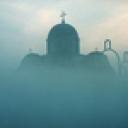
Orthodox Church, cc-licensed photo from Flickr by decafinata.
Kosovo provincial parliament declared unilateral independence from Serbia, yesterday. In his reaction Vojislav Kostunica, prime minister of Serbia, criticized America for inspiring these acts against a sovereign country. He said:
“The United States have also humiliated the European Union, and forced it to trample on the principles it is built upon,” Koštunica added, and warned that Europe, “which has lowered its head”, will be responsible “for all the serious consequences that Kosovo's independence carries with it.”
Kosovo and Metohija is province in southern Serbia. Metohija means monastery land. This reefers to great number of historical monuments mostly represented in about 2000 Christian orthodox monasteries.
Ivan Jankovic sums up all the news that stroke southern Europe yesterday:
The declaration was celebrated loudly with firecrackers and music on the streets of Pristina and other cities in the province. On the other side [in Serbia], it was not so happy. Except few bomb explosions in front of UNMIK building in [northern] Kosovska Mitrovica [where Serbs are majority], riots happened in Belgrade, Novi Sad and other cities. Hooligans […] were mad, so they crashed everything that came in their way. They stoned Slovenian and American embassies, McDonald restaurants etc. […] This caused great material damage.
Petarj cited local news and president of Socalist Party of Serbia, Ivica Dacic:
[…] [Less than 100] of citizens and police have been wounded in street clashes that broke out after unilateral declaration of Kosovo independence. Protesters attacked police in front of American and Slovenian embassies. […] [Dacic said:] “We should protect all foreign embassies in Belgrade, but those countries should think about their attitudes. They took 15% of territory from us. What should we do? Should We Applaud them? Breaking story was that crowd destroyed a kiosk. Kiosks are destroyed every day, but Kosovo is taken from us only once […].
Popkitchen titledher blog post “confused”. She adds:
[…] There is no one reason why I would wish to have smaller […] country than it is. The fact, that international law is neglected indicates how unimportant we are […].
Zivot says:
[…]Of course I am against independence. This is similar to one simple situation. Think one person coming to my house and taking away one of the rooms from me. So if that person stays there so long and finally proclaims the room his or her own. My comparison is ridiculous, because this [Kosovo] problem is greater in its proportions. […]
He then cites words of medieval Serb nobleman Stefan Nemanja ):
[…]Where our word is heard […], know my child, that is still our land, no matter who governs it. Emperors change, countries vanish, but people and their language stay, so conquered people and land will come back to the people and country they originate to”
Cika Miloje reacts to B92 blog post titled Independent Kosovo by writing:
[…] Kosovo was under Turkish governance since Battle of Kosovo (in 13th century), all up to 20th century. This time, we shall wait less, until Muslims get into some kind of big conflict with America. Taiwan is produced by America so it can defend its “independence” from China. Relations of China and Taiwan are getting closer and it may take few decades until they merge on economical grounds. East Germany got stolen from Germany. Marionette regime was placed in power there. It lasted 50 years, and now the country is united. I know the latest news sound like Armageddon to us, but history is long term process, and everything changes. […]
Mariopan reacts to the same post by foreseeing implications of this unilateral decision:
[…] This is not end of anything […], this is beginning. As soon as tomorrow or day after tomorrow, every ethnic group in the world will start terrorizing someone and proclaiming independence of some territory. I am so glad this circus will kick off around the globe so [they will understand implications of their actions when its late]. The [international community] tried hard to find a model to make this happen. So they made it and deserve to suffer all the consequences. […]
In his personal blog Avram says:
[…] It’s all the same to me. I am not so patriotic [to say out laud, all the time] “Kosovo is Serbia but I see double standards applied by the West, in first row, USA and EU. They broke UN declaration which guarantees territorial integrity to all internationally recognized countries. To be frank I would love to see Kosovo independence triggers independence declarations of all autonomous regions around the world, like that one in Spain. Abut republic of Srpska [entity of Bosnia Herzegovina], I am not sure what the situation is there. This is not autonomous province like Kosovo, but it would be nice if they could proclaim independence too. If Kosovo can do it, why can’t the others?
This is only small chunk of reactions which are written throughout Serbian blogosphere as we speak.
12 comments · »»September 23rd, 2007
Web 2.0. is finally coming to the Balkans: SeminarskiRad.com, a portal based on the share principle and offering free resources to Serbian students, has become really popular very quickly. A few days ago, the portal's blog supplement opened on Blogger, dedicated to the topics relevant to Serbia's youth.
The first post (SRP), published by the blog's co-founder Milos Stefanovic (nicknamed Kiskovic), is a report from a recent Moscow conference on renewable energy, whose aim was to educate young scientists in order to make this planet greener. Below is the post's translation:
3 comments · »»[…] Renewables are our planet’s future. It is very important for UNESCO to take a lead in educating young inventors. The European Network for Education in the Field of Renewable Energy (EURONETERS) met Sept. 3-7, 2007, in Moscow […]. Professors from FYROM, Lithuania, Greece, Serbia, Belarus and Russia held meetings at the All-Russian Institute for Electrification of Agriculture. The initial gathering of a task group for solar energy was followed by the executive committee of the network for education in this field. Professors coming from state universities across Europe are volunteers looking enthusiastically towards the future and working hard to establish joint educational program which involves publishing new booklets, creating online lab experiments and investing in lab equipment. The intention is to motivate students to handle innovative projects and opportunities in both research and application of renewables.
The main alternative sources of energy are wind and water power, solar energy, biofuel and geothermal energy. Between 1990 and 2003, renewable energy’s share in Germany’s electric power generation fuel mix grew from less than 3 percent to almost 9 percent. Over the same period, net electricity consumption in Germany grew by approximately 5 percent, while carbon dioxide emissions from electric power production declined by roughly 13 percent. The Renewable Obligation legislation places a commitment on licensed electricity suppliers in the United Kingdom to source an increasing proportion of electricity from renewable sources. The World Summit on Sustainable Development has placed the promotion of sustainable and renewable energies high on the international agenda.
Moscow UNESCO chair in renewable energy and rural electrification is lead by professor Dmitry Strebkov, who presided at the meeting of the EURONETERS Group for Solar Energy, which consisted of numerous papers and educational methods presentations. Scientists, gathered at a round table, exchanged their experiences. Conversation continued at labs where students showcased their works. Professor Igor Tyukhov introduced participants to the exciting methods to teach effects of the moving sun on solar cells. Polite hosts gave tour of a laboratory that produces solar panels. These panels are part of the extremely effective solar concentrators used to elevate the power of the electricity produced. The facility is capable of producing 1 megawatt of power by using these devices.
Meeting of the EURONETERS executive committee was presided by head of the network, professor Spyros Kyritsis. Academicians agreed to continue implementing agenda with minor changes. They applauded the completion of several new didactic tool, a book written by professor Kiril Popovski and colleagues on geothermal energy, a book of Strebkov and Tverjanovich on solar concentrators, Arbusov and Evdokimov on fundamentals of photovoltaics and Axaopoulos and colleagues on solar thermal conversion. Professor Vytautas Adomavicius highlighted hydrogen energy as highly promising for automotive industry of the future. Professor Viktor Bashtovoy said that biomass is a promising energy source for heating and electricity production when adequate technologies are present.
Professor Petros Axaopoulos demonstrated his educational software on solar energy, which helps to enhance students' education in renewables.
Professor Milorad Bojic talked about a possibility for students to implement online experiments. Experiments that can be shared between institutions via the internet (then there is no need for students to travel to other institutions in order to perform such experiments).
These educational materials are applied in many universities in Italy, Sweden and at the U.N. University for Peace in San Jose, Costa Rica. As students are satisfied with the educational procedures, executive committee recommended intensifying activities.
June 26th, 2007
Does a Creative Commons License help protect your blog from plagiarism? Is it a crime if a person from China copies your blog to overcome the so-called Great Firewall of China, trying to get some money along the way. How to protect yourself from web infringement?
Danica Radovanovic is a well-known blogger from Belgrade, who cares very much about her intellectual property and is eager to solve the problem she described at a Creative Commons listserv on May 30:
[…]
some guy mirrored and stole entire blog of mine, the guy copied entire blog, my intellectual property under CC license (Creative Commons Attribution-Noncommercial-No Derivative Works 3.0 License) plus he added AdSense to earn money on my account - I never ever had commercial usage or benefit from my blog.
[…]
To cut story short, you saw the link of my latest post, I won't post anymore as everything comes up from mine blog to this stealer's blog who earns on my intellectual work (placed in China I assume). You will find all info in this post and from comments of IT and software engineers. Also science blogger Bora Zivkovic from Science Blogs gave alert at his web site and we are looking for legal help asap.
At her blog, Danica has posted a step-by-step instruction to help others dealing with the same issue:
Let this be loud shame for those thieves. It is detected where the stealer comes from, as well as I reported abuse email on their host, and to the Google removals.
Yan responds:
[…] What he did is setting up a proxy for people in mainland China to access wikipedia, technorati, and wordpress. You know the GFW block these websites. […] So blame him for the ads, and blame GFW at the same time.
Bernarda gives another example, introducing mysterious “302 redirects”:
Here is another serious blogger who has problems. Jim Zwick’s very informative site on Mark Twain and other stuff has basically been shut down.
“ […] The removal of the materials from the site is the result of the site being banned from both Google and the Microsoft Live search engine, which I believe is the result of their inability to deal with a well-documented problem with page hijacking using 302 redirects. A 302 redirect is supposed to be used to tell a web browser that a page has been temporarily moved to a new location. The browser is supposed to automatically go to that URL instead of generating a “page not found” error. Google and other search engines (except Yahoo) interpret these links to mean that the page linked to really belongs at the linking site, and it lists it under that domain instead of the domain where the page is housed. […]”
Mark McCrohon writes:
I have developed a plagiarism detection tool called DOC Cop that helps bloggers determine if their site has been posted elsewhere on the web. DOC Cop is on the web here - DOC Cop does not take copyright or ownership of material submitted for investigation and processing is free of charge (donations appreciated).
Then Danicar considers two ways of fighting cybercrime:
[…] 1. to submit a formal notification of claimed infringement as described in the Digital Millennium Copyright Act (512(c)(3)(A)(i-vi)) to the Host (big company where this criminal holds all domains), so they would: ”Upon receipt of a valid DMCA Notification, we will commence with the removal of such content in an expeditious manner.”
vague…
and the other way, which includes real Digital Guru’s
2. to process my request of infringement here (”the file a notice of infringement with us - read: Google, you must provide a written communication”):
and this way has a much much heavier and broader notice.[…]
Raincoaster writes:
This particular case has been discussed in the forum quite extensively and the general consensus is that it’s a workaround to make sure that the contents of our blogs are made available to people in China and other countries where Wordpress is banned, rather than a targeted attempt at piracy or theft of intellectual property.
You’re right, though, Adsense is very bad form. VERY bad, and it shouldn’t have been there in the first place.
At this point you get to make a choice: if you see this as a creative way to get your blog past the censorship hurdles that China puts up, then you would leave things. It’s posting my blog too, and I’m just going to leave it because it’s important to me that my blog be read all over the world, even in countries where the governments try to block it.
If you still want to pursue this, the only real choice is the way that Dreamhost, the company you’re dealing with, has requested, which is your choice #1 in that list you’ve just posted.
It’s entirely up to you.
[…]
What I mean is, you need to HIRE a lawyer. The EFF is a great resource, but they’re not a legal aid group; they’re lobbyists and activists.
Remember, too, that it’s US Copyright that you’re operating under, because you published it on a Wordpress.com blog and that’s the terms of service. But the blog you’re fighting may or may not be hosted in a country that recognizes that law. China certainly doesn’t.
Michele writes:
I feel your pain!
I’ve been having similar issues with a well known industry news site stealing my articles and reposting them verbatim as their own
I didn’t want to name and shame at first, but I eventually did, as their response was so pathetic.
In her post titled “Goodbye, Wikipedia.jaylee.cn!”, Danica closes the case:
You may feel sorry that the whole wikipedia mirror is gone, as the guy who did the same with my blog was also circumventing Chinese content restrictions, as earlier said that citizens of China are not allowed to read Wikipedia. His web site was shut down by his ISP due to supposed threats from government.
At this time, the case rests, but the amount of stress, time and effort Danica has invested to solve the issue are enormous. This is a small contribution to the examination of the ethical questions of blogging. The conversation will go on.
5 comments · »»May 18th, 2007

Serbian singer Marija Serifovic performingMolitva (”Prayer”), the winning entry of the 2007 Eurovision Song Contest (photo by Indrek Galetin)
Just a few days ago, major news outlets reported that the main course of discussion at the Serbian Assembly session was to determine which political party is supported by the 2007 Eurovision winner, Marija Serifovic. Milutin Mrkonjic, who presided at the meeting, invited the singer to visit the parliament. When she came in, Mrkonjic said, “Fellow deputies, please turn around and greet Marija Serifovic. We will be having a short break. Let all of us go to the lobby to have a juice with our Marija.”
At B92 blog, Maja writes (SRP):
She was persistent to succeed in the world she created; she managed to show me again how it feels good to be a Serb!
Dusan is somewhat less emotional:
I can’t believe how much euphoria was provoked by the victory of Serbian [representative] at Eurovision contest. All of a sudden, everybody is proud to be Serbian!?! And all of that about one not so important thing for the country and its citizens. I consider this win a simple political fix-up, in the moment when Serbia turns its back to the EU, as the great fuss was produced by nominating [Tomislav Nikolic] as the chairman of the parliament??? So, the western courtiers had to show us how much they love us, at the time when they plan to take away Kosovo, and to blackmail us on our road to the EU. It is like: we took Kosovo from you, but we still like you. […]
Kredibilitet writes:
[…] People with such capital as the first place at the Eurovision Song Contest (with all the drawbacks of the voting system) have a credibility to say what they think and invest the credibility in what they believe. Marija believes this is the beginning of a new Serbia, and that gesture when she raised three fingers, and her parliament visit, are all good for Serbia. She placed her face in front of us, and we started spitting at her. Luckily, our comments disturb her as a horse is disturbed by a fly on his butt. […]
At another B92 discussion corner, Jeca writes(SRP):
I am glad Marija from Serbia won. That means, we will be organizing the next contest, which enables us to promote our country. […] Those who decide to visit Belgrade, no matter how many of them, will obtain, I hope so, a more positive picture of Serbia, about Belgrade, because they have a lot of prejudices about us, when taken into account all the [terrible] events of the nineties. […]
Vlad man states:
It is not all about politics, nor is everything related to Serbs negative. […] The Eurovision win is really positive, and everybody should salute the […] girl from Kragujevac, who achieved the top recognition of her profession, by using her own voice. She set a good example for everyone. […]
Gorana Secibovic:
[…] I consider this a great chance for positive PR of our country. In Norwegian media, Serbia is mentioned only in relation to [Ratko] Mladic [suspected war criminal], [Tomislav] Nikolic [ultra-radical politician who was leading the assembly for a few days], Kosovo [a painful issue as the Albanian minority wants to separate], and the mass graves around the region [consequences of civil wars that occurred during the last decade of turmoil]. Just a few days ago, a Norwegian lady asked me if the army preserves peace on Serbian streets, if military vehicles are patrolling around, and etc. […]
Neven Andjelic says:
Eurovision is the last shelter of romantic people who are against globalization. […] First, the economy collapsed, and then ideology of the East. It happened around 1989, together with privatization process, mass unemployment, when young generation lost driving force, and the older got totally disappointed. The hardships resulted in widespread emigration to the West, where engineers from [some Russian city] became plumbers in Birmingham, teachers from Belgrade went to improve their skills as painters in Amsterdam, journalists from Sarajevo went to wash cars in Paris, etc. […] But now, the poor European states from the east win, and they feel well. […] [Because of the voting system, which enables similar small countries to give more points to each other] at once, Bosnia Herzegovina, Serbia, Ukraine, Latvia turned out to be the superpowers of European singing. […] They can make some changes in the voting system, but the final say is with the people. The true democracy and the east always win. The poor, the lowest caste of untouchables prevails, like in Indian province, during the last election. […] Eurovision Song Contest is the victory of democracy. When French, Italians, and Luxemburg people won, the West was ok with it. When the East became dominating factor, at least in singing, people started talking about fixes, scam, and labeling the competition as stupid one. […] They wanted to make numerous Diasporas from the east societies, now the expatriates vote for their home countries. The east is on the roof of Europe. It deserved the recognition. Remember that you read it here. I am posting this a minute before the voting, as a proof, my expectations turned out to be true.
Trotter says:
Thank you Marija for promoting my Serbia this way! Thank you very much!
Srdan Kusovac responds to this post:
[…] There has always been politics in the Eurovision contest, or even more politics than music, because that is why the manifestation was initially established, because of the politics. The contest is, in this new time, I guess, the only opportunity when the “new Europe” manages to show it is “equal” or “important”. […]
At his blog, Dragan Vargic states:
[…] I think Marija Serifovic is a very good thing for the [country and its people]. Her talent, hard work, and the will to participate produced great effect. This is a pretty important event for all those defeatists [so called retrograde persons spreading negative energy] which I know and have to listen to all these years.
JustMe comments:
I have read remarks made by forum dwellers coming from former Yugoslav republics. I don’t know should I laugh or cry… I thought I wasn’t reading comments about Marija Serifovic Eurovision victory, but the latest X Files – a conspiracy theory edition about how Serbia stopped the win of the Croatian representative in Finland!
According to the “theories,” Serbia:
1. ‘Got' traded the trophy for Kosovo (?!)…
2. Led an anti-Croatian campaign in Finland, this stopping the victory of Dada Topic (?!)…
3. Won because only Serbs voted in the whole of Europe (?!). I suppose, the rest didn’t have the money for mobile phone…
4. Received 12 points from Croatia, because, again, only Serbs voted (neither Croatians had money for mobile phone bills)…
5. Won because the country selected a person of unidentified gender, so they received votes of the gay population…
6. Won because the singer pleads Europe by naming her song “The Prayer” […] (?!)…The “theory” list is long enough, but because of their stupidity, there is no reason to list them all. […]
Acca posts the Molitva song in English:
Prayer (Destiny) - English
I'm wide awake
An empty bed drives my dreams away
Life melts like ice
Disappears in the twinkling of an eyeI'm losing my mind,
Pushing reality out of sight
Our lips are touching softly
You're the one I believe blindlyI walk around like crazy
Falling in love frightens me
Days are like wounds
Countless and hard to get throughPrayer…
It burns my sore lips like a fire
Prayer…
Thy name is something I admire
Heaven knows just as well as I do
So many times I have cried over you
Heaven knows just as well as I do
I pray and live only for youI can't lie to God
as I kneel down and pray
You're the love of my life
That's the only thing I can say
The English version of “The Prayer” can be downloaded here.
2 comments · »»April 30th, 2007
Two hand grenades were placed on a window sill of Serbian journalist Dejan Anastasijevic's apartment on Saturday, April 15. The explosions caused material damage but no injuries. There were numerous comments about who might have stood behind the attack. Bloggers started a petition requesting prompt reaction of the police for the sake of press freedom.
At B92 blog, Milos Vasic writes (SRP):
The fact - a hand grenade exploded on the home window of a [journalist] Dejan Anastasijevic - speaks for itself about the motive of the perpetrator. Serbian Radical Party officials explained that “Dejan Anastasijevic is the favorite witness of Carla Del Ponte” (Jorgovanka Tabakovic, a few days ago); he is “a collaborator of some secret services, and a future witness against [Vojislav] Seselj” (Aleksandar Vucic, in 2004).
What happened is a manifestation of our slow and [unprofessional] judicial system, because they violated the procedure by not notifying the prosecutor and the appointed judge about the case, and the police then stated they had informed them, but the prosecutor and the judges denied that. […]
Let's push that aside. Something else is more interesting: how the media treated the crime. […] the case was carefully neglected by the extreme-right chauvinistic media, except for the Press, whose columnist, my former friend [Bogdan Tirnanic], couldn't resist the temptation to blame [president] Boris Tadic: “Why did Boris visit the offices of Vreme magazine, as somebody could ask why government reps didn’t come?” […]
When mafia consigliore attorney Goran Petronijevic detonated himself live on Fokus Radio […] with theory that [Cedmir Jovanovic] and [Liberal Democratic Party] did the bombing, and when I responded to this [idiotism], orchestrated campaign was triggered both on Fokus Radio and in the printed thing called Pravda.
[…]There is a theory according to which journalists should live on higher floors; that it isn’t hygienic to deal with investigative journalism; it is worse than taking a witness stand in the Hague tribunal against those who ordered political assassinations and worse crimes;
[…] Then former chief of TV Politika, Goran Kozic, joined the [spree of comments]. […] Kozic, who scrambled under some rock after “October 5,” got into the open recently and managed to become editor of Fokus Radio. He stated, “They should use [journalism excellence] award money given by [Bogoljub] Karic, and some by Polt, to buy flats on higher floors […]” (Pravda, April 23, 2007, p. 2).
At his B92 blog, Goran Miletic states (SRP):
[…] My grandmother said: “He sure knows who triggered those grenades.” […] [We] don’t need assumptions, but look forward to hearing the news that the perpetrator was jailed, briefed, and that the efficient judicial process started, the one to determine how it happened, and of course, why that person did it. […]
My friend commented that bombs were thrown by “some lonely, crazy person” and that there was no ordering party. In any case, if police don’t arrest lonely riders or executors with instructing parties, everything is possible and uncertain. If you are a citizen, you don’t know what can strike you, but if you are a person who commits a crime, options are pretty clear. You either get a visit from a government minister, or receive a bullet, during the arrest. Where did the equality before the law disappear?
Shaina of Bosnia Vault writes:
0 comments · »»I'm sure most of my readers are aware of the cowardly attack outside of Serbian journalist Dejan Anastasijevic's apartment. According to Dragoljub Žarković, the editor of Vreme; the attack may have been fueled by Anastasijevic's criticism of the recent Scorpions verdict. President Tadic has reacted to the attack by saying: “The state must react with full capacity to such deeds. I will reiterate the fact that offences of this kind represent an attempt to throw Serbia back into the wartime 1990s.” Vreme, the independent paper that Anastasijevic contributes to, also includes a collection of articles on Anastasijevic's attack in Serbian. Belgrade 2.0 features an article in support of Anastasijevic, as well as a link to a recent article he wrote on the Ahtisaari Plan. […]
March 25th, 2007
In the evening, Radmilo Ristic, a 74-year-old retired high school professor, likes to attend theater plays, gallery openings, literary nights, round-table discussions and other similar events that take place around Kragujevac, the city in Central Serbia. When Ristic comes back home, instead of the traditional paper and pen, his computer awaits him.
“I like to comment on some neglected texts in online editions of Serbian and Croatian papers,” says Ristic, the oldest blogger in the Balkans. “That way I can stimulate others to leave additional comments and point to important issues.”
An affair shaking the domestic community these days is the exams trade that took place at the Law School of Kragujevac University. Police arrested a number of professors who were allegedly involved in selling university diplomas. Ristic says (SRP):
It is interesting how they established that one exam costs 500 euro […]. Did they use some economic principles? There might be one explanation if the creators of this price thought one exam needed two months of studying. They took into account the average monthly salary of 250 euro, and, two months of work for this salary equals two months of studying for the exam. That’s a totally clear economic calculation, the one which wasn’t figured out even by the economics experts from Economics Department which is located just a few meters from the Law School.
He focuses on an article about the state of Serbia's judicial system by showing all the hassle one rape victim had to go trough in order to achieve justice. He states(SRP):
3 comments · »»The author of the text asks who is punished more, the sentenced professor or his student victim. It is enough to compare four months of imprisonment and five years of waiting for justice.
March 2nd, 2007
[Note: A roundup of the English-language blog posts on the ICJ verdict ran on Global Voices this past Wednesday, here.]
Serbia is proclaimed not guilty for the crimes that happened during the Bosnian war - and this is echoed in the country’s news and talk show programs this week. Lately, one could feel a clear “denying guilt” tendencies displayed by everyone who took part in the conflict. That is exactly what has been happening during the last decade, since the end of Bosnian civil war. But debating who is guilty doesn’t solve the issue. It widens the gap between people. People who identify themselves as Muslims, Serbs, and Croats have all evidently committed terrible crimes during the nineties.
After the International Court of Justice (ICJ) verdict, Serbia's Liberal Democratic Party offered a declaration to be voted by Serbian parliament, which contains an official apology for the Srebrenica massacre (recognized as an act of genocide by the ICJ). The party is supported by numerous non-governmental organizations that seem to promote Serbian guilt. They triggered strengthening of an opposing wave of nationalist movement represented by the Serbian Radical Party, allegedly formed by the domestic secret service during the last decade. Both SRS and Kostunica’s DSS agree to condemn all the atrocities which occurred during the civil war, but would not accept the blame for the Srebrenica massacre. President Boris Tadic will probably try to find a balanced solution.
All political structures would like to take some kind of formal action, but any real determination to solve the problem in its essensc doesn’t exist. What we need is a conversation between the common people who took part in the dispute.
5 comments · »»January 25th, 2007
The first preliminary results of the Serbian parliamentary poll arrived less than an hour after the ballots closed at 20:00 on January 21. Some started celebration while members of the parties that got less than the required 5 percent of the votes burst into despair. The Democratic Party (whose slogan is “Because life can’t wait”) lost in its stronghold, the capital city of Belgrade. The Serbian Radical Party (”50% + your vote”) didn’t win more than 50 percent of the vote, which would have enabled them to rule the country. The ruling coalition led by prime minister Vojislav Kostunica (and inspired by the slogan “Long live Serbia”) won fewer votes than in the previous election.
Jelica Grgenovic calls in with the first preliminary results during the election night (SRP):
[…] Here you are, Cesid has announced [the first results at] 21:55. Still, votes in major cities have to be counted, which could improve the results of [self-proclaimed] democratic parties. But at the end, it will not have a major impact on the overall result. [60 percent of the votes have been counted], the result would be as follows: SRS (28,5%), DS (22,9%), DSS (17%), G17+ (6,5%), SPS (6,1%) and the coalition gathered around LDP (5,0%) […].
Dule Nedeljkovic sparks up a dilemma. Will the current PM and the president agree about the Prime Minister position? He states (SRP):
[…] I foresee new elections. There is no chance to have [Vojislav] Kostunica and [Boris] Tadic agree about PM position. That is at least what I think. […]
Aleksandra Mitrovic replies:
1 comment · »»I can’t really understand how they are not ashamed to organize elections over and over again, to spend enormous amounts of money, especially when we have the same people with identical stories. They all rotate political functions, outcome doesn’t change. It would be interesting to check how expensive every election campaign has been. I would sum up the money. One could realize it would be better to spend that money on pensions, improvement of social care and other necessary things… it is sad to hear about all the wasted money. The majority of my friends from Serbia hope I will change my mind and get beck to my home country …but… I would not like to be ruled by these creatures. I can’t see any reason for celebration… […]
December 28th, 2006
In his blog post called “America is shaking”, Neven Andjelic shares his opinion on the United States (SRP):
4 comments · »»This big country is shaking. A number of events have caused the current condition. None of them has anything to do with my arrival to Berkley four months ago when I first grounded the superpower. I kept refusing to visit America for years because of ideological [differences] […] as well as because of fear of flying which was a more dominant reason. Now, as I have conquered this phobia and some hundred of days on the American job, my impressions about this country, people and the rest of the dominated world are complete. I turned pessimistic. The way elites are ruling this country could hardly be found in any other part of the “free world.” They are inaccessible for the people on behalf of whom they govern. They use god as much as they can when talking, and old family as it once was is important almost as almighty. They have chosen a Muslim to the American congress, but we have to wait a bit for the open atheist to be elected there. In the meantime, evangelistic leaders and reborn Christians are increasing the number of their followers by using flammable speeches against all other options including homosexual people […].
Somehow everything looks hypocritical in America. Patriotism seems to get the same echo although it appears to be a universal feature of ideological love towards the homeland. When you use these ingredients, you get some kind of ideology stew with result of having George W. Bush in the White House. Final outcome could be felt all around the world.
Average American needed six years of life under that kind of rule to realize that government isn’t the best one for him or for the rest of humanity. How happy liberal Americans were when they barely (this “barely” has to be highlighted) won both houses of congress. After six years, there is a chance to control Bush and others if the Democrats don’t fail the expectations which could happen easily. They are already more cautious when giving statements for the media, but then we take a look from a wider perspective, what is the major difference. Let me paraphrase Yasser Arafat’s statement in which he compared two main Israeli politicians - in essence, the difference between the Republicans and the Democrats is similar to the difference between Coca Cola and Pepsi Cola. He forgot to mention that both of these soft drinks are unhealthy.
| Korea content supported by |
![]() |
Japan content supported by |
![]() |