June 11th, 2008
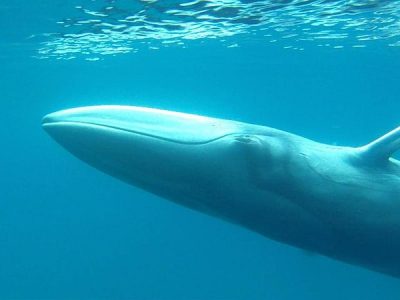
The mass stranding of at least one hundred melon-headed whales were reported in the mangrove of Antsohihy Bay (Northwest region of Madagascar) in the first week of June.
Harinjaka and the non-governmental organization Fanamby were among the first to report (fr) and publish photos (mg) of this ecological disaster.

The causes of the mass stranding are still under investigation as the local population and the ministry were trying to rescue a few surviving whales.

A few hypotheses are being discussed by experts, ranging from fungal or viral infections to the use of low-frequency sonar by the military or off-shore oil-foraging companies.
Fanamby is a Malagasy association that specializes in conservation and development by focusing their effort on developing private initiatives and new technologies.
Harinjaka, besides his work at Fanamby, is also the co-founder of Foko-madagascar and an author at the collaborative news site “The observers by France 24“; he answered a few questions about this sad event (interview was originally conducted in French):
Q: When and how did you learn about the mass stranding ?
Harinjaka: Fanamby was contacted by a tour operator who was visiting the area with tourists on June, 3rd. A few of them took photos of the stranded whales to sensitize other agencies about the urgency of the situation. The mangroves where it occurred are located about 600 km away from the capital city. Accessibility was not really the main problem, technical know-how and manpower were what was needed the most to rescue the surviving whales.
Q: What are the most plausible explanations so far ?
H: It's all hypothetical at the moment but beside an unknown disease, the one fact that was mentioned by most people in the region was that an Exxon-Mobile ship left the port of Antsohihy on June, 3rd. On June 4th, 40 whales were seen stranded and I saw many more the day after. Again, this is all speculative at this point but a national newspaper confirmed the presence of the ship.

Q: You mentioned that the reactions of the locals were bizarre at first:
H: Yes, when the local population saw that outsiders were taking photos of the disaster, they were quite unhappy and they demanded that outsiders take the whales away. They probably figured that outsiders were the reason the whales were stranded there in the first place.
The other odd story was that when experts tried to identify the species, they could not find what species they belong to inside the catalog of known Malagasy marine species. They were later identified as Peponocephala electra or electra dolphins, [Melon-headed whales].
Q: What lessons can be learned from this catastrophe ?
H: The Malagasy population have a special bond with Dolphins. We don't hunt or eat dolphins because our traditions tell stories of dolphins saving fishermen from drowning at seas. I would like to make a plea here: we should consider deploying more resources to enable faster responses to natural disaster such as this one, but also other threats to our biodiversity.
( All photos credits to Harinjaka)
( Note: *Melon-headed whales are also known as Peponocephala electra or electra dolphin. ** accounts from other witnesses are also integrated in the interview)
3 comments · »»
While the football world is enjoying the UEFA European Football Championship, many countries in Africa are restricted to watching 8 tournament games. Jentilisa, blogging from Madagascar, explains that the number of games to be broadcasted was decided by AFNEX (African Network and News Exchange) who bought the rights to the tournament in the region for African national televisions. He argues that Africa is home to many of the elite players who play in major European clubs and soon home of the next FIFA World Cup 2010 in South-Africa and the tournament should not be restricted to rich people who owns satellite dishes. He wishes that Chinese TV CCTV would dispute this monopoly in the future and lower the broadcasting fees for resource limited nations (fr and mg).
June 4th, 2008
The Malagasy government volunteered to help the international aid effort for the earthquake victims in the province of Sichuan, China. The immense proportions of the humanitarian disaster prompted the government to donate $100,000 USD to the Chinese ambassador Wo Ruidi in Madagascar for the rescue relief effort (fr)
The Malagasy blogosphere had mixed reactions to this donation, despite unanimously recognizing the sadness of a catastrophe of this magnitude, citing that more than 70% of the population still lives below the poverty line, there is a global food crisis and some regions in Madagascar are still trying to recover from the destruction caused by the hurricane season.
Tomavana, who also translates for GV Malagasy, posted on the blog, Malagasy Miray:
“Car c’est de façon quotidienne que la majorité de la population malgache affronte les difficultés de la cherté de la vie, augmentation du prix de l’huile alimentaire, de celui du carburant, des coupures “chroniques” de courants et autre cyclone de façon annuel. Or quel contraste entre le manque de fonds, excuse immanquablement invoquées par le gouvernement face à l’absence d’efficacité des réponses apportées à tous ces problèmes nationaux et cette solidarité internationale. A ce que je sache, ce don ne provient ni de l’argent de Ranjeva ni de celui du président Ra8, mais bien des caisses de l’état, donc du contribuable ?”
Tomavana’s post induced a few reactions in the comment section:
Manalina agrees with Tomavana (fr)
“Si sans cœur tu es alors sans cœur je suis … on sait tous ce qu’il en est”
The Malagasy government is working hard to strengthen the ties with China. In recent news, President Ravalomanana traveled to Shanghai in May and is on record for wanting to “expand collaboration with China”. The Malagasy government also was also prompt to support China’s handling of the riots in Lhasa in March and state that they would participate in the Beijing Olympics whether a boycott is in place or not.
Tattum believes that charity ought to start at home and Maintikely says that her grandmother is still waiting for the roof and the walls of her home to be replaced after the latest cyclone. Maintykely also wrote in her personal blog that the president was guilty of a blatant conflict of interest when he protected the price of oil from going up with state subsidies when he owns the company that provides most of Malagasy cooking oil.
Dotmg, on the other hand, does not understand all the negative reactions to the act of solidarity by the Malagasy government (mg):
“Rehefa misy andrarezina lavo ve ao amin’ny tanànanareo dia tsy mandeha mamangy ianareo, na mandeha mamangy ihany fa tsy mitondra solondranombary tsy masaka, sa manome ihany fa fanahy iniana atao kely satria izy aza manankarena noho ianao, ka tsy ho hitan’ny vazan’ainan’ny hareny izay kely hataonao anaty valopy?”
Vola thinks that the shocking part is the fact that 100,000 USD is really not enough when one considers the fact that 70,000 people died and many more are still not accounted for. If it was meant as symbolic gesture of solidarity, she asked, then wouldn’t a symbolic amount be more appropriate?
Many Malagasy bloggers have been actively raising fund for the earthquake victims in China and Cyclone victims in Myanmar through Facebook.
Another topic of international solidarity that got the Malagasy blogosphere talking was the call for help from Diana, a high school student in Mahajanga, who wants to help a baby born with a congenital malformation and his family get the proper medical treatment. The Malagasy Diaspora in Italy, France, Canada and South-Africa came together to raise funds for the operation and transport of the baby and his caregiver to the capital city, Antananarivo.
4 comments · »»April 12th, 2008

(photo via Harinjaka)
Madagascar is arguably most renowned for its unique biodiversity. However, the focus on the environment is sometimes resented by Malagasies who think it diverts attention away from the hardships of the Malagasy people.
(more…)
March 11th, 2008
Since late January, 3 severe tropical cyclones have affected Madagascar tremendously, the latest being cyclone Jokwe who made landfall in the northern region of Madagascar, destroying 40 homes and leaving 400 people stranded in Nosy-be. The city of Antsiranana was also affected but not as extensively and Jokwe is now destroying homes on the coast of Mozambique. The sad pun about the current cyclonic season being a cruel “Jok(w)e” from nature notwithstanding, bloggers urge the authorities for more adequate preparedness with respect to natural disasters. An analysis of the reasons for the extent of the catastrophe once landfall is made could help prevent more damages, especially considering that a 4th tropical cyclone, Kamba, is now forming 700 miles east of Madagascar.

( image credit to planete vivante)
Marie Sophie ( in French) and Tomavana (in Malagasy) list the reasons why cyclones have caused so much damage in Madagascar:
According to Tomavana (mg):
“ny orana[..], fisondrotry ny haavon’ny ranomasina [..], ny onja ateraky ny rivomahery [..] sy ny rivotra [..]no tena fototr’ireo fahasimbana ”
Precipitations [..], the increase of the sea level [..], the strength of the ocean waves caused by the storm [..] and the wind gust [..] are the 4 main causes of destruction.
Marie Sophie explains that (fr):
au nombre des victimes corporelles, souvent important (environ 6 000 décès chaque année), s’ajoute un nombre de sans-abri [..]; les habitations y sont généralement très loin d’une conception paracyclonique adaptée [..]. Les conséquences économiques peuvent également être liées à l’interruption des liaisons aériennes et maritimes ou aux dégâts portés aux réseaux divers (eau, téléphone, électricité) […]parmi les atteintes portées à l’environnement, on distingue les effets directs (destruction de forêts par les vents, dégâts des inondations, etc.) et les effets indirects (pollution des côtes par un naufrage, effets dus à un accident industriel ou technologique, etc.)
Not only the human toll is often substantial (6,000 casualties on average per year), one needs to factor in the number of homelesses […] Homes are in their vast majority not conceived with cyclone prevention in mind [..] The economic outcomes of such disaster also have to factor in the indirect consequences: interruptions of commercial airlines and ferries or the destructions of power lines, phone lines and pipelines […] from a environmental perspective, the damages can be direct ( destruction of forrests, flooding..) but also indirect such as pollution caused by the capsizing of boats at large, industrial accidents etc..)
Joan points to the many relief and rescue organizations where you can make donations for victims of the latest cyclones.
2 comments · »»February 20th, 2008


( photo via GAZETY_ADALADALA)
Tropical Cyclone Ivan has now left Madagascar leaving behind several regions in shambles and thousands of people without homes.
The official account by the authorities reports 2 deaths and 15,000 people without homes. Considering that Ivan was classified as a very severe cyclonic storm with winds at up to 137 km/h, many people are wondering what might be the final count of actual casualties and damages. As pointed out here, the intensity of the wind guts is similar to that of Hurricane Katrina.
One blogger reacts to the official temporary report (fr):
” Alors que des milliers de personnes ne sont pas recensées habituellement, comment peut-on savoir qu’il n’y a que deux morts à déplorer après un phénomène de cette ampleur ? Constat dérisoire lorsque l’on connaît l’état de l’habitat de ces régions”
The rescue effort, spearheaded by government agencies such as Apipa or BNGCR and NGOs, are already moving forward even though communication and transportation are still very difficult at this point.
The flow of information on the radio air and on the internet were unprecedented considering the magnitude of the disaster that frequently induced prolonged interruption of means of communication. People were sharing information via phone calls or SMS when possible and even blogs, online forums and videocasts.
A valiant effort was conducted by Joan to collect in one centralized place all the available updates under any formats about Cyclone Ivan. This led to an interactive map of up-to-date reports in several places.
Similarly, planete vivante was able to update the situation frequently and constructed a map of all the affected agglomerations and publish this striking sildeshow:
(via http://planetevivante.wordpress.com)
This also led to conflicting reports that bloggers were quick to point out.
We wrote earlier that 9 people were trapped under the ruins of Hotel Antsara in Sainte-Marie and reported dead. This information was relayed by several radio stations and newspapers before being infirmed by the government. We are glad that the 9 people are reported safe. Jentilisa warns (mg) of the danger of spreading too hastily unconfirmed informations. An explanation for the conflicting reports can be found here.
The lack of emergency feedback and the overall difficulties to communicate and provide urgent response are discussed by Tomavana (mg). He wonders why there is no equivalent of a toll free 911 in Madagascar.
Providing tools for keeping track of the cyclone and predicting its path was illustrated by Harinjaka.
The aftermath on the short and long term is difficult to foresee but most predictions are pessimistic. Flooding are already taking places in Antanarivo. As seen on the photoblog of avylavitra, there is reason for concerns in the capital city as well.
Here is a video posted by avyalvitra illustrating the alarming rise of the Ikopa river in Antananarivo, already invading real estate on a few habitations.
February 18th, 2008
Tropical Cyclone Ivan has landfalled in the Northeastern region of Madagascar on February, 17th and it is now categorized as a category 4 Hurricane.

(via meteo france)
Even though Madagascar is better prepared for cyclone season, having already taken the blunt of many cyclones (most recently cyclone Fame), the region was still devastated by the shear force of the combination of wind and rain.
Avylavitra reports that because of lines of communications being cut off, 9 people died already on the island of Sainte-Marie [mg] (translated in French here)
“Omaly dia nisy vehivavy niantso maika ny rainy taty Antananarivo nilaza fa nianjeran-javatra ny hotely nisy azy ary dia nirodana ka tototra ao miaraka amin’ny olona valo hafa izy. Ary dia io rainy io kosa nandefa antso vonjy tao amin’ny RNM (Radio National Malagasy). Naverina tao amin’ny Radio io antso io sao mba misy afaka mamonjy azy ireo any an-toerana. Rehefa avy nandefa ny antso tao amin’ny Radio ity raim-pianakaviana dia niverina niantso an-janany tamin’ny telefaonina indray, nefa indrisy fa tsy nisy nandray intsony izay antso rehetra nataony.
Na izahay nihaino ny radio aza dia nangitakitaka sy nientana anaty ihany niandry izay tohin’ity tantara ratsy ity mndra-paharainan’ny andro.
Tapaka daholo ny fifandraisana tany an-teorana taorian’ilay antso nataon’ilay ray mahantra. Eny fa na ny BLU tokony ho nampiasain’ny BNGRC (sampana misahana ny vonjy taitra mandritry ny tranga toy izao) aza dia tsy nandeha. Koa lasa antso tany an-tany efitra ilay filàna vonjy nataony.
Nivoaka tamin’ny gazety rehetra androany maraina fa tapitra maty avokoa ireo olona sivy tototra tao amin’ity hotely tra-doza ity. Indrisy, mampalahelo”
Mialisoa gives a thorough summary of the situation as Ivan moves toward the south (Fr):
” La partie Est de Madagascar est fortement touchée: Atsinanana, Analanjirofo, Alaotra Mangoro. Cette dernière avance un bilan provisoire d'un peu moins de 500 sinistrés ce matin, principalement dans le district d'Andasibe à cause de la crue des eaux. Aux dernières nouvelles relayées par la radio nationale grâce à son fameux “Ampitapitao” ( oui, l'émission existe toujours), la route nationale 2 qui joint la capitale à Toamasina est inondée, aucune navette n'est possible […] Le cyclone s'affaiblit mais la pluie persiste. Antananarivo boit la tasse ( comme vache qui pisse, me dit Anselme ) depuis samedi, vers 1h du matin. Aucune éclaircie en vue, la capitale est ses environs passent leur temps entre petite pluie et averses hargneux, coups de vents, coups de froid, boue et flaques. “L'eau monte à vue d'oeil”, me confie un riverain, “pas besoin d'averse, mais rien q'une fine pluie et dès demain, on y est”. Comme quelques uns de ses voisins, il est candidat aux premiers déménagements qui ont commencé depuis samedi soir du côté d'Anosizato.”
Jandre in Madagascar has more satellite images of Ivan and explains that considering that it takes 3 years for Vanilla to mature, the effects of Ivan are disastrous on many levels.
Tomavana has aslo posted an exhaustive summary (mg) about the recent updates from meteorologists on Cyclone Ivan in Madagascar.
We will update this story and the report from the ground as the story unfolds. We also would like to thank the folks at Rising Voices, Nari Jibon and Voces Bolivianas for their words of support to the people caught in the storm and their valuable advices on keeping the lines of communication open within the country and with the outside world.
January 18th, 2008
Jentilisa reports that the popular radio program “karajia” (discussion in Malagasy) braodcasted by the Roman Catholic Church Radio called Radio Don Bosco was suspended by the government. This suspension was also reported on a popular broadcast called ” kidoana maraina” on Radio Television Analamanga (RTA). Jentilisa explains that the reason for the suspension was to prevent a supposed-call for strike made on the radio broadcast by one of the listeners. Jentilisa is worried that this abuse of power may lead to internet censorship if this trend continues [Mg].
December 21st, 2007

(photo credit to Harinjaka)
The final results of the municipal elections for Antananarivo, the capital city of Madagascar, were handed out last week. The independent candidate, Andry Rajoelina, won against the candidate of the presidential party, Hery Rafalimanana, in an upset many bloggers perceive as a warning for the current president.
(more…)
November 9th, 2007
The Malagasy blogosphere was abuzz with discussions regarding the role of the diaspora in the development of Madagascar. This is a recurrent theme in the Malagasy blogosphere and in African development think-tank in general.
Sipakv wrote (Fr) :
“Deja a l’epoque, le role de la diaspora se discutait ferme, et le contenu ne differait guere de ce qui se dit en ce moment, meme si les participants ont change. Il y a toujours les enthousiastes, les cyniques, les indifferents, les Malagasy restes au pays qui refusent carrement a la diaspora tout apport au developpement, au vu de leur absence au pays et de leur ignorance supposee quant aux conditions et aux besoins locaux. Et il y a aussi, ceux qui reprochent a la diaspora, a tort ou a raison, une approche arrogante.”

Many bloggers went to task when it came to concretely contribute to the development of ITC in Madagascar. The nonprofit organization Foko-madagascar created a monthly blog club meeting to promote citizen journalism in Madagascar and encourage people to share their stories on the web.
Other organizations such as namana serasera have had a long outstanding record for helping develop ITC in schools among other socially-driven actions. Their initiatives are strongly supported by Malagasy bloggers at home and abroad.
Similar type of collaborations between Malagasy continents apart have fueled the growth of Global Voices in Malagasy which has posted 178 posts in 2 ½ months and gained a substantial readership despite the hurdles of being one of the less spoken languages in the world.
Yet, the question remains, is the Malagasy diaspora doing enough for their homeland ?
Vaomiera’s take on the role of the diaspora (Fr):
“je pense que la diaspora a beaucoup plus de role à jouer en apportant sa competence (dans differents domaines) au sein d’entreprises existantes, en soutenant les nouvelles entreprises, en recherchant des financements, en financant des projets de developpement, […]
La force et la raison d’existence d’une diaspora sont resumées ainsi: “regard” tourné vers le pays”
Thenonrequired relates a telling story of the hurdles that the diaspora sometimes faces when it comes to returning home and contributing (Fr):
“Première tentative pour rentrer à Schgeumland. Envoi de CVs. Réaction d’un des DG des entreprises ciblées: “Mais qu’est-ce-qu’il a à rentrer à Madagascar? Il n’y a pas de job ici pour ses compétences. Il ferait mieux de rester où il est…”.Deuxième tentative (4 ans plus tard) pour rentrer à Schgeumland. Envoi d’un CV. Réaction du recruiteur: “Mais il est surdiplômé ! Il est sur-qualifié ! Qu’est-ce-qu’il veut? Il n’y a pas de job pour lui ici.”
Rajiosy wonders why he feels like the obligation to give back is heavier on the African diaspora than on others (Fr):
“Il semblerait que l’obligation de “développer” son pays d’origine ne soit imposée qu’aux ressortissants d’Afrique […]J’aurai tendance à croire que tout malgache ayant fait le choix de vivre ailleurs, travaille en premier lieu à la richesse de son lieu de résidence/pays d’adoption. […]De là à dire qu’il contribue également à la richesse globale des malgaches (du monde entier) par lui-même, par ses enfants, par sa communauté bref par son histoire. C’est le pas que je franchis allègrement…”
Whether through conversations or direct actions, it seems that the blogosphere is abounding with bloggers with a will to contribute to the development of their homeland or at least, a will to understand the need for giving back.
Harnessing this goodwill was the topic of conversation during a meeting with the founder of the Ubuntu Institute.
To encourage bloggers to continue the conversation online on various topics, a “Best of Malagasy blogs Awards” has been planned for launching in the coming weeks.
| Korea content supported by |
![]() |
Japan content supported by |
![]() |