feed

Melissa De Leòn Douglass

Stories

January 8th, 2008

Americas: End of the Year Traditions 

Melissa De Leòn Douglass · 14:45 ·
lingua → bn · es

One Latinas Blog writes about Las Posadas: A Mexican Tradition

Las Posadas are the remarkable buildup to Christmas Eve. Las Posadas are the most delightful and unique Mexican tradition that begins on December 16th to commemorate the events in the journey of Mary and Joseph from Nazareth to Bethlehem. After dark, each night of the “Posada,” a procession begins led by two children. The children carry a small pine-decorated platform bearing replicas of Joseph and Mary riding a burro. Other members of the company, all with lighted long slender candles, sing the “Litany of the Virgin” as they approach the door of the house assigned to the first “Posada.” Together they chant an old traditional song and awaken the mast of the house to ask lodging for Mary. Those within the house threaten the company with beatings unless they move on. Continue Reading…

From Nika's Culinaria: Colombian Tamales How-To Guide

Christmas in Colombia is QUITE a production. Its not just one or two days like here in the US and it can be exhausting if you are not used to partying constantly for a better part of some 15 days, day and night after day and night. If you think you will be spending Christmas in Colombia next year be sure to condition your liver with a serious regimen of rum training over several months. Otherwise, you will be such a light-weight that you will not remember past December 15th or so. Get the scoop now…

Now it is time to find out about the New Year's traditions:

From Ecuador, Pacho Lara welcomes the 2008 sharing what is a tradition to do for this festivities:

New year's in Ecuador is also known as the “old year.” As the name suggests, the various traditions not only celebrate the new year, but also commemorate the passing year. There are various secular traditions and rituals that are observed, all of them with some personal or social significance. Some of these traditions are quite peculiar, like eating twelve grapes, lentils, and changing into yellow underware (ladies) at midnight (all supposedly for good luck). If you want to travel during the new year, you should run around the house or the neighborhood with a piece of luggage at midnight. There are other similar small things you can do to bring success in other areas of your life. But the most interesting part about new year´s celebration, for me at least, is the tradition of burning the “old year.” Read more…

From Dominican Republic, Remolacha.net writes about how much they enjoy to wait for the new year with their families: Esperaran Año en Familia [es]

La mayoría de las personas que optaron por quedarse en la capital y la provincia Santo Domingo durante el feriado de año nuevo, dijeron que esperarán la llegada del 2008 “en familia”, con una cena modesta, haciendo cuentos y jugando.

Most of the people who decided to stay during the new year holiday in the capital and the province of Santo Domingo, expressed their plans of waiting for the new year with their families, with a nice simple dinner, telling stories and playing some games…

From Panama, Chiriqui Chatter vividly describes how the 2008 was received in David, province of Chiriqui: David Celebrates the New Year.

The closer it came to midnight, the greater the activity outside. About five to ten minutes before midnight, I gave up and went out to the balcony.

There were a fair amount of rockets going off, but nothing like midnight itself. At midnight the whole world seemed to start exploding. It was incredible. I watched for several minutes before, I decide I should take a few photos to record this event.

I should have taken some photos of all the fireworks stands that have been set up in David. I mean there have been stands set up everywhere. Read the complete post…

From Panama too, Boquete Guide describes with photos the colorful way people in Boquete, province of Chiriqui celebrated: Welcome 2008 Boquete Style

Fireworks in Boquete, Chiriqui (Panama)
Fireworks in Boquete, David (Panama)
Photos by Lee Zeltzer

The Latin Americanist shares a compilation of Latin American New Year's Traditions:

With New Year's just days away, most of us have our party plans set. Part of those plans include partaking in traditions with roots in our native countries. Many of us partake of the ritual stemming from madre Spain, eating 12 grapes at the 12 strokes of midnight, making a wish with each uva and ensuring 12 months of good luck…

From Bolivia, Vania Balderrama revises what people traditionally do to receive the new year: Tradiciones de Año Nuevo [es]

Comer Cerdo -
Se dice que en la cena de año nuevo y en el primer día del nuevo año hay que comer cerdo para tener abundancia el año que viene. Según mi suegra, nunca se debe comer pollo, a menos que quieras pasar el año que viene todo desplumado y sin un quinto en el bolsillo.

Las Doce Uvas - Preparas en un platillo doce uvas de cualquier color. En cuanto den las doce campanadas, comes una por una pidiendo un deseo por cada una que se come.

Contar Plata - Justo a media noche contar un fajo de dinero, esto para que no falte durante todo el año.

Eat Pork: people eat pork at the New Year's eve dinner and during the first day of the year for good luck. This will bring abundance during the whole year. According to my mother in law, we should never eat chicken, because you will be broke all year long!
The Twelve Grapes: before midnight secure twelve grapes of any color. At twelve, eat them one by one, each time thinking of something you really want to achieve during the new year.
Count Money: Just at midnight start counting money, with this practice you will always have plenty during the year. Continue reading…

Para recibir a los Tres Reyes Magos, The Cooking Diva prepares Three Kings Tropical Bread with Coffee (Rosca de Reyes al Café) and explains about this tradition:

Rosca Rey de Reyes, or Rosca de los Reyes, is eaten in México, Puerto Rico, and Portugal on Twelfth Night (January 6th), celebrated in the Catholic religion as the day the Three Kings arrived in Bethlehem bearing gifts for Jesus of Nazareth. A tiny ceramic doll, coin, or bean may be hidden in the bread, and traditionally the person who finds it throws a party on Candlemass (February 2nd), or is in charge of preparing the “Rosca” for the following year.

In this recipe we are using coffee to re-hydrate the dried fruits instead of the more commonly used port wine or dark rum, adding an innovative twist to the flavor combinations. Please note that this specialty bread involves a 2-day process, so be sure to set aside enough time for the steps involved. Read more…

1 comment · »»

December 17th, 2007

Panama: The Kuna Indigenous Group and the Use of Technology 

Melissa De Leòn Douglass · 16:04 · Americas
lingua → es

It was a great moment when I learned about Gilberto Alemancia and his profound contribution to Panama’s tourism industry as a multilingual guide in the Panamanian rainforest indigenous areas, and in the most colorful of the jobs ever, capturing nature and people with the lens of a digital camera.

Gilberto Alemancia is an independent eco-tourism consultant - he is also an advisor on various eco-tourism programs in indigenous communities for Central America, Asia and Panama. He has given talks on ecotourism, conservation and culture at universities throughout Central & South America, Asia and Europe. He has also spoken at various international eco-tourism conferences for Outside and National Geographic Magazines. (from Pilotguides.com)

One of the first things he mentioned when we were first corresponding by e-mail was that he is from Kuna origin. Then, he went on and mentioned it again in another e-mail, without me even asking. It was then when I reacted and wondered, “…well, he might be a person who has experienced in his lifetime the cultural stigma that labels people with indigenous roots in our country. Maybe not, …maybe he is just a very proud one.”

Then, I found myself before the missing link I have been looking for so long: someone with the knowledge on the different indigenous groups of our country and their dialects, with the disposition to share and interested to teach his own. I started asking questions, it was my chance…Finally!

Melissa De León: From the cultural perspective, what is your perception of the impact technology and internet has had in the Kuna ethnicity?

Gilberto Alemancia:  It is sad to admit that today, technology is almost non existant in the Kuna Yala islands. There is no internet available in the Comarca Kuna Yala, although through the islands runs a fibre-optic submarine cable which provides vast infraestructure capacity making Panama highly competitive in the use of communications in logistical services, a project developed by Cable & Wireless Panama and financed by ARCOS (Americas Region Caribbean Ring Systems). The Kuna caciques (chiefs) and the General Kuna Congress failed to include in the contract signed in April 2001 that Cable and Wireless would provide Internet to the Kuna islands and its people. I understand technology is very important in the education precess and could help us teach others about our culture and traditions. In nowadays Cable and Wireless only pays a monthly fee for the use of the Kuna Yala territory to host the submarine cable, but that’s all. I know this company (Cable & Wireless) always talks about supporting education through technology, but that may be in the city, because the story is totally different in our islands.

MD: What motivated you to learn photography? Where did you learn it?

GA: To tell you the truth, I never formally studied photography. My work is in the Turism and Recreation field, but eight years ago we began organizing photographic excursions in Panama with a very good friend from New York, Rick Sammon, who writes for the Associated Press and is the author of ten books about digital photography. I was very much interested when I saw him taking photos of nature and people, then I start organizing exclusive photography tours in Panama with other internationally famous photographers. At the same time I was learning from their workshops. It is a hobby for me, but some of my photos have been in magazines in Panama and internationally they have been published in publications as such as Iris Times, Outside Magazine, Native Peoples, Island Magazine. It is very important that every time we try to teach the people from the indigenous groups we visit about photography, at the same time we make donations.

In our photographic excursions we visit Kuna Yala (Kunas), Darien (Embera y Wounaan) and the Ngobe Bugles. I have noticed that young people want to learn and maybe work in this field, but the only problem is that the digital cameras are expensive. We teach them, because what we do are interactive classes, and because it is good for them and a way to show the world about our culture and traditions.

Photo Credits: All photos from this post are by Gilberto Alemancia and used with permission. All rights reserved unless authorized by the author.

Hungry for more? …well, then you’ll have to visit his Flickr!

6 comments · »»

July 31st, 2007

Across the Panamanian Blogosphere 

Melissa De Leòn Douglass · 22:56 ·
lingua → es

#1: From Panama Guide, What to do with Noriega :

The other big story that will be continuing until at least September 9th is the pending release of Manuel Noriega from a prison cell in Miami where he has been held for the past 17 years on drug trafficking charges. France has asked for Noriega to be extradited there to serve time on a money laundering conviction, and Panama has (officially, anyway) asked to have him returned to Panama to do time for three convictions. The US has indicated that they intend to send Noriega to France (whew) but his case will go before a judge in the US who will rule on Noriega's request to be returned to Panama. Read more

#2: From Panama's Noriegaville News, Panama starts Jihad on teenage girls:

Teenage girls who don't behave according to PRD Sharia standards will be persecuted and denied their right to education. The policy is aimed at pregnant schoolgirls and those who otherwise walk out of line, for example by living together with a partner without being properly married. Read the complete article

market5.jpg
Photo credits: BoqueteGuide.com

#3: From Boquete Guide, visit the Mercado Municipal (Municipal Market) in the city of David in the Chiriqui province, one of the most popular places for foreigners to retire in Panama.

This province, Chiriqui is known as the food basket of Panama.
Vegetables, fruit, meat and dairy for much of the country comes form here. That means if you live here and buy fresh food they are really fresh, really good and unlike what we were acustomed to in the US.

Instead of selecting for long shelf life, color and transportability the selection here tastes like it has been a selection for just that, taste.

#4: From Rob-Rivera.com, Camping in Chicá, Campana :

Not as far but just as interesting as El Valle, Chicá in the Campana region of the interior is a great way to escape the city whether you’re in the mood to relax, do something fun or live out an RPG campaign. I went with some friends in order to congregate in the spirit of a grandiose camping adventure and what I got was a very welcome change of pace from the diatribe of the city.

Being the improvisational kind of cat, a good look at the trunk of my car carries everything one would possibly need for a wilderness adventure in Panama, no matter what your handicap setting is. Take notes, kids: Read the complete article

#5: From Panama's Noriegaville News: Canal Board Appointments Revive Shady Past .

The appointment of two new members of the board of directors of the Panama Canal has generated political controversy as opposition leaders claim that president Martin Torrijos' selection of candidates is based on political favoritism rather than selecting the best persons for the job.

A closer look at both new candidates reveals that banking interests as well as a history of corrupt financial mismanagement are appointed into the Canal board by the PRD government. Read more

tomarb_1.jpg

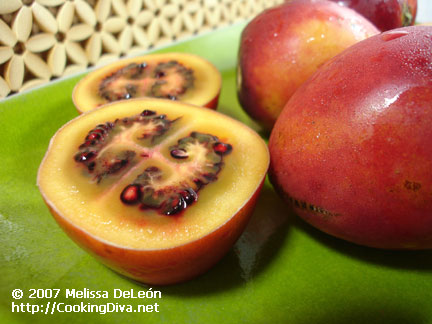
#6: The Cooking Diva reports! From the Tropics: Tree Tomato Salsa - Salsa de Tomate de Arbol

I was first introduced to this unique and colorful fruit in one of my trips to Ecuador a few years back. There, this fruit is very well loved, consumed almost in a daily basis when it's in season. In Quito I tried it as a very refreshing fruit juice offered by friends or at restaurants and in a very intriguing looking hot sauce at a seafood restaurant. I say intriguing just because it was a sassy sauce!

All About The Sassy Fruit

It was LOVE at first sight. My senses indentifyed a delicate ripe mango aroma packed in a tomato skin with the soul of a passion fruit and the sexy red of pomegranate juice dancing around the seeds. Far from trying to confuse you, I am reinventing this fruit which I suspect is unknown or underestimated by many. When was the last time you had a Tree Tomato? Hmm, right…That is exactly what I thought! LOL. You haven't had the pleassure of trying it at least once, YET! Continue reading...

bonito_matt.jpg
Photo Credits: Matt Landau, The Panama Report

#7: From The Panama Report: Moving and Shaking in the Pearl Islands .

…Soon enough, we caught some beautiful 60-lb bonito tunas which in reality more looked like a collection of footballs. Keenan landed a stunning yellow and green Dorado which, once it experienced rigor mortis, he then used like a paddle to smack Sam in the back of the head.

At one point we intercepted a large flock of dolphins and they surfed alongside the boat, jumping and swerving and being gay. One of them had a white spot on his chest and I called him Lassie! Simultaneously, the first mate on the boat couldn't remember Keenan's name and referred to him as Quizno.

The islands themselves are glorious. Caves, secluded beaches, coral reefs. There's this amazing contrast of blue water, white sand, and deep green forest that inspired me to take out my easel and watercolors and paint until my hand got tired. That is, until I realized I don't own an easel or watercolors. I don't even know why they call it easel anyways as that reminds me of a small animal. Read the complete report...

#8: From Chiriqui Chatter: Should You Carry Medicare Part B in Panama?

First let me say that I understand that Medicare is worthless in Panama. This is one of the downsides of moving to Panama. While you may have worked your entire life in the US and religiously paid all of your taxes, you will not be able to collect a penny from Medicare unless you are in the US.

That being said the US puts the squeeze on you by telling you that your premium for Part B will go up each year at a rate of 10% a month for each year you postpone taking it. The current premium which went into effect January 2007 is $93.50 if your annual was $80,000 or less.
In 2005 the cost was $78.20. The current rate of $93.50 will translate to $112.20 with a two year delay. Read more

1 comment · »»

June 6th, 2007

Panama: 37th OAS General Assembly, A Trail of Poisoned Medicine and Update on the New Immigration and Health Laws 

Melissa De Leòn Douglass · 23:58 · Americas

# At the same time the OEA (OAS, Organization of American States) celebrated their thirty-seventh Regular Session of the OEA General Assembly in Panama from June 3-5, 2007, there were many congregations of groups peacefully protesting against the recent developments in Venezuela, involving the closing of RCTV which, to many, limits and conditions free speech and freedom. The local TV stations ceased operations for 30 seconds in the morning and 30 seconds in the afternoon, showing only the image we are sharing here. The message reads "Sin expresión no hay libertad, ni en Venezuela ni en el resto del mundo," which means "Without free speech there is no freedom, in Venezuela or in the rest of the world."

luto

Local newspapers in their websites and a group of bloggers also participated with the initiative. Learn more by visiting Diablo Rojo.

# Suntracs.org shares the audio file (ES) of the speach Canciller Maduro from Venezuela gave at the OEA's General Assembly meeting in Panama.

# From LaPrensa Blog, a very controversial issue is exposed. ¿Cómo evalúa usted las investigaciones por las muertes con medicamentos contaminados? (How do you evaluate the investigations of the deaths by contaminated medication?)

El tema de los medicamentos contaminados que provocaron la muerte a un centenar de panameños, cada día toma un giro distinto. Éste semana el Ministerio Público ordenó la detención de actual director de la Caja de Seguro Social, René Luciani, para ser indagado con respecto al tema. Igualmente se ordenó la detención de los ex directores Rolando Villalaz y Juan Jované.

Sin embargo, el proceso ha estado caracterizado por su lentitud, han pasado ocho meses desde que se supo del caso y la fecha todo sigue confuso y sin vistas de ser aclarado.

This process of investigating the death of more than a hundred Panamanians by the ingestion of contaminated medication takes a new turn every day. This week the detention of Rene Luciani was ordered, the current Director of the Caja de Seguro Social (Social Security Agency) to give testimony about the case. Rolando Villalaz and Juan Jovane, ex directors of the same institution were also called for the preliminary inquiries.

Nevertheless, the characteristic of this process has been slowness, it has been eight months since we learned about the case and to date it remains confuse and unsolved.

Head over to LaPrensa Blog to read the complete report and the array of interesting comments.

# The Noriegaville News meditates on the new immigration law and new health regulations from a different perspective: Panama stands firm against dangers of tourism.

First of all, if visitors came to Panama with the idea to stay for six weeks or so to find property or spend a couple of months in their condo or vacation home, they will find that a freshly implemented law makes this a criminal activity. The duration of the tourist visa has been reduced from 90 days (the standard all over Central America) to 30 days only, and for an extension one has to go through the nightmarish bureaucracy at the Immigration service.

Carry your obligatory vaccination card!The new visa regime is not the only measure the government takes against tourists entering the country. A new law is being debated in the National Assembly that makes it obligatory for anyone in Panama or entering Panama to carry a "vaccination card" as proof of having been vaccinated against unspecified diseases. Read more

# Panama Guide reports on the changes on immigration law in Panama: Update on the 30-Day Tourist Visa Issue.

Today I interviewed Lic. Karen Zamora, the Chief of Investigation for Panama's Department of Immigration, regarding the recent changes to the tourist visa law. She said they can instantly check the status of any tourist in Panama using a new and sophisticated computer system. They capture the tourist movement data at entry points such as Tocumen Airport and Paso Canoas for every entry and exit, and they have the technology to instantly check on the status of any tourist in the country at any time (pretty cool). She demonstrated the technology using a mock suspect, and said "he last entered in January and has not left, so he's currently illegal." They can also now easily see the multiple tourist entries and exits over time, so they know who are the "perpetual tourists." She added that anyone who enters Panama after 22 May 2007 falls under the new law and regulations, and that anyone who was in the country prior to that date will be treated under the old regulations. She said that they know this is a period of transition and that there are people who have gotten "caught in the change" to the new law. Read the complete article

# Panama Guide shares some vital information: FAQ: What Shots Do I Need For Panama?

Panama's Ministry of Health is tasked by law to specify what vaccinations are required. Their program is called the "Programa Ampliado de lnmunizaciones" (PAI) (Extended Immunization Program). Within this program they publish the "Esquema Nacional de Inmunizaciones" (National Immunization Scheme), which specifies what vaccinations are required by who, at what age, special conditions, etc. So far I have not been able to find a link to this document (but I know it's there somewhere.) The new law as published does not contain a comprehensive list of required vaccinations, but rather simply talks about new vaccinations that will be funded through the law and provided to the Panamanian population through the new immunization program. There are, however, other sources that will work as a start for now. Read more

# Boquete Guide finds an unique place in Volcan, Chiriqui: Road Trips from Boquete: Sitio Barriles, an amazing archeology site which lays secret to most of visitors and residents.

Of all the places I have been so far in Chiriqui this site is most amazing. Three distinct cultures inhabiting this one area in a 2600 year span. Distinct cultures if their images and artifacts are indicative. It is theorized one was Asian and another African both in about the same time frame. And then Mayan at about 900 AD.

I cannot recommend this day trip enough if this bit of history is of interest to you. Edna takes her time to explain it all and answers questions. Oh cost, we never asked and even after Jennifer bought some trees and other plants and I gave a large gratuity the cost was far less than Finca Dracula. Read on

barrels11.jpg

6 comments · »»

May 30th, 2007

Panama: Political Season Heating Up, The Return of Noriega, and Crime in Panama: a Love Story 

Melissa De Leòn Douglass · 00:23 · Americas

#1: Panama Guide meditates on the always controversial Panamanian elections: Political Season Heating Up, Slowly

It may seem like it's still very early to be talking about the next national Panamanian election which will not be held until May of 2009. But in fact this is when politics in Panama are genuinely interesting because all of the obvious questions have not yet been defined. For example, who is going to be the candidate for the PRD for President? Everyone knows that Martin Torrijos would like to be followed by Samuel Lewis Navarro, but now the job at hand is pulling that off, and first they have to get past the elections for the National Executive Committee (CEN) and then a national PRD primary. Other serious contenders are ex-President Ernesto Perez Balladares who very much wants to return to power. The third wheel is Panama City Mayor Juan Carlos Navarro, who apparently is willing to be a team player for the strategic and long-term good of the party. Balbina Herrera, ex-Dignity Battalion Commander, National Assembly deputy for San Miguelito and current Minister of Housing is a force of nature in Panamanian politics. Read more…

#2: Panama's Noriegaville News reviews the possible actions the Panamanian government could take facing the imminent return of ex-General Manuel Antonio Noriega to this country: "Getting to host the general."  

We're only 4 months away from Manuel Antonio's release from the US prison where he's being held. The media in Panama produce nothing but a deafening silence on the subject, but behind that the Norieguista government is bustling with activity to assure that things will run smoothly.

There is, The Noriegaville News learned, for example a plan in which Torrijos
Jr. gives Noriega a similar reception as the latter gave Torrijos Sr. in 1969, when the dictator returned to Panama to counter a coup that had been mounted against him while in Mexico. Torrijos Sr. arrived in David in a plane he had borrowed from his friend the Nicaraguan dictator Somoza, and there Noriega had prepared a triumph caravan by car to the capital. Believe it or not, but a similar event - Noriega walking or being driven in some sort of Papal vehicle from the airport to his house - is in its early stages of preparation for when the narco-tyrant returns to Panama…To read the complete article visit Noriegaville News…

#3: Boquete Guide reports on expatriate living in Panama "Immigration - Visas have arrived, finally!"

We finally have received our Jubilado Visa’s gone are the monthly trips to immigration for renewal of temporary Visas.

The Jubilado Visa is a permanent tourist visa. It allows a holder to stay in Panama indefinitely without exiting the country. In fact exiting requires another visa entirely. As a holder you are not an immigrant in any real sense, just a tourist with some benefits.

One major benefit not listed below is that you do not need to leave Panama every 90 days for 3 days to re-enter as a tourist. Here is the official list of benefits.  Continue reading…

#4: Jorge Arango shares his point of view regarding politics and life in Venezuela: Sad for Venezuela

Venezuela is an amazing, beautiful country. Although I’ve only  once, I was captivated by its warm people and seemingly world-class infrastructure. I was also taken aback by its social iniquities, which were obvious even to a casual visitor like myself. (Note: Panama is not much better in this regard.)

I’m very saddened every time I hear news about the Chavez government’s latest “progressive” initiative to further consolidate their stranglehold on Venezuelan society. Tonight RCTV – one of the few mass media outlets left that is critical of the government – is being shut down; the government decided to not renew its license. Freedom of the press – a critical pilar of any healthy society – is quickly withering away. (How long will it be before they start censoring the Internet?) Read the complete post…

This is what Julia, one of his readers has to say on the subject:

It is sad indeed. Not just the closing of RCTV but the fact that for protest against it I also had to run and hide inside some buildings because the police were throwing tear gas bombs and don’t know what else. I’m frustrated. We are a beautiful country but every day we are more sad, more angry and less safe. As a Venezuelan I want to thank you for your words.

#5: Chiriqui Chatter travels to Costa Rica by road, and shares some valuable tips and information on what can you expect if you take this trip, and what you would miss if you don't: Trip to San Jose, Costa Rica

As you can see, I have returned. While it was a good trip, I am always glad to get back home. I took the TRACOPA bus from the Frontera to San Jose and the round trip price was about $20. The trip is about 7 hours by bus and that makes the trip about the same as a bus trip from David to Panama City. As always I took photos to give you a taste of what the trip was like.

….I will have to say that the road from Paso Canoas to San Jose was in very good condition. I didn’t see a single pothole. The road is only two lanes and is a pain to drive because of all the 18-wheelers. I would not want to drive this road. I think the road from Panama City to David is easier even with the potholes. Read More…

#6: Matt Landau from The Panama Report presents a common problem from a different perspective: "Crime in Panama: a love story"

It was a fairly muggy Saturday afternoon when, walking through a quiet intersection just short of Via Espana, I felt a tug at the back pocket of my jeans and turned to find a beautiful woman smiling as if I’d just kicked some game her way. It was the kind of tug that might have gone unnoticed had there not been a beautiful face not inches away from mine. We walked a few paces, our shoulders touching, our hips brushing, and our feet semi in sync. Any closer, and I’m pretty sure we’d have been having intercourse.

I looked at the girl, cute face, saddle skin tone and devious eyes like marbles, and then at her breasts which were the size of small ornamental pumpkins. She smiled back in an intimate way and I felt, for the first time in my life, I might be truly in love. A low-cut striped top and relatively tight jeans revealed a slender body that looked to be crafted for model runways and cheap beer ads. I pictured me and my honeydew girl forming a solid and meaningful relationship, perhaps some day sitting with our grandchildren and recalling the day we met. That is however, until I realized that honeydew was not flirting with me, but rather trying to steal my wallet. Read the complete post...

#7: Kleph's Kitchen shares one of Panama's traditionally loved recipes: "Sancocho"

Sancocho is a classic chicken soup. It is very similar to Caldo de Gallina in Peru. As such, it is best cooked with an old laying hen than a young frying bird. The tough meats will break down nicely and there is a much richer flavor to reward the time invested. In fact that's where the name comes from, the Spanish verb sancochar, which means to parboil.

According to the Cooking Diva, what makes this version uniquely Panamanian is the use of culantro which she defines as, "is a strong flavored, aromatic herb native from Mexico and Central, and South America. It is cultivated widely all over the world, and it is used extensively in Latin American and Asian cooking." It is not cilantro or coriander. And it isn't found commonly in US cooking. Get the scoop now…

0 comments · »»

May 15th, 2007

Food Blogs: Pata de Cerdo from Spain, Pork Katsu from Japan and Stir-fried Pork with Cincaluk from Malaysia 

Melissa De Leòn Douglass · 15:39 ·
lingua → es

#1: From Spain, Canary Girl shares a well loved recipe to prepare Canary Island Style Pork Roast (Pata de Cerdo)

This recipe is my mother in law's, she makes thee best “Pata” around. Tender, juicy, and a hint of spice around the edges. She gets it nice and crispy on the outside too, which for some reason, I can't seem to manage, but nonetheless the flavor is out of this world.  "Pata" is normally served very thinly sliced on baguettes with a bit of salt
sprinkled on, and can be either a breakfast or a main meal when served with fries and a salad. Get the recipe now…

#2: From Japan, Nook & Pantry cooks up some Pork Katsu:

Pork katsu or tonkatsu is deep fried pork cutlet served with katsu sauce, a Worcestershire-like sauce.  According to Wikipedia, it is one of the most popular dishes in Japan. Ironically, pork katsu was originally invented in the late 19th century as a sort of Western style dish to appeal to Japanese tastes, but over the years it has become more and more Japanese and is now served with rice and miso soup. It was one of my favorite lunches during my undergraduate days. Get cooking now

#3: From the Philippines, Market Manila shares a recipe to prepare Ubod, Sugpo, Alimasag at Baboy (Heart of Palm with Prawns, Crabmeat and Pork Cracklings)

Here’s a heart stopping, flavor packed way to enjoy some totally fresh ubod or heart of coconut palm. A work colleague of mine dragged a huge chunk of freshly felled coconut trunk from Bohol to Cebu last week, and I was thrilled with the prospect of a freshly made lumpia ubod. Read more...

#4: From Malaysia, Rasa Malaysia cooks with cincaluk (preserved shrimp) and prepares Nyonya Recipe: Stir-fried Pork with Cincaluk (Heh Ya Kay Char Bak)

Today, I am giving you the second installment of this unique ingredient with stir-fried pork with cincaluk. Known in Hokkien dialect as Heh Ya Kay Char Bak, this Nyonya creation graced my family's dining table very often when I was growing up. While cincaluk is not everyone's cup of tea, for those who love it, it lends a very distinct and exotic flavor to the main ingredient, in this case, pork. Continue reading…

#5: From Cuba, Rachel's Bite recreates the delicious Cuban Pork Chops with Mojo and Sofrito Mashed Potatoes:

This is one amazingly tasty meal. Each recipe is good on its own, but they are great when put together. I have been concentrating on cooking a lot of Asian food lately, I forgot how tasty some good classic recipes can be. The pork chops are so flavorful due to the marinade followed up with a spice rub. And the potatoes really complement all the spices in the pork chops. The diced peppers in the potatoes are a really nice twist on an old classic. Get the scoop now

#6: Thai & Lao Food shares a recipe to prepare Khao Soy - Pork and Salted Soy Beans Noodle Soup

This soup originally is from the northern region of Laos. I got the recipe from my Thai Isan cousin, whos husband is from northern Laos. The most important ingredients are the extra wide pho noodles, the superior dark soy sauce, and the salted soy beans. The salted soy beans sauce is like a vegetarian version of ‘ba dek' which is salted gourami fish. Read More

dsc03872.jpg

Photo taken by Melissa De Leòn

0 comments · »»

May 6th, 2007

The Panama Canal Expansion, Labor Day Issues and Quingming 

Melissa De Leòn Douglass · 22:50 · Americas

#1: Kleph's Blog reports on the Panama Canal:

After almost 100 years of operation, the historic waterway is having a tough time adapting to the demands of the modern world. Today the canal authority - known as the ACP - operates the waterway at an estimated 90 percent capacity with more than 14,000 ships completing transit each year. The waiting line to transit can be days and, when there are maintenance closures that can stretch to weeks.

Moreover, size is a problem. Gigantic container ships are now built to fit the size of the canal’s prodigious locks exactly. But the boom in international shipping has prompted the construction of a new generation of vessels – post-panamax – that can carry almost three times as much.

Last October, Panamanians went to the polls and approved a $5.25 billion expansion to the canal that will include the construction of a new lane of traffic and locks that can accommodate these larger vessels…Read the complete post.

#2: Kleph's Kitchen reports on Panamanian Cuisine, and shares a recipe to prepare the traditional "Sancocho"

Visiting Panama I was somewhat dismayed by the disjunction between the country's larder and the apparent cusine. There were dozens of varieties of fish and fresh vegetables in abundance but finding a Peruvian restaurant was a bit of a trick.

It seems the recent boom times have played against the country's rich culinary heritage. Typically, Panamanian food is cooked in homes and street restaurants. In the very modern urban metropolis Panama City is becoming, that's seen as a bit beneath the growing number of glitterati who are seeking out high end restaurants boasting European dishes. Read more…

kleph.jpg

Photo taken by Melissa De Leòn Douglass

#3: Boquete Guide reports on Cashews in Panama: Marañon

We discovered these Maranon trees at the Decameron Resort, hence the nice label on the tree. One of the employees there found me struggeling to open a nut shell and explained it was futile that then open when roasted. We later found bagged cashews at Quesos Chela and tried them, the were unsalted, and very tasty. Another natural bounty from Panama, cashews available now from a tree in the lowlands. Get the scoop now…

#4: Chiriqui Chatter on "Labor Day in Panama "

I hope you hadn’t planned on going to the bank or many stores because today is Labor Day and you won’t find many people working.  Usually that won’t affect the stores in the Chiriquí Mall or Plaza El Terronal because the malls in Panama are open year around…I hope I can figure out something to do today that doesn’t require money. Read more…

#5: IT Buda on Quingming: Dia de los Difuntos Chino (ES)

Los chinos tenemos una forma muy peculiar de rendirle homenaje a los muertos.Las tumbas son visitadas por las familias, usualmente estas se ponen de acuerdo para ir en conjunto y repartirse el trabajo de limpiar la lápida, cortar la maleza entre otras cosas. A manera de ofrendas, se hacen rezos (en chino, obviamente) y se pide por el bienestar de los vivos.

También se ofrendan comidas, usualmente pollo sancochado, puerco, es importante incluir frutas y algun otro comestible dulce. Es importante incluir algun tipo de licor, servido en tres tazitas.Read the complete post…

The Chinese have a very peculiar way to honor their ancestors. Families get together to visit the graves and share the duties of cleaning and cutting the weeds surrounding them, among other things. They bring offerings, pray (in Chinese, obviously) seeking the wellness of their living relatives.

Food offerings are commonly found, usually boiled chicken, pork, fruits and sweets. It is important to include some kind of alcoholic beverage, served in three little cups…

hellbanknote.JPG

Photo taken by Juan Lee and used by permission.

#6: Stephan Schuab on The impact of roadblocks on residential tourism:

Apparently Panamanian traffic police performs license checking campaigns preferably on major holidays. That's when you can see them on all major streets, but as well as in remote locations
where you really wouldn't expect a roadblock. They make you stop want to check your drivers license. I have no problem with that and see the reasoning behind these checks.

Another new measure to improve road safety is a new law that went into effect earlier this year. Every driver is required to carry a copy
of the traffic rules in the vehicle. I guess the idea is to make people at least skim the book once in a while. Read the complete post…

2 comments · »»

April 30th, 2007

Ropa Vieja and Malanga, Guarapo de Piña, and Colita de Cuadril from across Latin America 

Melissa De Leòn Douglass · 13:37 · Americas

#1: From Havana, Cuba, Chispa Stories shares his first impressions on the interesting "Ten Days in Cuba" adventure:

And we did have good food. The one thing I’ve managed to learn so far (in my three hours) here in Cuba, is that there are thousands of very stern rules and an exception for each and every one of them. At La Cocina de Lilian, our little table was in the middle of a private garden inside an even more private house and as I ate my little crock of “ropa vieja” and garlicky “malanga fritters” I hoped we weren’t experiencing the Cadillac now with Peugeots on the horizon. Read more...

#2: From Venezuela, Experiencia Culinaria takes us through a travel in time, to rescue one of the almost gone delicious traditions of Latin America: Guarapo de Piña (ES).

Pocas bebidas refrescantes criollas alcanzan la popularidad del guarapo de piña. Entran en él los tres componentes a la cual más económicos: agua, papelón y conchas de la mencionada fruta. Moderadamente fermentado y dulzón, es algo así como un modesto vino blanco. Tiene propiedades eminentemente tónicas y digestivas. Read the complete post

Not many refreshing native beverages reach popularity as the "guarapo de piña." It consists of three really inexpensive ingredients: water, raspadura (a dry form of molasses) and pineapple skin. It is slightly fermented and sweet, a sort of a modest white wine. It has obvious invigorating and digestive properties…

#3: From Uruguay, Amargo y Dulce tips her readers where to find organic products in Montevideo: Looking for Organic?

Ecotienda is located in El Centro and also has a weekly stand at the Sunday feria in Parque Rodó. At the store you will find fresh produce, cheeses, the most delicious yogurt, ice cream, fresh ricota, and dulce de leche - all organic. Ecotienda sells honey, honey studded with almonds and dried fruit, olive oil, jams, preserved vegetables, and some other jarred items. They also have a few baked goods - including scones, tartas, breads, and crackers…Read more!

#4: From Argentina, Asado Argentina shares insightfully delicious information on how to prepare "Colita de Cuadril (Tail of Rump) - Tri-Tip"

Colita De Cuadril is known in English as tri-tip, sirloin bottom, or tip roast. The exact same thing, not one of those cuts that are similar yet cut differently like vacio and flank steak. You can roast it, grill it, or smoke it. Slice it up for stir-fry. Grind it up for hamburger meat. Cube it for kebabs. The meat sucks up spices and marinades like a sponge…Read the complete post now!

dsc03436_2.jpg

Colita de Cuadril photo taken by Melissa De Leòn Douglass

#5: From Panama, Boquete Guide reports on Quesos Chela, a well loved traditional family owned dairy shop: "Road Trips from Boquete"

Yogurts and various country cheeses round out the offering. A tribute to life and decadent pleasure. These are not the cured aged cheeses of the world but young fresh country or mozzarella cheese; simple and tasty. If you live in the US and cannot place country cheeses think farmers cheese or Mexican Queso Fresco and then add texture and flavor.

2 comments · »»

April 5th, 2007

Panama: Bocas Dolphins Under Threat, and Non-Lethal Personal Security Devices in Panama. 

Melissa De Leòn Douglass · 10:39 · Americas

panama canal

#1: From The Noriegaville News, Bocas Dolphins Under Threat :

My own opinion of this project is it is simply a commercial venture using and probably abusing the natural resources of Panama. The continued use of the buzzword abundance in their proposal confirms my feeling. How do you increase abundance by removing the dolphins from the bay? I agree that dolphins are not an endangered species as I have sailed through schools of thousands off Venezuela and on the
Eastern Caribbean. However, there is not an overabundance of dolphins in Dolphin Bay.
The few dolphins there are like pets to the local population and they are very disturbed, deservedly, about their possible loss. Read the complete story

#2: From Panama Guide, Non-Lethal Personal Security Devices in Panama :

Compared to many parts of the United States it's relatively easy to obtain a permit to legally carry a handgun in Panama. From personal experience I know that carrying a handgun for self defense is usually a bad idea, especially in a foreign country and I strongly suggest you think twice before you go that route. If you produce the weapon and draw a bead your next decision might include taking another human life. There are, however, viable alternatives. Continue reading…

#3: MsABCMom on Schools in Panama:

(more…)

0 comments · »»

March 28th, 2007

Arepa de Huevo from Colombia, Ceviche from Ecuador and Pupusas from El Salvador! 

Melissa De Leòn Douglass · 13:43 · Americas

ceviche

#1: From Colombia: Nika's Culinaria shares a delicious recipe with step-by-step photos on how to prepare a traditional Colombian delicacy: Arepa de Huevo (Arepa with Egg)

My first experience with it was when we visited Colombia 25 years ago.
As in other latin american countries, street vendors sell all manner of things. We were on foot somewhere in Bogota, Colombia, and literally by the roadside there was this large woman sitting next to an enormous wok-like pot filled with boiling hot oil. She also had dozens of eggs and arepas. I didn’t really know what to expect when we walked up. I watched her cut open a large arepa…Read the complete post!

#2: From Ecuador: Erin in Ecuador and Elsewhere shares her experiences with Ecuadorian cuisine, specially "Ceviche," during her stay in that South American country as Ecuador's first IVP (International Volunteer Program)

Here I am below,  enjoying my first crab-ceviche, which is now my favorite of the Ecuadorian ceviches. Ceviche is usually seafood, "cooked" and marinated in lime juice. The Ecuadorian ceviche is served as a kind of soup, with tomato, onion, and limes and "chifle" (fried plantain chips) on the side. That was the second meal of the day (after breakfast…. and would be one of four!!… and I thought I ate too much in the US on Thanksgiving!). Read more…

#3:  From El Salvador:  Gluten Free by the Bay tells the story of how she became a fan of the Salvadorean Pupusas: The Day my House Became a Pupuseria! Learn how to prepare Pupusas de Queso y Frijoles Refritos, as well as the tasty Curtido de Repollo.

(more…)

3 comments · »»

Funders
Sponsors
Korea content
supported by
OutBlaze Japan content
supported by
SanrioTown