April 28th, 2008
(UPDATE: Andrew Mwenda has been freed on bond, see his letter to supporters on the TED blog.)
Bloggers and independent media outlets in Uganda are reporting that three journalists and a photographer at The Independent, an opposition newspaper based in Kampala, have been arrested and that the paper's offices have been raided by Ugandan security forces. One of those arrested was Andrew Mwenda, who was previously charged with sedition for his coverage of the death of Sudanese vice president John Garang in 2005.
Reuters and Uganda's Daily Monitor ran the story yesterday, and the Independent published a full account of what happened:
In a two-pronged operation, police and operatives from the Chieftaincy of Military Intelligence (CMI), Joint Anti-Terrorism Taskforce (JATT) and the Black Mamba squad raided The Independent again, exactly a month after the first raid.
…
At [Mwenda's] house, the police confiscated his lap-top, flash disks, 43 CDs full of information – both official and private, a manuscript of a book he has co-authored with Prof. Roger Tangri on Elite Corruption and Politics in Uganda. After that, Mwenda was driven to the offices of The Independent.
…
In no minute, other plain-clothed men, some feigning meanness others calmness, stream into the offices and start taking position as [police detective Joshua] Musede hordes the few employees already at work out of the newsrooms into the open space, saying there is something he is looking for.
Consulting editor Charles C. Bichachi then demands to know what the group was exactly looking for and the authorisation permitting them to do so.
“The ID is enough, he doesn’t have to show a search warrant,” interjected one of them, a relatively tall and light-skinned man feigning calmness, speaking Runyankole with a gun popping out of his waist.
…
Mwenda’s arrival clears the air as to what the raid this time is about; the team is searching for seditious material that the publication is in possession of; transcripts and audios of interviews of alleged torture victims in safe houses in Kampala and around the country under the wings of CMI.
Juliana at Afromusing writes:
Andrew Mwenda, arguably Africa’s most refreshing intellectual and journalist, has been arrested by Ugandan officials. More here.
This is utter injustice, and i am not even sure where to begin. For now, highlighting it on this blog seems to be one way, please highlight it on yours too, and I am sure some initiatives and online campaigns are being organized. Keep an eye on the TED blog for Updates.
Glenna at Uganda's Scarlett Lion adds:
May 3 is World Press Freedom Day. This year, Uganda was not included on the annual Reporters Without Borders survey. The web site lists no reason behind this decision.
Supporters of Mwenda have set up a Facebook group demanding his release.
2 comments · »»April 20th, 2008
A post by Gay in Uganda last week reveals the discrimination the country's lesbian, gay, bisexual, transgender and intersex (LGBTI) population faces when applying for travel documents:
Ugandans know a guy called Brenda. A gal, because Brenda is a trans person. Meaning that biologically the birth was to a male baby, but growing up Brenda was more confortable in the female role, and ultimately embraced the female gender.
…
Recently, Brenda needed travel documents. They were denied. Reason, they don’t give them to ‘people who have changed themselves’. Julie Victor Mukasa (Note: a Ugandan lesbian activist) tells of the time that she had to prove that she was biologically female at the RDC’s office in Kampala, when she went to get passport forms filled. Use your imagination how she proved that.
Our constitution states that it is a citizens right to get a passport. Brenda is apparently not included in that definition of a citizen. But that is besides the point. Fact is, those of us who are in LGBTI activism, are suddenly finding problems getting travel documents.
…
Very likely I may have problems traveling next time that I need to do so. My passport may light up or something. Happened in Rwanda last month. Apparently, LGBTI activists need permission to leave the country!
Magintu, denied a passport renewal for entirely different reasons, vents:
I have been trying to get my passport renewed for three weeks now, to no avail. Over 8 years ago when they gave me my first one, I did not even show face in the passport office. And I got it two days later.
Now I want to renew my passport and Uganda is giving me shit about it. You would think they would recognise game and offer me the damn passport before I marry wisely and blow this joint. Or maybe they would nitpick about the fact that I was not born here; but no, they are more concerned about the fact that I have an occupation. Yes, I kid you not: they say that on my first passport I am listed as a student. Now in this application, I say I have a job. And they cannot understand how this can be. Depsite the fact that 8 years have passed between issuance of said first passport and request for a renewal, they still expect me to be a student.
Meanwhile, although Uganda's New Vision boasts several features committed to helping its readers find love, its focus seems to have switched from romance to finance. The View from Kololo's Hannah laments:
Mystery Date: once a portrait of young dreamers looking for love, once filled with anticipation and over-dramatized emotions, now a business opportunity, now filled with indifference.
…
Take, for example, Julius and Stella, from the March 22 issue. Julius is a videographer; Stella an artiste. Stella has a boyfriend; Julius is married. Stella’s summary amounted to this: “When I told him I was an artiste, he was happy because he is a promoter. He said we could make good money since he knows the trade well.” Julius said, “We exchanged greetings and I realized she was familiar. I had seen her on stage, singing. She said she liked me and I was happy to meet her because, as a promoter, I can benefit from her talent.”
The trend is evident in personal ads as well, Glenna at Uganda's Scarlett Lion reports:
I'm working on a story related to personal adverts in the Ugandan daily newspapers. More details on the story later, but I thought I would share a few highlights I've found perusing “Meeting Point” in the New Vision.
I've removed the contact information from the ads, but should you want one of these winners, just leave me a comment and I'll get it to you.
UNIVERSITY drop out, 29, wants financially stable, caring, lady.
I know that most financially stable, caring ladies want someone whose only description of themselves is related to the fact that they're a University drop out.
DAN, 18 wants a sugar mummy.
Dan, where have you been all of my life??
Several other bloggers also have their minds on money. Nathan of Muzungu! Muzungu! and Chris of Caked in Red Clay both posted this month about continuing to stockpile coins and small bills after leaving Uganda. Chris notes:
I realized, while my weighed-down pockets had me swaggering down the street like John Wayne on his way to a western dust-up, that my Uganda approach to collecting small change is not as effective here in the UK.
In Uganda, small change is worth its weight in gold. It means you can pay a boda-boda or matatu taxi exact change, you can pay for your lunch without feeling bad about the server having to canvas the area for change and you can pay for phone air time without any hassles. The two largest denominations, the 20,000 shilling (about $11) and 50,000 shilling (just under $30) notes, are generally major hassles to break, since they are so much more than most day-to-day expenses. So when a group is out for dinner and all chipping in on the bill, any change and small bills tossed in are highly coveted by all others who want to break their bills.
…
The abundance of coins is mixed with a different economy, where things are of course more expensive so more money is coming and going from your pocket. In one coffee shop I didn’t have the right change for a 1.25 pound cup of tea and apologized profusely as I gave him a 10 pound note, apologizing for him having to break such a big note.
He laughed.
I was reminded, yet again, that I was not in Uganda any more.
For The-xposer's Kisiki, finding correct change presents more than a reminder of cultural differences: it is an obstacle to entrepreneurship. He explains:
1 comment · »»A few minutes before writing this piece, I was in Wandegeya on my way to town, and need for airtime arose. I went to an airtime stand, and order for 5,000 top up. A man in his late 40’s handed back my 20,000 note because he had no ‘chengi’ (change).
I moved to a next stand that was managed by an Asian, and I flashed my 20,000. The attendant took the note, handed me the airtime, and asked me to wait as he sought me ‘chengi’ from the business neighbours. Within two minutes, I was done and I walked away.
…
In doing a random survey, if both sellers have ten customers loaded big notes within 15 minutes, the earlier seller would have nothing. The second seller would have benefited from customers. Dominance of business mentality of the second seller is what entrepreneurs in Uganda should apply for their businesses realise advancement.
Sometime back, Bank of Uganda ordered the banks not to chase people who seek for change from banks. Today, some banks sell ‘chengi’, even in the Taxi Parks ‘chengi’ vending booms, but 10% off the money need change is quite high.
It will take a long while for Uganda business men and women to notice how much they lose by chase a customer because of ‘chengi.’
February 19th, 2008
The blogren had their collective eye on Uganda's mainstream media this week. Tumwijuke at Ugandan Insomniac took reporting matters into her own hands following the lethal collapse of a secondary school building constructed on top of a ransacked graveyard, including several powerful photographs in her coverage of the tragedy:
Following below are a few pictures of graves at a family cemetery that was located on land which St. Peter’s Secondary School is reported to have ‘unlawfully’ acquired. The grave stones were carelessly knocked aside, bodies carelessly exhumed and dumped at an unknown location and this was on the same plot of land that the collapsed building was located. In fact the grave yard was less than 20 meters away from the new dorm.
No one from the affected family was willing to speak to me on record about the desecrated graveyard. They whispered about being paid to look the other way and being threatened into silence. Neither the school management nor the owner, Dominic Kavutse, were willing to comment.
Multiple comments on the post praised her for reporting the incident:
Those pix of the grave are so horrifying. How could they do that and go on as if everything is normally. You are a star for taking those photos. No newspaper has done that.
***
She treads where the brave dare not go. Girl, you deserve an award for uncovering these gruesome things in our very backyards.
***
i think this blog is finally teaching us all why there are blogs anyway. citizen journalism oyee!
Meanwhile, Moses Paul Sserwanga spoke out against the arraignment of two Daily Monitor senior editors following their exposure of a salary scandal involving the Inspector General of Government and High Court judge Faith Mwondha:
This is indeed a story of trepidation where offences which are against the spirit of our constitution are preferred against journalists to keep them forever in a state of fear.
The charges are basically designed to harass and intimidate journalists in the exercise of their constitutional rights to inform the public about the conduct of government/public officials.
But the citizens of this county must stand up and not allow our fears to be far outweighed by what we know is our obligation - to protect the provisions of our constitution. To help those who are victimised for the ideals they stand for; freedoms of liberty, speech, association and media not to feel alone.
And Nappy Brain took the government-owned New Vision to task over their response to a reader's question about statutory rape:
Did I get this wrong or didn’t this woman just say that a young girl/woman in her care was being raped repeatedly by her husband? Didn’t she say that the rape of this minor in her house has been going on for 2 years? Did she not also say that this young woman was in her care and that she had no one to turn to and nowhere to go after her father died?
So, why does the New Vision advise the woman to “work things out” with this rapist? Why does she advise her to send the girl away so she can work things out with her husband?
…
Our national newspaper advises women everywhere to mistrust the word of another woman who has been raped and instead side with the offender by attempting to restore some kind of relationship with him.
On a lighter note
In the past week, Uganda has played host to two famous visitors: the instantly identifiable Sex and the City star Kristin Davis and the somewhat less recognizable German president Horst Köhler. Glenna at Uganda's Scarlett Lion, assigned to cover Köhler's visit for the Daily Monitor, was bemused by his relative anonymity:
At one point during German President Horst Koehler’s visit to an [Internally Displaced Persons] camp just outside of Gulu, Northern Uganda, he looked to some of the IDP kids, then looked to his translator, and asked, “Do they know who I am?”
Pause.
“No.”
(I didn't know who Kohler was until I got the assignment last week.)
Both Köhler and Davis, who works as a global ambassador for Oxfam, toured northern Uganda to learn more about the region's ongoing civil war. Ugandan celeb-tracker Rafshizzle caught up with Davis in Kampala:
3 comments · »»
…And we missed her arrival but Rafshizzle Sherlocks worked overnight and found her at Oxfam Uganda headquarters in Muyenga as she presented bicycles to youths who won the climate change competition.
Davis, who is also the global ambassador for the international aid agency Oxfam then said, “This is my first visit (to Uganda) and I am really looking forward to meeting the people and seeing the country.”
Well, we’re also happy to see you, Ms Davis, but why were you hiding from us?
January 30th, 2008
To scroll down the main page of Citizen Uganda is to indulge in a visual symphony: carefully selected photos align harmoniously with well-crafted blocks of text. Thick lines in complementary colors separate commentary from current events. Trios of links gracefully rotate, gliding from entertainment tips to featured blogs to Africa-focused videos and back again with the ease of a concert harpist trailing her fingers over the strings.
In short: Citizen Uganda is the best new online source of information about Uganda, and it's also very, very pretty.
Paschal Ssemaganda, the site's founder and editor, is pursuing a Master's degree in publishing. It shows. The site looks and feels like a glossy magazine, with columns on technology, the Ugandan economy and the arts interspersed with slick RSS feeds from Uganda's major newspapers and what Ssemaganda calls “chai” (tea): bits and pieces of the African blogosphere that offer readers a break from the tedium of Kampala office work.
“I want the site to be a fun, entertaining, alternative news source” Ssemaganda told Global Voices in a phone interview. “I want to stay away from left wing and right wing, but there is a core liberal philosophy.” So far the political commentary has been fairly balanced: a recent article condemned Uganda's opposition party for its response to the ongoing crisis in Kenya:
Speaking on behalf of the opposition, the shadow Foreign Affairs minister called for the isolation of Kibaki and for sanctions on his government…. This strategy might win some media attention and a couple of points for the opposition among NGOs and humanitarian agencies but ultimately it tells us more about their judgement. Okumu and Latigo seem to assume that Ugandans will not see through this attempt to manipulate a real humanitarian crisis into a political advantage for opposition. It also demonstrates their inability to prioritize. It is true that Uganda benefits from democracy in Kenya, but any sanctions on Kenya will cripple Uganda's economy as well.
An earlier post, however, questions the government's judgment in handling Uganda's microfinance industry:
…the government created a post for the Minister of State for Micro-Finance, thereby taking regulatory responsibility for microfinance institutions away from the Central Bank. It was not the wisest decision in retrospect, and was probably made so that the government would be well positioned to take credit for the positive developments that microfinance can bring to Uganda's economy. Now though the government has a potential catastrophe on hand. The lack of regulation for microfinance institutions threatens to undermine the confidence that many have in the practice and expose the NRM as bad managers.
Citizen Uganda's political commentary is engaging, but the site's real strength is in its focus on technology and digital communities. Since the site's inception last November, Ssemaganda has reviewed a local web hosting company, discussed iPhone possibilities in Uganda, debated the use of web standards in Africa and shared his thoughts on web design in Uganda. Readers are invited to contribute articles, events and photos, and the site has its own Facebook page to keep its fans informed.
According to its About Page, Citizen Uganda “is an amalgamation of a variety of opinions on current affairs, technology, the economy, and social development.” Part current events, part tech talk, part trendsetter, Citizen Uganda raises an exciting, beautiful bar for Uganda's digital things to come.
0 comments · »»December 28th, 2007
An interview with a Kampala City Council official has blogger Tumwijuke wondering if Uganda is “mentally, intellectually and creatively broke”:
What else would explain the near absence of public art in the city? Rich men and women in Kampala are opening new hotels, shopping centers, office blocks and apartments every month. These are well traveled and widely read (I hope) people who are exposed to things like good architecture, art and culture. So why is the city so bland?
Tumwijuke follows her account of the interview with photos and descriptions of Kampala's existing public art installations, an excellent collection of what few pieces the city has to offer.
The post also calls attention to blogren newcomer kampala.ver, Uganda's first architecture and urban planning blog. Author Filoug's Yes Please! and Urban Sins categories chronicle, with photos, the best and worst of Kampala's architecture, and a multiple-post proposal details a central public transport terminal that would reduce congestion and provide a combined space for transportation and commercial activity:
Clearly, the downside to my previous argument for the need of an organized bus system including the construction of a Central Kampala Public Transport Terminal is this: With the stroke of a pen we have done away with one of Kampala’s prime tourist attractions, the Old Taxi Park.
So we better come up with something really nice as a replacement. Something that doesn’t exist anywhere in town. Something that improves quality of life, for everybody to enjoy.
Such as a shady, relaxing, traffic-free Public Square in the heart of the city. Again.
To achieve this, a ’spine’ of blocks is arranged along Luwum Street and Ben Kiwanuka Street, creating an urban frontage, at the same time shielding the square. Narrow alleyways cut trough the blocks, emphasizing the sense of openness and spaciousness of the square itself. Since Old Taxi Park is located right in between Nakasero and Owino Market, it is also suggested to strengthen this axis by turning Market Street into a pedestrian shopping street. It’s already got the right name for it.
Finally, writing from the United States, Uganda-CAN worries about the effect next year's 10% reduction in U.S. diplomatic posts will have on the ability of the U.S. to support peace talks like the ongoing ones between the government of Uganda and the rebel Lord's Resistance Army:
0 comments · »»These cuts (in the midst of the massive disparity) come as U.S. policymakers are realizing the limits of military solutions to complex security problems. Yet, this institutional arrangement continues to privilege military approaches, while limiting the potential for diplomatic engagement. This is having a real impact in northern Uganda and the whole of Africa. The U.S. military, with the advent of AFRICOM, is increasingly becoming the face of U.S. policy on the continent. Though the military does often play a key role, this limits the creative space for the U.S. to support peace negotiations and promote sustainable conflict resolution.
November 29th, 2007
Beloved by the blogren for his prolific, provocative comments and his endless, passionate devotion to North Korea, the 27th Comrade was until recently one of Uganda's most active bloggers.

Two months ago the Comrade decided to take a hiatus from his blog Communist Socks and Boots, limiting his writing to the occasional post on the group blog The Kampalan. His decision was met with surprise, sadness and well-wishing on the part of the blogren, and this blogger missed his manifestos so much that she sought him out for a conversation about writing, reggae and, naturally, Communism:
ONE: How long have you been blogging?
Back when I was just starting out in serious software development, I had a small blog. Very clunky thing that I no longer maintain. I don't consider that phase, though. After all, it had only three readers - myself and my two alter-egos. Then came the real blogging, which I date starting in the last quarter of 2006, at CS&B. Not that much of a Long March to write books about, I'm afraid.
TWO: What made you decide to start a blog?
I had the ingredients: non-expensive internet, some stray time, and stuff to rant on about.
THREE: What do you use your blog for the most?
First I thought it would be something like an open journal. I have almost completely succeeded in keeping the tech stuff off the blog - it wasn't meant to be an outlet for my tech stuff. It was merely something to chronicle my more-interesting moments. And then, some day, I put an opinion out there. And then it became a kind of rant zone, on top of being a diary. By last post, the rant zone personality of the blog had won the civil war.
FOUR: Who influences your writing?
When I was in school, I used to read Ernest Bazanye's articles. Always. That cheeky, laid-back thing, you know. I like it. Other elements of my style came from Mario Vargas-Llosa, Salman Rushdie, Robert McLiam Wilson, and maybe Adam Thorpe.
FIVE: Top three favorite blogren?
Baz, funniest bugger alive. It's a shame he isn't announcing an up-coming novel, because I think Uganda's time is ripe for a Nobel Prize for Literature.
Tumwijuke has such rude talent with the camera that, while checking her well-written posts, I tend to wish I were a photographer myself.
Ivan. He's a graphic artist, and it shows in his writing. He writes paintings, in a cheeky style.
SIX: Why did you stop writing on CS&B?
I'm quitting my job to make some time for myself, so out goes the non-expensive internet. That's one of the ingredients for my blogging, and it won't be available for a while.
SEVEN: Do you think you'll start up again?
Yeah, definitely. You don't stop this kind of thing. I'll probably be programming my own blog engine when I'm off the job. When I come back, I may be self-hosted, or (if all that fails), I'll be back to CS&B. Both are equally likely.
EIGHT: Why are you a Communist?
Everyone is born a Communist. But living in a Capitalist society can quickly brain-wash people into thinking Capitalism is the norm. It isn't. Your mother didn't sell you breast milk. Your parents didn't rent a room out to you. And when you are taking care of them, you won't forward them the bills.
NINE: How do you feel about the United States?
How would you like it if every country were like America? If there were 200 countries in Iraq, 200 countries polluting the world, 200 slave histories, 200 Jena Sixes (that's Jena 1200), 200 million nuclear bombs at the ready, 200 hundred trigger-happy empires, 200 times that the American natives have been massacred, 200 bullying hegemonies, 200 causes and targets of modern terrorism. 200 stray, uncontrollable evils. The only positive of America is having shown us what Capitalism becomes if it is not squashed before it hatches. Looking at America, I find it harder to condemn the (rather brutal) purges that happened in twentieth-century Communist states.
So it's not just an act, then.
I'm Red. Through and through. Maybe nobody will doubt if I register the Communist Party of Uganda?
TEN: Last question: as an avowed fan of Bob Marley, do you have any comments on the death of South African Reggae star Lucky Dube?
A: I was shocked by what nobody seems to be saying about Lucky's death. He was killed by Capitalism. This rampant crime in South Africa, it is blamed on a trinity of poverty, un-employment, and the legacy of apartheid. Apartheid slave-driving and segregation were supposed to prop up the Capitalist machine. So was slavery in the USA. So was the raiding and massacring of the Australian Natives. So is the massacring of the environment. So is the massacring of the Middle Eastern children. Even when these regimes finally cave in to the revolutionary forces or civil rights movements or Umkhonto we Sizwe, the effects of the cannibalist nature of Capitalism will tarry with us for the next millennium.
Thanks, Comrade.
2 comments · »»November 14th, 2007
Ugandan bloggers gear up for the Commonwealth Heads of Government meeting, worry about the latest developments in the north and keep tabs on their favorite reality television star.
Are you ready for CHOGM?
The Commonwealth Heads of Government Meeting, known in Uganda as CHOGM (”cho-gum”), is just around the corner. Joshua Goldstein mentioned CHOGM on Global Voices earlier this year.
The blogren are taking a largely skeptical view of Uganda's readiness for the massive international conference, scheduled to begin November 23. “I went to Kampala a few days ago,” writes Minzo at Minega Strikes Back. “[G]reat city but if you actually believe they are ready for CHOGM I have a bridge in Brooklyn that I'd like to sell to you.”
Kelly of Kelly's Uganda Journal marvels:
Apparently his super-smartness, Inspector General of police, Maj Gen Kale Kayihura decided to have a CHOGM drill yesterday and closed Entebbe road, Ggaba road, and Nile Avenue…. This genius decision making resulted in apparently the worst traffic in the history of Kampala, and let me tell you from personal experience, that is BAD!
CHOGM security preparations have Christopher Mason of Caked in Red Clay troubled:
To boost security ahead of the conference, the government has brought in thousands of forces called “Special Police Constables”, or “SPCs”…. Because the demand on police in and around Kampala was so high for Chogm, the government brought in thousands of these SPCs, gave them some additional training and deployed them at nearly every intersection throughout the city, where they now stand with their fingers on the triggers of their AK-47s.
…
Over the weekend, two people (one 13-year old girl and a 22-year old man) were shot and killed by SPC officers at a market in the city. There has not yet been an in-depth explanation of just how and why the incident occurred.
“Really, were there campaigns to make ordinary Ugandans know about CHOGM?” wonders The-xposer's Kisiki:
I talked to the women [in Lulongo Village, 100km from Kampala] and they poured out all their problems ranging from inaccessibility of health services to poverty. The children were smiling but their eyes did not hide pain and dissatisfaction. Curisioty pressured me to ask if they new anything about CHOGM? The answers were summarised to ‘NO.'
And Samsung at look at the world through my eyes Photoshops a Jack Bauer CHOGM inspection:

Rebel movements
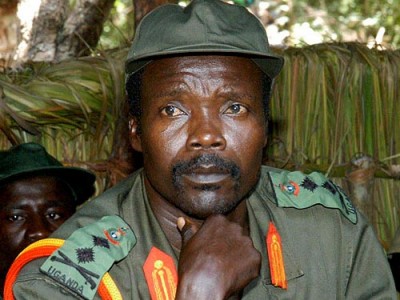
The past month has seen a sudden shake-up in the Northern Uganda peace process: rebel Lord's Resistance Army second-in-command Vincent Otti is widely rumored to be dead after a falling-out with leader Joseph Kony, even as a team of LRA peace negotiators travels north in an unprecedented visit to ask forgiveness.
“We have been having an absurdly stupid peace process going on,” declares Gay Uganda:
Sometimes it bothers me how cheap life, our lives seem. Relative to the whole large world out there.
Uganda's Scarlett Lion is uncharacteristically mute on the recent developments, instead posting a series of pictures:
Big Brother Blogger
Ugandan Big Brother Africa 2 contestant Maureen Namatovu, the ninth Housemate to be voted off the show, is chronicling her post-show experiences at her new blog, Maureen Blah Blah Blah. Already she's invited readers to a Fans Party in Kampala.
African Loft weighs in on Maureen's popularity in her home country:
3 comments · »»Morality aside, Maureen had not been as exciting as Ugandans had wanted. Gaetano Kaggwa [Uganda's Big Brother 1 contestant] was all talkative, nagging, sexy, romantic, full of drama and always kept the Big Brother I at its feet. The Maureen character this time however was the opposite of people’s expectations.
…
Maureen Namatovu being history now, who’s taking the money?
November 7th, 2007
The death of Ugandan radio personality Wilfred Bangirana on Sunday has the blogren fondly remembering his talents as an oldies DJ. Eddyslahh at Mixed Notions posts a sweet tribute:
I remember one time when i went with my uncle to the disco for the oldies night where Bangi played and the guy refused step off the dance floor becouse to him, Bangi had taken him back to them days when they were still young and energetic,where getting off the floor would only be when the bouncers were asking them to get out coz it was time to close….
Bangi is one of those people who made me love old music and for that reason i never missed his wind down zone programme on sanyu fm becouse he always knew what to play, its as if the guy knew exactly what i wanted to listen to.
Reactions to President Yoweri Museveni's declaration that he “do[es] not need money to leave power,” a thinly veiled slight to former Mozambican president Joachim Chissano after his acceptance last month of the $5 million Mo Ibrahim Prize for Achievement in African Leadership, were considerably less tender.
Minty queries:
Why does my computer’s automatic correction give me the words Amusement and Uneven when I try to type the name of our dear visionary president Museveni?
Does it have anything to do with this story?
While The Phantom frets:
I wish this were a lie, a conspiracy orchestrated by the media to discredit the good name of the paterfamilias. There would be heads rolling and people apologising and all that but this is a small price to pay for the alternative. That the president actually thinks the prize is about the money.
And finally, a series of beautiful pictures from Bethany, taken in Kampala's Owino Market on a rainy Saturday afternoon:


October 22nd, 2007
Wednesday's Public Poverty Forum in Kampala had one blogger, Tumwijukue, asking, “Did they (re)define poverty? Did they speak of poverty of the mind? Or did they merely use the event as a networking opportunity and an excuse to miss work for the day, rushing to the organizer's table at the end of the forum for the Ushs. 50,000 delegates' allowance?”
Comments on the post ranged from an emphatic “BURN PARLIAMENT” to “‘…poverty of the mind?' What minds?” Magoola sardonically suggested, “We all need to just sit back, recline and wait for Bono's solution.”
A continent away, Resolve Uganda senior researcher and conflict analyst Peter Quaranto is asking an equally tough question:
For almost three years, I have been part of the growing movement to press Western governments to respond to the crisis in northern Uganda. International neglect, while aid poured into Kampala, has allowed the war to persist for two decades. Today that silence is history; world leaders from Washington to London to Brussels are speaking about the urgency of resolving the conflict.
Yet priority does not guarantee prudence. In fact, many Western officials have begun making reckless military threats that threaten to undermine the ongoing peace process. It leaves activists like myself wondering: have our efforts been counterproductive?
Meanwhile, Daniel Kalinaki censures Ugandan journalist and Africa Almanac founder Timothy Kalyegira for using the nationally published Daily Monitor, rather than a personal site, to publicize views Daniel claims “destruct and distract” Ugandans:
Tim, like many of us, has his moments of madness. The only difference is that while we spew our madness into cyberspace, Tim does so through a national newspaper…. In a nutshell (at least the way I understand it), Tim says Ugandans go abroad for master's degrees as a fad and that they have nothing to show for it in terms of changing the country when they return. This is a dangerous and false generalisation that needs to be exposed for the fallacy it is. Tim seems to have a problem, not only with higher education per se, but with higher education sought abroad, particularly in western universities. Tim has previously thumbed his nose towards Ugandans who go abroad for ‘kyeyo' but these same folks keep people in school and food on tables in Uganda.
Lastly, Rafshizzle is deeply concerned about an issue of another kind: Paris Hilton is coming to Africa:
0 comments · »»She told E Online: “There's so much need in that area, and I feel like if I go, it will bring more attention to what people can do to help.”
Meanwhile, a source said that Hilton would secretly sneak into Uganda before leaving for Kigali.
I'm not quite sure what the Rwandan locals will make of the beauty, better known for sex tapes, partying and one notorious prison stretch.
Perhaps life behind bars really has changed the Hilton, who vowed to do more charity work when she came out of the clink.
“I want to visit more countries where poverty and children's issues are a big concern. I know there's a lot of good I can do just by getting involved and bringing attention to these issues,” she said after her release recently and now us Ugandans and Rwandans should be proud that we are one of the people she has thought about first.
October 9th, 2007
Ugandan blogger and radio personality Dennis Matanda's provocative opinions on African culture, Idi Amin and recolonization have been covered on Global Voices before. Dennis caused another stir last month when he posted on his blog under the title “How to Be Dead.” The post chronicled the radio show, ensuing threats and frightening act of vandalism leading up to his flight from Uganda, a decision met with a mixture of support, bemusement and skepticism by his fellow blogren.
Writing about her latest dating escapades, Tumwujike tells readers, “If you want to read a post about ‘real' drama, Dennis Matanda’s blog is the place to go.” Tandra addresses Dennis in her post about September's Uganda Bloggers Happy Hour, saying, “pity we cldnt hang before some ignorant peeps just run mad and u had to play dead.” But Degstar had the strongest reaction:
We had this discussion eons ago — in your old car, the one that had a toy Beretta in the glove compartment? — where I pointed out that for your being less than reserved about your feelings on things of national import, you could, should, expect to pay a price. And you, in that — some would say arrogant — devil-may-care way of yours said, “f— that. I mean really!!” me, I just said “kale.” Indeed you went on to say exactly what you wanted when and where you wanted. Then as it turns out — if I’m getting this right — your views on other people’s sexual preferences were what finally broke the camel’s back and resulted in the late night visit to your house.
Chief, what did you expect? A formal protest note delivered to your lawyer? A picket of your Nakasero hill office? A boycott of your radio talk show? Public burning of your newspaper articles? Or perhaps an invite to the Media Centre to share your divergent views in a bid to “reach a consensus and chart a common way forward?” dude please, I think not.
Now living in the United States, Dennis is working on his
first fiction piece: a novel titled Master of the Sagging Cheeks, which he hopes will bring a change in the way the world views African leaders. He agreed to share his story with Global Voices:
Q: Can you describe the events leading up to your decision to leave Uganda?
A: There are basically three things that led me to leave Uganda. The first is that I was getting nasty phone calls from unidentified people threatening me about a radio talkshow I did each week. The calls became nastier when we discussed homosexuality on the 24th of August. I basically did not agree with the pastors and colleagues about homosexuality. I said homosexuality was not welcomed with open arms in the West and so we did not have a right to assume that it was imported into Uganda. Because I had just returned to Uganda from a holiday in the UK and the US, I got a phone call that night telling me to go back where I came from if I wanted to see the light of day.
The second is that I was not too sure who these people were and could not pinpoint if they were government agents or not. I brought up the topic of harassment with my colleagues — not necessarily divulging the fact that these calls were coming in — but seeking information on who would be behind these things. The basic information I got was that because there are so many security operatives and many arms competing for the President's ear and so many power centers, it was almost impossible to know who was behind the calls.
And lastly, I did not know if I could trust the police with my life considering that they are obviously against anyone who says anything against the government — which I did all the time.
Q: You have a reputation as provocateur — your articles on African leaders and colonialism in particular have garnered much heated discussion. What would you cite as the single most controversial point of view you've publicly taken?
A: I think that the Call for Recolonization has been the most unpopular. I remember getting a call from an influential person in the government asking me to put them down considering that they touched on some really sensitive issues on leadership and President Museveni. He said that although I was right and making a lot of sense, in his opinion, “the people who run the country were past sense and were now into destruction of anything that stood in their way.” Interestingly, after I run away from town, I called him and in our discussion, he said something to the extent that those articles could have been the main reason I was targeted, as they were discussed across the African continent and beyond.
Q: Do you believe the attack on your compound is related more to your blog or to views expressed on your radio show?
A: To be honest, I cannot put a finger to it. I still do not know who was after me — and this was the scariest part.
Q: How would you respond to the accusations Degstar made claiming that you “ran”?
A: Degstar’s accusations are spot on. I ran away from things I should have “stood like a man” and fought against. I guess he is personally disappointed that I ran away yet he watched me do battle with some important people while I was managing the [Ugandan public relations firm] TERP Group, which is owned by the President's son in law. The thing he forgets is that I would rather do battle with an enemy I can see — and at least know. I ran because I did not know who was after me. Maybe I ran away too fast, but it's better to be safe than sorry.
Q: What's your opinion of the current state of the Ugandan traditional media? Do you believe Uganda has a free press?
A: For the moment, the traditional media are basically safe… at least until the end of the Commonwealth Heads of Government Meeting in November. But the cracks have already started to appear with upcountry radio stations in places like the Toro region in Western Uganda being harassed for all kinds of things.
The other element in the temporary safety of the traditional media is in the fact that there is not a single institution capable of managing the rapidly expanding and basically free media. The Media Center which was supposed to do this does not have the credibility and the Uganda Broadcasting Council has been known to take lackadaisical decisions (including taking Gaetano off the Capital Radio over homosexuality comments he did not make; and of course, working with the Media Center to get Blake Lambert deported).
And the biggest safety is in the fact that if the President himself has not seen the news item, there is a chance that there will be no direct reprisal on the media outlet. Besides, most of the media house do not really appreciate some of the President’s actions. About five months ago, he summoned owners and managers of the big media houses and, after making them wait at his office for over 7 hours, came in to lecture them on how to do their jobs. They did not take it well — and he seems to have created rebels in his midst — instead of making them his allies.
The Government itself, like its leaderm has also so alienated itself from the mainstream media houses that they would not necessarily toe the government line out of choice. That is where I think Uganda has a free press. They are currently getting away with things many countries would not dream of. This, and this is something to worry about, is bound to change with very big, bad consequences.
Q: What role do you think blogging plays in this situation?
A: In the middle of the 2006 presidential elections, the 27th Comrade and Ernest Bazanye are going to become points of reference. They will step into their new roles and will become news leaders. Through satire, jokes and barbed comments — like the ones Ivan makes — the bloggers will reach the bone of many a great audience. Blogs will become like valuable missives or illegal drugs which people will go out to look for and get.
Q: Do you have plans to return to Uganda?
A: Yes. Definitely. I still have plans of becoming Uganda’s President! But between now and then, I have a couple of novels to work on, a PhD to pursue, a Health and Education foundation to introduce to Ugandan villages — and especially, a Washington Lobby to garner. So — now that I'm here, I might as well finish Master of the Sagging Cheeks. I have another 15 chapters to go, so I'm going to spend the next six months writing.
Dennis, thank you for your time.
1 comment · »»
| Korea content supported by |
![]() |
Japan content supported by |
![]() |