feed

Rebecca MacKinnon

Stories

July 16th, 2007

Hong Kong: GV Editor Oiwan Lam faces court battle over Flickr photo 

Rebecca MacKinnon · 22:35 ·
lingua → pt · zht · zhs

OiwanOn May 11th, Oiwan Lam, Global Voices Northeast Asia Editor, committed what she says was a deliberate act of civil disobedience. (She is pictured at left protesting media content controls.)

Writing on the citizen media website InMedia Hong Kong, Oiwan called on her readers to post links to erotic websites and also included an artsy photo of a topless woman that she found on Flickr, the photo sharing site owned by Yahoo!. The post was originally published here, but has now been removed from the InMedia site and posted on a Wordpress.com blog here. (WARNING: that last link is for people over 18 only and is not work-safe.)

As Boingboing and others reported earlier this week, Oiwan's post has been classified as "Class II indecent" by Hong Kong's Obscene Articles Tribunal. The maximum penalty for this is HK$400,000 (US$ 51,162) and one year in jail. Whether or not she ends up doing jail time, she certainly faces a long drawn out court battle and series of appeals, and if she loses will end paying a hefty fine. People in the media business with experience fighting such cases also point out that the implications of a conviction are quite serious because the conviction is passed to all governments and would affect her ability to get visas.

jakephotocroppedAt right is a cropped version of the image, minus the woman's breasts which were visible in the original. Click on the photo to see the original image. (WARNING: not safe for workplaces or children.)

Oiwan displayed and linked to this photo as part of a protest against the fining of a man who posted links to porn sites in an adult online discussion group. She was also protesting the fact that a local student publication was recently classified as indecent after publishing a questionnaire about sexual behavior. She discusses her reasons in English here, here (WARNING: same warning as above applies to these two links), and here. Also see two posts about the earlier cases on Global Voices here and here.

Oiwan feels strongly that censorship of adult material is the thin end of the wedge for creeping political censorship - and the silencing of minority voices. In the opening of her "war declaration" post, as translated by Roland Soong, she writes:


The recent storm aroused by the Chinese University of Hong Kong student newspaper's erotic section is just the tip of the iceberg. Political censorsihp has been manipulating public opinion in seemingly apolitical sectors. Previously, we saw during the consultation over digital media copyrights how the state machinery used "protection of copyrights" to attempt to introduce a system to filter and delete contents, or else intimidate personal or small websites through fines.

Another gap through which political censorship can be introduced is pornography. This gap gathers the power of the state as well as the forces of religious people and fake moral politicians. So far, they have focused on gender and gay rights groups, but we must extend our battlelines in light of the court decision two days ago: the police filed charges against a netizen for posting hyperlinks to pornographic websites at a certain forum and the court arrived at a guilty verdict with a fine of HK$5,000. This is a very significant precedent for censorship.

Oiwan's court date is August 15th.  Meanwhile…

Flickr's New Regional Censorship Policies Enter the Mix

When Oiwan was asked by the Television and Entertainment Licensing Authority (TELA) on May 28th to remove the offending photo and blog post, Oiwan refused. One reason she gave was that Flickr, which has guidelines about adult material, had not flagged the photo as unacceptable and thus she had no reason to believe it was indecent by any reasonable standard. Click here to read in English about her conversation with the TELA official.

After the conversation Oiwan wrote: "In the guidelines of the largest photograph storage/sharing company
flickr in the world, this photograph is regarded as acceptable and it
is quite prominent in terms of search results. But the Hong Kong
authorities have defined it as indecent. Where should we define the
boundary for netizen and public acceptance?"

Then in mid-June, Flickr launched a new Chinese language service. After which  all Flickr users in Hong Kong whose Flickr accounts were set up through yahoo.com.hk (Yahoo! Hong Kong) could no longer access the photo that Oiwan had linked to on Flickr. Instead, they got a block page like this one:

flickrblocked2.jpg

The page says "This photo is unavailable to you" but gives the user no further explanation as to why.  This now happens any time a Hong Kong user tries to access a photo or account that has been rated "moderate" or "unsafe." They can only access areas rated as "safe." This is part of Flickr's new targeted censorship policy, as outlined in its FAQ item about filters:

If your Yahoo! ID is based in Singapore, Hong Kong or Korea you will only be able to view safe content based on your local Terms of Service so won’t be able to turn SafeSearch off. If your Yahoo! ID is based in Germany you are not able to view restricted content due to your local Terms of Service.

Exactly who determines what gets rated "safe," "moderate," and "unsafe" is not explained to users at all. Exactly what criteria are being used is also not made clear, and while community guidelines are referred to, it's not clear what these guidelines have to do with actual laws in the jurisdictions concerned. In fact, the entire user account of Jake Applebaum, the photographer who took that photo, is blocked to Hong Kong users, despite the fact that it is very unlikely that all his photos violate Hong Kong's obscenity laws.  (His account includes many pictures that don't involve nude people, including - I noticed while trolling his account - fully clothed staff photos for the Electronic Frontier Foundation…)

On June 22nd, TELA handed Oiwan's case over to Hong Kong's Obscene Articles Tribunal (OAT) without notifying Oiwan and InMedia. Then on June 26th, OAT classified Oiwan's article as indecent. In a recent interview Oiwan indicated that she believes there is a relationship between Flickr's censoring of the photograph and the OAT's indecent ruling. "This was some kind of concidence," she said. "Flickr changed its policy and then the Obscene Articles Tribune received my photograph for classification purposes."

Now let's be clear: Oiwan says she has no factual information linking these two events. Somebody from Flickr needs to address this on the record and clear things up. Oiwan's queries yielded only this e-mail from customer service [Flickr Case 283506]:

Hello,
Your picture has been marked "restricted" due to the adult
& sexual nature of the content. Regards,
Michelle

Oiwan believes that two key unanswered questions are:

  1. Did somebody from the Hong Kong government contact Flickr or Yahoo! Hong Kong and ask them to restrict access to Applebaum's photo and/or account?
  2. Were the actions of TELA and OAT influenced by the fact that Flickr had decided to restrict the photo in question?

We do not know.

On Wednesday Boingboing published an e-mail by Applebaum in which he made clear he is very upset about the way he has been treated by Flickr as a longtime user, with his entire account and all of its contents now inaccessible to his friends and potential clients in several countries. He also writes "They're about to be complicit in putting another (Thanks Yahoo!) Chinese citizen behind bars as an unintended consequence of their attempts to grab foreign markets."

Now, let's be clear that Oiwan is not packing her toothbrush, and Hong Kong's legal system is completely separate from mainland China's.  If Oiwan is eventually found guilty after a long expensive journey through the courts, and then fined, the extent to which her plight can be blamed on Flickr depends on the answer to question 1 above. If it's "yes," then one might argue that Flickr assisted the OAT's case, though the Flickr/Yahoo employees may or may not have understood what they were doing or been aware of what was going on with Oiwan.

According to somebody in a position to know, who won't talk on the record, Flickr can only provide local-language services if it complies with local laws. This person says that the decisions about what gets blocked to users in different jurisdictions are made by staffers in these countries - not by staff in the U.S. People in the company also argue they are trying very hard to do the right thing by their users while finding a way to provide localized services in a wide range of jurisdictions.  The extent to which they claim in private to care about their users is, unfortunately, not being conveyed very well in public - or to Flickr users.

Legally, Flickr is off the hook because in the Terms of Service users agree to allow Flickr staff to remove or block their content in accordance with the law as well as community guidelines, etc etc etc all  contingencies covered. It is also unlikely, when more facts become clear, that it will be possible to blame Flickr for having directly caused whatever happens to Oiwan.

However, this whole mess makes one wonder. Even if we assume political content is not being censored (Can we if certain political speech is illegal in some places?) and assuming that we are only talking about censorship of erotic/"adult" content, is it possible for a global internet company like Flickr (or Google) to censor different content for different national jurisdictions without creating major blowback?

The first kind of blowback is a significant decrease in trust by at least a segment of Flickr users - how big a segment depends on how well Flickr communicates with their user community. So far they don't seem to be doing that so well.

The second kind of blowback is more serious:  Are censorship decisions about made by Flickr staff (or staff of any other global user content hosting company) going to be used by governments as an excuse to prosecute certain cases? Without meaning to, will the company's internal content filtering decisions - which appear in this particular case to err on the side of caution in an attempt to comply with local law - inadvertently also help to shape the interpretation of local laws by local authorities in a more restrictive and conservative direction?

Is there any way to avoid this kind of blowback once you get into the game of local censoring? Or it just inevitable?

8 comments · »»

December 19th, 2006

Delhi Summit Reflections: We ARE the People of the Year. 

Rebecca MacKinnon · 08:59 ·

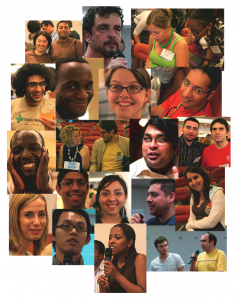
As global voices editors, authors, community members, and allies convened our second annual summit in Delhi this weekend, TIME magazine dedicated its “person of the year” to YOU: people around the world who are taking media creation into their own hands.

Gvgroupshot-1(Photo by Jace. Click to enlarge.)

The TIME article praises the individual “for seizing the reins of the global media, for founding and framing the new digital democracy, for working for nothing and beating the pros at their own game,” etc. The article concludes: “This is an opportunity to build a new kind of international understanding, not politician to politician, great man to great man, but citizen to citizen, person to person.”

That, in a nutshell, is exactly what Global Voices is all about.

The problem is that the “new kind of international understanding” that TIME describes, a world of true “citizen to citizen” communication, remains a still-distant dream. The reality is that Web2.0 - and the potential for empowerment that it represents - remains largely inaccessible to large numbers of people on the planet, and is not being accessed by many more, for many reasons.

Gvjackyspeaks-1(Photo by Georgia. Click to enlarge.)

How do we help more people become creators of their own media? What kind of outreach can Web 2.0-savvy citizens provide to the still-uninitiated? How do we bridge massive and endless barriers of language and culture? Are the technical tools accessible enough to the next billion Internet users, or are we in need of new solutions better suited to the developing world? And how about people who are being prevented from speaking - or being heard - by governments, corporations, and other powerful entities? These were exactly the questions we tackled during our public meeting on Saturday.

(more…)

3 comments · »»

December 16th, 2006

Global Voices Delhi Summit Slideshow This is a Photos post

Rebecca MacKinnon · 01:30 ·

Day 1 of the Global Voices Delhi Summit is well underway and the photos are starting to emerge on Flickr. Here is a slideshow. People are contributing their photos of the meeting (and a few from their travels before the meeting) by uploading their pictures to Flickr and tagging them with gvdelhi2006:

There is a webcast and online chat. You can find out all the details of how to connect on this page.

0 comments · »»

December 15th, 2006

Global Voices Summit begins Saturday!! 

Rebecca MacKinnon · 11:33 ·

If you aren't able to join us in Delhi for Saturday's Global Voices 2006 Summit, please join us online!

Information about the schedule, webcast, live online chat, and other information can all be found on this web page. Or you can click here to go directly to the streaming audio webcast - which is scheduled to start at 9:00am Delhi time. (03:30 GMT, 10:30PM EST, 11:30AM Beijing)

We are building up a number of linked resource pages about the summit on the Global Voices wiki which will be available from this central page. It will include feeds of material written about the summit as long as it has been tagged with the summit tag: gvdelhi2006. If you blog / write / take pictures / record audio or video or otherwise generate content about the summit don’t forget to tag it so your views will be more easily found and more widely distributed.

How did we get to this moment? A bit of history: Two years ago this week, a few of us convened a small gathering of bloggers from around the world in a Harvard Law School classroom. From it emerged the Global Voices Manifesto. Here it is in full:

We believe in free speech: in protecting the right to speak — and the right to listen. We believe in universal access to the tools of speech.

To that end, we want to enable everyone who wants to speak to have the means to speak — and everyone who wants to hear that speech, the means to listen to it.

Thanks to new tools, speech need no longer be controlled by those who own the means of publishing and distribution, or by governments that would restrict thought and communication. Now, anyone can wield the power of the press. Everyone can tell their stories to the world.

We want to build bridges across the gulfs of culture and language that divide people, so as to understand each other more fully. We want to work together more effectively, and act more powerfully.

We believe in the power of direct connection. The bond between individuals from different worlds is personal, political and powerful. We believe conversation across boundaries is essential to a future that is free, fair, prosperous and sustainable - for all citizens of this planet.

While we continue to work and speak as individuals, we also want to identify and promote our shared interests and goals. We pledge to respect, assist, teach, learn from, and listen to one other.

We are Global Voices.

By the following summer, the blog that we had originally created as a conversation space for conference attendees had morphed into the website as you see it today: an edited aggregator of weblogs from all over the world except North America and Western Europe (the idea being that voices and views from N.America and W.Europe get disproportionate attention not only in the International media but on the global web). The blogs we link to on the site are curated, contextualized and in some cases translated by our amazing group of regional editors and translators. Roughly one hundred volunteers from all over the world provide in-depth coverage of the discussions taking place in their own countries' blogospheres. Enough people seem to find it useful that we now have over one million visitors per month, and we recently won the Knight-Batten Award for Innovations in Journalism.

At last year's summit in London, it was clear that Global Voices is much more than a citizens' media website or international bloggers' network. It is a community. And it is a movement of people who are united by the values of free speech, tolerance, dialogue, and inclusiveness articulated in the manifesto.

At this year's Delhi summit, much of our public meeting on Saturday will be devoted to the challenges our community hopes to tackle in the coming years: How do we bring more people, not just wired elites, into the global discourse that is facilitated by the Internet? What kinds of technical tools need to be used, adapted or developed in order to bring the less-wealthy into the global conversation? How do we help people speak when their governments or other powerful groups don't want them to? How do we overcome language barriers?

Please help us figure some of these things out by joining the conversation.

2 comments · »»

December 9th, 2006

Global Voices launches new search function! 

Rebecca MacKinnon · 17:04 ·

Global Voices co-founder Ethan Zuckerman and tech guru Boris Anthony have put together a new “Global Voices Web” search using the new Google Co-op platform which enables you to create your own search engine. Check it out - it's in the yellow search bar near the top of the page right under the “tag cloud.”

In addition to being able to search all of Global Voices or all of Google, now you can also search “the Global Voices Web.” Right now, that includes about 4,800 blogs that our Regional Editors follow each day, and from which they select their “Daily Links”. In other words, when you use this search function, you are searching all the blogs that we regularly link to or which our editors have found worth following.

GV doesn't cover North America and Western Europe because we believe the views of people from those parts of the world get disproportionately more attention on the world wide web and in the global media than people from all other regions. GV is meant to be a small effort towards counter-balancing that imbalance. Thus the search includes few blogs from N.America or W.Europe except for blogs by members of various diasporas currently living in the West. The point is to have a search that covers the same footprint of citizen media that GV covers.

This new “Global Voices Web” search was constructed by Ethan and Boris using Google's Co-op search, with a bit of help from some people at Google who responded to their requests for changes. When Ethan and Boris started putting it together, Ethan blogged about the lack of results on some terms in a post titled “What Google Coop Search Doesn't Do Well.” The folks at Google eventually read his post and fixed the problem. Google engineer Vrishali Wagle wrote about the fix on the Google Custom Search blog and says he encourages people to give more feedback. Ethan is now much happier.

Note that our search is still very very “beta.” Because it was constructed by importing the feeds from editors' aggregators, we had to weed out a bunch of non-blog and off-topic feeds (news sites, U.S. tech blogs, and things like that). If you try it out please let us know if there are any non-blog or off-topic sites we've failed to weed out or if there appear to be glaring omissions. We're sure it is far from perfect at this stage which is why we need as many people as possible to test it out and let us know what's wrong.

As Ethan explains in his blog post about this new search function: “a future version will include all the sites we link to on GV, which should expand the collection quite a bit. And an even further off version will integrate with the giant aggregator we’ll be offering on the site next year, which will let you look at new posts from all the countries we cover, as well as offering suggestions for feeds we should be watching - the blogs covered by that aggregator will be the same blogs tracked by the search engine.”

Please help us make it better. We are already discovering things we want to improve and would like to know your requests and concerns.

3 comments · »»

November 10th, 2006

Corporate Social Responsibility: The blogosphere reacts 

Rebecca MacKinnon · 16:57 ·

Screenshot 3-2If you missed the live webcast of Reuters' Corporate Social Responsible panel yesterday, you can click here to view the full-length archived video. Stephen Frost live-blogged it on the CSR Asia blog. We had a sizeable group of bloggers from a range of countries on the live IRC chat - you can click here for the full chat transcript.

The panel at Reuters' New York facility was distinguished but not exactly diverse: Doug Bauer from Rockefeller Philanthrophy Advisers, Clive Cook from the Atlantic Media Co., John Demsey, group president of Estee Lauder, Samuel DiPiazza, CEO of PriceWaterhouseCoopers and Reuters Chairman Niall FitzGerald. (click here for the full list of names and bios). All men, all North American or Western European, all white, all executives. Writing from Trinidad & Tobago, Atillah Springer commented in the live chat: “the more I think about it, the more insane it seems that they can be having a conversation about whose business CSR is and not have any stakeholders, not to mention women on the panel.”

A lot of laudable statements were made. Mr. FitzGerald made the impassioned point that corporations must be good citizens or large numbers of people on this planet will lose faith in the value of free markets. Business must find a strategic advantage to being responsible, DiPiazza believes. Knight predicted that sustainability - environmental and social - will be the key business innovation of the future. Panelists agreed that quarterly earnings pressures make it difficult for companies to act in a manner that is most socially responsible because social responsibility pays off more over the long term than the short term. Bloggers on the live chat found all these things encouraging. However many found the discussion to be divorced from the realities on the ground in their countries. There was also considerable cynicism about the ultimate motives of CSR, despite the lofty rhetoric. Atillah concluded from Trinidad & Tobago:

(more…)

1 comment · »»

November 7th, 2006

Are companies being socially responsible in your country? Let us know!! 

Rebecca MacKinnon · 15:11 ·


Reuters Newsmaker Event: CSR

On Thursday November 9th, at 6:30pm EST (23:30 GMT / 07:30am Friday Beijing time), Reuters will be hosting a live conversation about corporate social responsibility at its New York headquarters.

According to the special web page built for the event: “Corporate responsibility is increasingly important in today’s global landscape, with companies taking a greater role in developing communities, working to reduce poverty and addressing the health of our planet.”

But are companies - multinational as well as local - making nearly enough effort to be socially responsible? You, our dear readers and community members, likely have a few opinions on this subject.

We hope you will express your views on your own blog (please tag your posts with CSR for “corporate social responsibility” in Technorati) or let us know what you think in the comments section of this post. We will be feeding relevant blog posts into a special section of the event page. Also, I will be in the room on Thursday and will relay your views to the panelists.

We also hope that the Global Voices community will join us live on the day by listening to the webcast (link tba on the event web page) and participating on the live chat. Your participation will bring some badly-needed perspectives from developing countries and non-Western nations.

Your participation is especially important because if you click on the event web page, you will see that the panel of speakers is, well, not exactly the most geographically, economically, or ethnically diverse panel we've ever seen - to put it mildly.

If you'd like, please help us spread the word and get more friends to participate by putting a badge for the event on your blog:

LINK TO THIS DEBATE

Bloggers around the world, feel free to use the graphic and code below to link to this debate.

Reuters Debate

See you on Thursday!!

10 comments · »»

October 25th, 2006

Global Voices Delhi Summit: Join us in December! 

Rebecca MacKinnon · 15:18 ·

Please join us for the Global Voices 2006 Summit, December 16th in New Delhi, India!

India Gate, by ramkrsna

The Global Voices Summit, on December 16th, will be our annual opportunity to take stock, come together and explore our central question: How can we use the Internet to build a more democratic, participatory global discourse? How can we create a more inclusive conversation about what is happening on our planet, and how human beings in different parts of the world are impacting each other in countless ways we don't realize every day?

This year we also hope to address two further questions:

  • - How do we bring more unheard, ignored, or disadvantaged voices into the global online conversation?
  • - How do we help people speak and be heard — even when powerful people try to stop them from doing so?
  • WHO WILL BE ATTENDING?
    Global Voices editors, contributors, community members, interested bloggers and journalists. Basically, anybody who is interested in what it means for media, geopolitics, and global society when the whole world starts talking online.

    (more…)

    0 comments · »»

    September 28th, 2006

    Video: Vietnamese bloggers get “kinky” for charity 

    Rebecca MacKinnon · 08:05 · East Asia

    Vietnamese blogger Elmooh has uploaded a series of four videos shot at an “Offline Party” - a blogger-organized charity fundraiser in Hanoi. The party included a game involving young men, young women, bananas and candles. (Don't worry, it's all g-rated and everybody keeps their clothes on!) I e-mailed Elmooh asking him about this game. He replied:

    Abt the game: Chuối chín rồi. Banana gettin ripe.

    3 pairs, 1 girl and 1 boy each.

    The girl blinds the boy eyes with stickers, making sure no glimpse he can peek, then ties a rope with a banana at the other end around his waist, he must not know how long/far the banana hangs.

    With verbal directing instructions from the girl, the boy have to stamp out the candle light with the banana…

    So there you have it. As Elmooh reports on his blog, there was a serious point to the “kinky” game, the conga lines, and the hip-grinding dancing:

    We, then, had a fab time with some friends from a vocational center for underprivileged children. Some of them are limped, some of them bear body deformation since birth but all of them have great skillful hands and creativity to make fantastic handicraft works.

    We were sitting there for hours listening to their stories, to their singing and to make necklaces, bracelets, earrings, belts out of colorful painted pottery pieces.

    The offline party and the previous raised enough money by entry tickets to buy them a fridge. Vietnamese youngsters, not only go for fancy vehicles, endless parties but do have hearts. The little we could do, but there will be more to come.

    Blogger-driven charity is a growing, global phenomenon.

    (Thanks to Noodlepie for the link.)

    0 comments · »»

    September 20th, 2006

    Ted Turner on the U.N.: Spoke but didn't listen 

    Rebecca MacKinnon · 11:24 ·

    Turner

    On Tuesday afternoon in New York, Georgia Popplewell, Alice Backer, Kamla Bhatt and I did our best to ask questions on behalf of the world's blogosphere at the Reuters “Newsmaker” conversation with Ted Turner, who gave $1 billion to set up the U.N. Foundation ten years ago.

    The bloggers participating in the conversation - on their own blogs as well as live in the IRC chat - were generally disillusioned and skeptical about the U.N.'s ability to solve the world's problems. Many were concerned that Turner is wasting his money on needless bureaucracy and a dysfunctional organization whose governance structure is an increasingly illegitimate Cold-War era holdover. But Turner was adamant that his money is well spent.

    It's worth noting that when Reuters host Paul Holmes said we would take questions from bloggers, Turner rolled his eyes.

    Is the Mouth of the South more interested in talking than listening?

    How interested is he, really, in listening to the voices of people who are on the receiving end of the U.N. projects and missions he helps to fund - and in taking their criticisms seriously?

    In the IRC chat, Neha Viswanathan asked Turner who he represents: “Where does he gather his agenda from? Who does he identify with - America or the third world?” Turner responded that he represents “humanity.” There was much applause. But does he really listen when many members of that “humanity” want to tell him what they think of his efforts?

    Our impression from this one encounter was that that Turner isn't really a listener. He wants CNN to report more international news, but if the voices of the people he aims to help are not sufficiently grateful, he did not seem inclined to adjust his views or plans.

    Before the event began, Global Voices' new Sub-Saharan Africa editor Ndesanjo Macha set the tone with lyrics from the Fela Kuti song, “Beasts of No Nation,” in a post titled Dis-United United Nations. Ndesanjo writes: “Will they listen? Perhaps as they did in Rwanda! And now in Darfur. And many more other places. You know what I mean.”

    Iraqi blogger Salam Adil wrote a post titled: “UN - What's the point? A message to Ted.”

    (more…)

    4 comments · »»

    Funders
    Sponsors
    Korea content
    supported by
    OutBlaze Japan content
    supported by
    SanrioTown