May 27th, 2008
Following recent reports of alleged coup plotters, police yesterday picked up and put Malawi's former president Bakili Muluzi under house arrest. Lilongwe-based Journalist Bright Sonani gives eyewitness accounts as events unfolded at Kamuzu International Aiport in Lilongwe where Muluzi was picked as he arrived from a trip from the UK:
After the dramatic arrest right inside the Kamuzu International Aiport grounds at around 2.45 pm, the UDF Chairman was 30 minutes later whisked into a waiting Malawi Armed Forces Military Plane the 16 Seater Dornier which flew him straight to Blantyre.
Muluzi’s son Atupele confirmed that his father has been charged with treason.
However, government yesterday declined to immediately comment on the arrest which drew tension inside the city of Lilongwe with running battles between the police and UDF supporters who, angered, with the development closed roads especially those leading to KIA…..
“They have arrested the former President apparently on treason charges. They don’t have a warrant, they refused him to leave the airport, they want to take him in a military aircraft to an undisclosed location,” said Atupele, who was the only top UDF politician and Muluzi’s closest ally allowed into the airport grounds, soon after the arrest.
Soon after the arrest Police also instantly moved in to disarm the former head of state’s government security personnel.
The arrest of Muluzi has followed eight senior security and opposition political figures who have since been granted bail.
Meanwhile Malawi's president Bingu wa Mutharika is in Japan for a meeting of African leaders.
There are mixed reactions to the recent arrests. While all this is happening, one Malawian blogger is running a poll on how Malawians look at the recent arrests.
0 comments · »»May 13th, 2008
It has been reported that several senior security and opposition political officials have been arrested in Malawi on allegations of coup plot. Malawian journalist and blogger Kondwani Munthali says that the politics in Malawi is undergoing interesting developments and political temperatures have reached a boiling point. Writing from Lilongwe where he is based, he says:
Finally arresting people like Retired General Joseph Chimbayo, Joseph Aironi, John Chikakwiya, Humphrey's Mvula and Kennedy Makwangwala will not solve the current political impasse. I am hesistant to add the military officials also in the cooler for Treason. Some of us saw the signs of times, long time ago, but we chose to ignore it.
Political temperatures have reached boiling point, but it is the man in Karonga who has no food. I was in Lilongwe Kumachenga, when the MCP legislator was screaming that he cannot go to Parliament. I was happy when Bingu called for the talks only to be dejected later when he went on a political rally to reveal what was going on secretly.
I don't know where Malawi is going to as of today, arrests and intimidation seem to be much more like Kamuzu era not a democratic regime people opted for 15 years ago. I hope my country will wake up to realisation that leadership is more
of a gift from God. Restraint and patience develop good leaders and not tempers. I hope in the next few years, posterity will prove many of us right in our decisions and be remembered as “great leaders” who brought impact
on our people than sheer politicking.
In his long post “Cry the Beloved Country,” he bemoans the political developments which he says do not help the rural poor in
Malawi. A week ago Munthali was arrested by the police on allegations that he was behind stories that speak ill of the president in online publications.
May 4th, 2008
Recently, the United Democratic Front (UDF) of Malawi's former president Bakili Muluzi had a convention and elected him as their presidential candidate in next year's election. His only challenger was Malawi's vice president Dr Cassim Chilumpha who is answering treason charges. Lilongwe-based blogger Austin Madinga says he Muluzi's comeback is for wrong reasons. Madinga introduces his post by saying that he heard Muluzi in a BBC in an interview:
When asked why he would like to return as Malawi's president he said because Bingu wa Mutharika (Muluzi's successor) had dumped the party after he was elected president and as such he needed to return the UDF to power! This type of reasoning to me is not only gravely flawed but also defied all logic. Mr Muluzi needs to be reminded that people do not ascend to power to simply punish others or for the sake of being a ruling party. They are placed in positions of authority to serve the people and going by Muluzi's past record, that is not likely to feature high on his agenda.
A prominent Malawian political science commentator and University of Malawi lecturer Boniface Dulani started blogging a few weeks with the sole purpose of sharing his views on politics in Malawi. His recent post is titled On the UDF Convention and Why Muluzi will not get my vote. He critically looks at Muluzi's candidature and the UDF convention which he describes as a joke since its delegates were themselves not democratically chosen:
Even if I was to be persuaded to believe that Muluzi did a wonderful job in his first ten years in office (and it would not be a mean achievement to convince me), I just cannot accept that the UDF does not have any other individuals from within their ranks that are capable of leading the party into the next elections. The only way we know Muluzi has the potential to be President is because he was given the chance to serve in the first place. This only goes to show that what the country, and the UDF, lack is not people with leadership potential, but opportunities to serve. If Muluzi is so important to the UDF, he can serve an important advisory role to a different UDF nominee instead of clinging on to the candidacy himself.
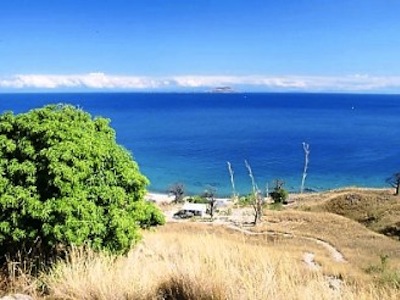
Now to something different about Malawi. The Botswana-based blogger Bennet Kankuzi launched a bog titled I Love Malawi with the primary purpose of sharing photos about Malawi fondly called the Warm Heart of Africa. So if one someone wants to follow the beauty of Malawi, here is the blog to give you some relief from the politics and economy. Below is one of the pictures showing the tea plantations of Southern Malawi:

March 28th, 2008
A recent post on Malawi's staple food nsima has raised debate on how much freedom one can have in expressing themselves in blogs. The reactions by mostly Malawian readers have demonstrated that some restraint, responsibility and sensitivity is needed especially if one is writing about something that others may consider very dear to them.
The heated debate that has ensued in some Malawi's blogs and discussion forums followa female European blog post where she described Malawi's main staple food nsima as “the most disgusting and pointless food in the history of the world.”
Only identified as MissJenn-Malawi and working in Mulanje, Malawi, she had dozens of reactions when her story was spotted by two Malawian bloggers and then published on Nyasa Times.
She has since deleted the blog whose original post was copied by Cryton Chikoko. Meanwhile over 70 comments have been registered some calling for her immediate deportation.
Several bloggers made comments on this story while not writing about it on their blogs themselves. Joe Mlenga who blogs on said
The content I must say is distasteful…but I commend the posting of this write-up.
A female blogger Leah Gondwe said
I wonder if this woman is ok up there…was she thinking that we malawians wont see the article? To hell with being entitled to her own opinion… hope the police get hold of her ASAP before we angry Malawians break her bones, as her address and mobile number are posted on her blog.
While Sunga said
I think we should not bash the posting of the article. What is clear is the fact that she did not handle the shock of eating nsima with goat well. I have been around a few countries on the continent and got a few culcural shocks but did not express myself the way she did. There are better ways doing it and getting the message across. She scores pretty low on my diplomacy scale.
The reactions by Malawians to this post on nsima has also shown some Malawians also need to excercise restraint as some comments seem to go beyond mere expressing their feelings about their lovely food. This is the caution by this author on his blog ndagha where he wrote in reflection over the saga:
Some comments made by Malawians can also be said to have been and are equally offensive to the author. If indeed Malawians have been offended, it would have been fair to express that in a mature manner as doing as some of the comments only makes one fail to differentiate between the blogger and the one commenting.
In fact some of the comments were really showing that some people just found an opportunity to vent their anger on the azungu instead of simply registering your disgust at her way of writing. I am sure it is fair to say “I have been offended by what you have written” other than insulting the author. It is one thing to say how you feel about something and it is another to attack someone.
Nsima known by many different names in most Sub-Saharan countries is made from maize, cassava, etc, and eaten along with relish.
This is not the first time that visitors to Malawi especially from Europe and US tend to blog on some lifestyle or cultural things that offend some Malawians. The reactions to the nsima post has not only shown that gradually Malawians are reading blogs by others but also that some have been encouraged to create their won and express themselves.
2 comments · »»March 26th, 2008
The Malawian blogging community is gradually growing in terms of size and topics. In this roundup, I introduce four blogs dedicated to marriage and children issues, Tumbuka language, health and lifestyle issues.
Marriage and Child care
Sunganani Manjolo has a passion for family and children care. His blog is full of ramblings on marriage, family and all the in between. Based in Lilongwe, Malawi, Manjolo blogs from experience as a married man and having been associated with Christian ministries, he shares practical tips for a modern young professional. He started blogging February 2007.
One of his earlier posts was on Praying With Your Spouse raised and listed some benefits to him after he had practised what he blogged about:
I am beginning to be more open to her (I think she likes it)
I am praying and thinking about her more often. (I think she must like it)
There is a sense of growing intimacy about the entire practice.
New Language Blog
The Internet is a place where the dominant language is English and this poses a challenge to seekers of information in other languages or of their own. A blog called Manyani Choyowoyero cha Chitumbuka is dedicated to teaching the Tumbuka language dominantly spoken and used in Northern Malawi. It was introduced March 2007 by Tobias Kumwenda who claims to be a proud Malawian and always striving to beat the odds in ICT sector.
Here is a taste of the lessons from his blog:
(Sghawa = Groundnuts), (Ntchunga = Beans), (Kabichi = Cabbage),
(Chinanazi = Pineapple), (Mphatata = Sweet Potatoes), (Mpunga = Rice)
(Mchele = Salt), (Shuga = Sugar), (Mbambayila = Irish potatoes)
The Eye Specialist blogging
Dr Khumbo Kalua who blogs under his name is currently a Lecturer and Researcher at University of Malawi's College of Medicine and Senior Eye Specialist in Blantyre, Malawi. He prides himself in having studied at several Universities in 3 continents. Being a medical specialist, his blog mostly focusses on health and medical issues affecting Malawi's health system.
His latest post titled “Primary Health Workers: Is Quantity better than Quality in Malawi” takes the reader to the challenges Malawi's primary health system has but also highlights the role of its players:
HSA’s (Health Surveillance Assistants) are the first level of contact with the patients in the community and they are supposed to give health promotion (HSA were first recruited in Malawi for Cholera prevention programmes), but unfortunately currently they do a lot; give immunisations to children, treat fever in children, treat pneumonia, malaria, supervise patients on TB and ARV, give support to home based care, implement NGO’s programmes and many other duties.
Career Woman
Fingani Mphande started blogging late 2007. She has so far written about the International Women's Day and Being a Career African Woman. Her latest post on “Being a Housewife” takes her to her home in Malawi away from Sweden where she is researching on malaria. She reflects on the importance of respecting women who spend most of their days at home:
3 comments · »»There are several men who would prefer a house wife because they will manage the home full time and may also respect their husbands more because that is their only source of income. As for me I would say a house wife is a woman whom we have to respect in society even though she is not a career woman (like lawyer, secretary, doctor, scientist, you name it), being a house wife is a career on its own.
February 26th, 2008
Some artists read the times and strategise accordingly. A popular song titled Mose wa Lero by Joseph Nkasa makes many Malawians sing along even if they did not want to because of the way the artist has related the biblical Moses to Malawi's president Bingu wa Mutharika. In the song which is on Mutharika's blog, the artist Nkasa says Mutharika has led Malawians move out of Egypt where they had hunger and different problems. The artist further says the Malawians just like the Israelites would not want to back to Egypt ironically referring to the former president Bakili Muluzi who announced his intention to contest as president during the 2009 presidential elections in Malawi. The president now bears the name Mose wa Lero (modern Moses) in all campaign works.
While on politics, recently Malawi's president made a cabinet reshuffle which saw health minister Marjorie Ngaunje left out paving way for Khumbo Kachale. As you may discover, because of name similarity, it was easy for the only eye specialist in Malawi Dr Khumbo Kalua to be mistaken that it is him that got the top job at the Health ministry especially that he got an sms about the appointment. He blogs about his missed opportunity to be an honourable cabinet minister:
The reaction to the message was with mixed feeling; firstly why did the big boss not communicate to me /or tip me before electing me; and that if this was true then what would happen to my community job as an eye specialist.
I looked at the reasons why possibly I could have been considered for the post and they looked to be many; I have worked in the ministry of Health and have over 12 years experience as doctor; (I) am a specialist Dr, and possibly I am rightly qualified. Factors against me being elected were that I am non political, non partisan and I stick to my profession ethics and have difficulties in following bureaucratic ministerial procedures. Overall I considered it was going to be a good opportunity for me to be a health minister; (get) the six figure salary, the Mercedes Benz with the personal driver, the games played in parliament….. I thanked the one (whoever it was) who had suggested my name to him who appoints. Yes I was ready to cancel my flight and get back to Blantyre Malawi and this time on a business class ticket. Well after many years of hard work my life seemed to have been transformed overnight.
Challenges of African universities
A Malawian studying in Bostwana, Benett Kankuzi, complains about the challenges that researchers in Africa are facing. In his post titled The challenges of doing academic research in Africa, he laments at the lack of support from governments which provide inadequate funds. He says as a researcher visiting other countries he cannot rely on the hosts to take care of him
because normally host institutions do not have funds for these expenses. This is because most universities in Africa are funded by their governments and definitely the funding is never enough. Of course its understandable since the governments have “priorities within priorities” in their national budgets. The governments have to fight for national food security, clean water, infrastructure development etc for the masses and funding academic research would never make it into the priority list.
However, this situation might lead others to conclude that there is no academic research being done in Africa which is not necessarily true. Unfortunately, world university rankings take research publications into account. So you better not be surprised to see many African universities not faring well in the rankings!
Scanning through the fifty or so blogs by Malawians, it seems many have not been posting in the last few weeks but Malawi's Internet discussions have been awash with the politics at home, in Kenya and US road to White House.
0 comments · »»January 18th, 2008
Malawi Dumps Taiwan for China
A few days ago foreign affairs minister announced that Malawi has switched its diplomatic relations from Taiwan to Mainland China. The news has been received with mixed reactions though a quick overview shows that a significant number of Malawians seem to welcome the new love affair which effectively makes Malawi dump Taiwan after 40 years of marriage. Malawi was one of the few remaining African countries who were yet to fall in love with China.
Lilongwe-based Austin Madinga blogging under the heading Enter The Dragon has questions which he hopes the foreign affairs ministry can clarify the benefits from the new marriage with mainland China:
My most pressing (question) is apart from promising to buy tobacco and uranium from Malawi, what else are they likely to buy? Is Mainland China an open market for Malawian businesses? Will it not be one way traffic for cheap (and sometimes lethally toxic) goods?
Barnett Kamkuzi while asking a question Which Way for Malawi? Taiwan or China, seems to support the shift to Mainland China. He writes:
Malawi needs the money. The President of Malawi, Dr. Bingu wa Mutharika, has an ambitious and well-meaning vision to establish the Shire-Zambezi Waterway which shall lead to the construction of an inland water port that shall unleash Malawi from its disadvantaged position of being a landlocked country. And definitely this shall turn around the economy of Malawi. And just imagine, communist China is offering to finance this much needed project! In addition to this, Malawi will be selling its main forex earner, tobacco and sugar to China. With the anti-smoking lobby in the West, China will definitely be an alternative lucrative market for Malawi's tobacco. And lets not forget that China is emerging as the biggest trading partner with Africa and Malawi would not want to be left out. Of course, others have described China recent relations with Africa as neo-colonialism but after being given several raw-deals from the West, it seems Africa wants to try the East!
Journalism leaving a lot to be desired at the state broadcasters
As 2009 gets closer, Malawi and its people are getting more and charged with various issues affecting their country. How the media performs and especially public media is a hot issue for discussion in Malawi. The country's foreign relations too are getting more and more into focus as whatever happens elsewhere politically offers a lesson or two to Malawians.
As part of his new year resolution, it seems journalist and blogger Kondwani Munthali has quit from the state broadcaster Malawi Broadcasting Corporation (MBC) to save his face from sad events surrounding the profession at the broadcaster. He has gone back to the newspaper he started with a few years ago. He blogs about his personal frustration with MBC:
I want to agree with many Malawians that the Corporation has sunk to its lowest levels professionally that sticking around the place casts doubt on your integrity. This is a place where young professionals fight for presidential trips, this is a place where a health story will not be priortised over a dead mans letter written in 2000. Bootlicking, gossip and the new format of shameful reporting has emerged at MBC that sticking around the place will only kill ones career than improve it.
On a related issue Peter Jere in South Africa backs the Malawi Television programme which some commentators in Malawi is a propaganda tool by government. Blogging under Of Mizawanya and Political education in Malawi, he says that the television programme is used for educating young Malawians of their political heritage:
Therefore, it is vital for the youth to know where the nation is coming from and what it went through socially and politically so that they better understand why they are witnessing what is currently happening in our country politics today and at the same time our young people shall be able to know where we are going as a nation politically. So we think these Mizwanya guys are doing a mighty job and filling in the gap that our education system could have done long time ago to education and inform our youth and others on who did what in our political history. This helps in decision making in case some of those who committed various serious crimes would want to stand as leaders. The electorate needs to be given enough information on all the leaders regarding what they are and what they have done in our history so that the best achiever could be chosen otherwise we will end up choosing someone who is not the right person to rule the country.
Dual Citizenship?
In his erratic ramblings, a UK-Based Malawian blogger Cryton Chikoko debates about dual citizenship which he says is a better evil for many Malawians in the diaspora due to economic challenges in their home country. Though not clear if he is considering to turn British himself, he picks a leaf from other Malawians who have decided to return home:
0 comments · »»Professionals with international exposure are the highly skilled people that Malawi needs. These are people who can significantly help in the social services and development of the country. Goodall Gondwe and Mutharika himself are some of the examples. The Rambler appreciates their contributions to the nation although they came back after they had given their very best in foreign lands. Anyway the nation is still enjoying the residue!
There are many professionals who are stuck as citizens of foreign nations not because they want to but it is all for economical reasons. One Canadian “Malawian” nurse told me that she embraced the Canadian citizenship “for convenience but at heart I am a Malawian and that cannot change.” Dare you browse “Nyirenda” in facebook. There are loads of Nyirendas in the US alone chiwelengelo cha Usisya kulengelatu! (more Malawians known as the Nyirenda in US than one famous place in Malawi).
November 10th, 2007
Malawi's Internet users have this year been experiencing new trends as now they can access and browse from their mobile phones and homes. This is an initiative by the fixed line service provider (Malawi Telecommunications Limited) and two mobile phone service operators, Telekom Networks Malawi (TNM) and Celtel Malawi. The introduction of mobile data services in the form of mobile Internet and multimedia messaging, popularly known as MMS is bringing excitement to Malawians.
Mzuzu-based blogger known as mile has welcomed this initiative with a post titled ICT Development in Malawi.
I wrote once on my first personal website that I wanna be able to browse the internet from my home village in Mzimba. Thanks to Celtel I am able to do that now on my phone though I am still limited to checking a few pages and emails only. Still I wanna browse everything and be able to download software on my laptop when I am there so that my software development isn't limited to location. High Cost of ICT Services. I wonder why something that somewhere else is very cheap could cost so much her.
Compulsory HIV test???
Sub Saharan Africa is home to about 25 million persons living with HIV. While in many countries voluntary counselling was promoted to help check infection, new Malawian blogger Benett Kankuzi feels it is time testing for HIV became compulsory. Based in Botswana which has HIV prevalence rates, he says there are many reasons why compulsory HIV test should be pursued:
- Each citizen will know their status and therefore plan their individual lives properly. This will help individuals not to live in an “ostrich” state by pretending that they do not have the virus yet they don’t exactly know their sero-status.
- Voluntary testing has failed to entice many people to go for the test. Just ask yourself on the number of people who have gone for HIV testing voluntarily. Personally, have you already done so?
At the same time, a health journalist Kondwani Muthali updates his blog with the latest HIV and AIDS acronoyms. You might think I made a mistake above when I wrote persons living with HIV. The word ‘A' is dropped and Kondwani gives more instructions:
UNAIDS has revised the acronyms once again, so now people living with HIV are called PLHIV, and young people living with HIV are implicitly called YPLHIV. Old acronyms were PLWHA, PLWA, PLWH, PWH and YPLWH, YLWH, YLWH….With reference to those living with HIV, it is preferable to avoid certain terms: AIDS patient should only be used in amedical context (most of the time, a person with AIDS is not in the role of patient); the term AIDS victim or AIDS sufferer implies that the individual in question is powerless, with no control over his or her life. It is preferable to use ‘people living with HIV' (PLHIV), since this reflects the fact that an infected person may continue to live well and productively for many years.
Another health-related issue in this round-up has to do with the impact lack of running water has on education for pupils in Malawi. It is reported that many girls drop out as soon they reach adolescence as they cannot bear the inconvenience and embarrassment of having to do without water. Pilirani Semu Banda quotes Government statistics in Malawi that 10.5 percent of girls drop out of school each year as compared to 8.4 percent of boys. In addition to this, around 22 percent of primary school age girls do not attend school at all, while 60 percent of those enrolled do not attend regularly.
Blogging under the title Lack of Running Water Puts Girls' Education at Risk, the lady journalist writes about the challenges that girls especially face when there isn't any running water at school.
2 comments · »»The hard-working, resolute 13-year-old attends a primary school that has no running water. All 350 pupils at Rita’s school have only two pit-latrines to share, and there is no tap where they can wash their hands after using the toilet.
Rita says she and other adolescent girls find these poor sanitation conditions even more awkward when it is time for their monthly periods: “It’s so difficult to concentrate in class when you know there is no water to clean up with at break time. I usually prefer staying home every time my menses come.”
September 21st, 2007
The origin of humankind has been debated heavily over the years. However, there is a new twist to this development following the finding in
While this is news to celebrate, the Malawian blogger on africa-aphukira (African Rebirth) chronicles serious biases by Euro-American media and scholars against Africa in not crediting the recent archeological finding to a Kenyan, Fredrick Manthi, who, in fact, is Senior Research Scientist, Palaeontology Department, National Museums of Kenya, and has a PhD in the field. The author Steven Sharra argues that Africa should be given its due credit just like Dr Manthi whose work has not been duly credited:
When the news broke out in August of this year that new archaeological research in Kenya urged huge reversals in the conventional wisdom about the theory of evolution, the chasm in the reporting between the African media and the Euro-American one was astoundingly wide. Almost all of the media in the United States and in Britain who wrote about the news attributed the finding to Maeve Leakey and other Euro-American scientists. The African newspapers, on the other hand, attributed the discovery to Kenyan palaeontologist Dr Fredrick Kyalo Manthi. One writer, writing in the Daily Nation of Kenya, pointed out the discrepancy, while everyone else just reported on the finding and its hard facts.
He continues:
The question for us now becomes how to move beyond the cliché that describes the blatant anti-Africa biases not only in the EuroAmerican media, but also in the entire knowledge enterprise. Africa and Africans continue to occupy a liminal, marginal space in the Euro-American imaginary, and the media representations of the
Kenya fossils story make that glaringly clear. What is perhaps not as easy to articulate, however, are the effects this travesty has on the image of the continent, its people, their histories and possible futures.
The story of Dr Kyalo Manthi and the way the Euro-American media has portrayed it is another reminder of the ongoing struggles for the re-assertion of Africa and Africans both on the continent and outside. They are not struggles for their own sake; rather, they are struggles about the truth of an entire group of people striving to tell their own stories to a world long used to hearing tales of the hunt from the hunter’s perspective.
Traffic counter frustrates blogger
Clement Nyirenda had a rude Saturday when he discovered that he could not track the traffic to his blog just because Statcounter had had a problem. He writes:
To begin with, I have always pointed out on this blog that I really like Statcounter. I signed up for Statcounter in the early stages of this blog and it has become my tracker of choice. This tracking software provides free information on 500 page views per month…..
But after a ruined day, he says had humbly confessed that they had a problem which ruined his day.
Now, I am pleased to report that the Statcounter Support team humbly confessed that indeed they had a problem and that they were really embarrassed because of what had happened. They further assured me that they will work on my account and ensure that I get back all my stats. After a few hours, my two projects were back to life with all the stats for the period when no new stats were being displayed. I have now renewed my love for Statcounter.They handled this crisis professionally.They were very humble and really worked to help me not to lose any stat. I have since deleted my account from the lesser known stat provider. I will stick to Statcounter.
The just ended budget session in Malawi approved only 1 Kwacha to the state broadcaster Malawi Broadcasting Corporation (MBC). Opposition parties and some commentators had argued that the state broadcaster did not deserve any funding as it is merely a mouthpiece of the ruling party and government. This is happening at a time in Malawi when there are about eighteen radio stations and a couple of newspapers, which provide alternative views to the nation unlike the pre-multiparty days when there was only MBC.
Blogger Hastings Maloya supports the decision to give MBC only 1 Kwacha (less than a cent in any European or US currency) for a full year:
Now the people of Malawi are free to chose which radio station to tune to. Malawians can make a judgement as to which radio station breaks the news and which one has most entertaining and quality programming. We are free to listen to what we like and switch off what makes no sense. Even advertisers have the freedom to fly their adverts on radios of their choice depending on what audience they are interested in. The question still remain, why should Malawians contribute to MBC when the radio is not open to the listeners’ choices? In a free society that we are Malawian citizens should be free today to criticise their government, and offer thoughts. This is not happening on MBC. Malawi enjoys freedom of expression and opinion, and this can be strengthened by a fairly leveled playing field for radio broadcasting. MBC, as it is now with the changed landscape that we are in, does not deserve any public funding. Let it receive if the laws say so and we should work tirelessly to re-look at those laws and see whether they are making sense for the time that we live in.
One of the major tribes in Malawi is Tumbuka whose peoples mostly occupy Northern Malawi. The tribe comes from the Nkhamanga Kingdom which dates back to over three hundred years ago. The recent elevation of Themba la mathemba Chikulamayembe to the position of paramount chief has excited Malawi born and blood relation of the chief, Mercy Gondwe. Though she missed the occasion, which took place at the Nkhamanga Headquarters in Rumphi, she writes:
This is extraordinary honour to the chief as well to us the Nkhamanga people….. This is very important and something that we the Nkhamangas have always wanted. Am very happy about this and I think people will be move d forward and it will make a difference to Nkhamanga. I believe as the first paramount chief, His role will be quite challenging and he has more to do ahead of him. I wish him all the best.
Normally a day in October is set aside each year to celebrate when the chieftainship started operating.
And this round-up should end up with another excited Malawian blogger Soyapi Mumba who now has an Apple's iPhone:
1 comment · »»
I recently had the privilege of holding and playing with Apple's iPhone. Wow, What an experience it was! It was wonderful to play with the device's on-screen keyboard, iTunes' Cover Flow, shifting photo slides, turning the little animal 90 degrees and the like. What I realised after playing with the iPhone is that there is new paradigm of User Interfaces from What You See is What You Get (WYSWYG) to What You See is What You Touch (WYSWYT).
July 20th, 2007
In recent years, Malawi's soccer scene has been less exciting due to poor performance of national team, The Flames. Its performance has attracted a number of bloggers calling for action now. At the heart of the matter are issues of coaching and finances. Such problems have not only affected the national team but also many clubs. Malawaian bloggers look at the whole situation from different angles.
Peter Jere in his post Malawi National Team: What is the problem and way forward? he muses over his own early days when there was no tv in Malawi yet he could follow the game. He shows pride in Malawi's soccer history but wonders at the poor performance. He has someone to blame though:
Let me agree with those who blame the football administrators in Malawi. In additional to players, these people are killing football. They all know what used to happening in football for a player to be identified and pick for training. They all know that we used to having the coca-cola trophy where teams all over the country compete. They also know we used to having regional select that were competing and out of that prayers were identified. But it’s a shock that the same people went through this process this time around fail to do like wise in Malawi soccer. They were suppose to force matters and make sure that Football standards are maintained and that we maintain our tradition in national team player identification…. Finally, let us do something about our nation time we are to retain our old glory.
Austin Madinga's Big Mouth blog deals with one particular issue: Coaching. Having found some green pasture after some hustles with local sports field, Madinga gives a fare well to a veteran soccer player and coach, Kinnah Phiri.
Happily for me he was suddenly whisked away by South African premier outfit Free State Stars to mentor the boys there. Oh, am so happy for him! So am I happy to get to hear much less of him! Fare thee well Kinnah!
However, a Malawian blogger based in Bermuda, Kondwani Moyo gives more insight into the soccer problems in the country in a post titled Don’t blame Constantine Yet!!!!!!!!!!! :
Further to the talent we have, we have also seen great coaches come in and go. Manfred Hoener was in the country and he left, Alan Gillet came and he went, Kim Spliedsboel came and left, the said controversial Bukhard Ziese came and left, many others came and went but results never came except for Kim who had exploits in the Cosafa Castile Cup. I think we have had good coaches and excellent talent. If we failed to get results, then something is wrong somewhere, and I don’t think one person is responsible, especially someone who has been in charge for less than a year. There are several problems I have noted in most Malawians – by this I don’t mean non-Malawians are any better, I only know one group of people and that is Malawians. I list below some of the general problems I have seen:
1. Lack of resources
2. Lack of continuity
3. Poor football administration
4. Sports is generally not encouraged as a stand alone career
5. Some of our talent cannot handle fame and celebrity status
6. Lack of government serious commitment to sports in general
7. Envy and lack of respect for each other, resulting from unhealthy competition for positions and influence.
8. Because of the above, we want to apportion the blame on our expatriate coaches who we praise before and soon after hiring them, and blame them for failing to deliver after 5 games, which in turn will lead to……….
9. Hiring another expatriate coach, and another and another and another, without sorting out the root of the problem.
A Psalm for the President
Sunday 15th July was declared a national day of prayer in Malawi. President Dr Bingu wa Mutharika had called for divine intervention following an impasse on the National Budget. Opposition members of Malawi National Assembly have refused to pass the budget. The opposition demands that the speaker first effects their petitions to declare vacant seats of government members who are said to have crossed the floor.
Joe Mlenga attended a Church service and wrote Psalm 1 for Bingu:
Therefore Dr Mutharika needs Godly advice because ultimately all that the president does will prosper and the wicked will be blown away like chaff just like Psalm 1 prophesies. May God speak to President Mutharika at this important time and may the Lord bring close to him only the people that will give him Godly advice and not wicked counsel. May the Malawi leader meditate on God's word day and night. It is well with Malawi and the President. God is working out something and a great shaking will take place and a great repositioning and replacement will occur for the good of the Dr Mutharika and Malawi. Amen!
1 Blessed is the man
who does not walk in the counsel of the wicked
or stand in the way of sinners
or sit in the seat of mockers.
And while Joe Mlenga provides the Psalm, Peter Jere in South Africa defends the president's decision for the national prayers in a post titled The Power of Prayer.
Firstly we need to know that the fact that the President asked the Church to pray shows that this president believe in God and that he walks with Him. Now since the President walk with God, he is able to see things that are happening in the spiritual realm and also able to take up a spiritual step through prayer. We need to know that it is different when it’s the President calling upon the nation to pray. In the bible, we have many instances where Kings and leaders called upon the Lord for intervention. I don’t have to remind you the many instances in the bible here because they are many. However we need to know that God respect his word when a national leader calls upon His people to pray. God comes down to do what He knows best when it’s about serious issues negatively affecting His people.
Why AIDS deaths in Malawi
A regular diasporic blogger in Malawi's Chichewa language wonders why so many people catch HIV and die of AIDS in Africa and not in Europe, where he claims that sexual immorality is rampant. He doubts the claim that AIDS is linked to sex and therefore believes and agrees with Thabo Mbeki that AIDS is a disease of poverty:
Kusanena mosapyatira mawu, azungu kuno amapanga chisembwere (sex) mwachisawawa mwinanso kuposa mmene anthu amapangira kumudzi kuja. Asapitetu kokamwa zakumwa zowawa, ndiye kuti akamachoka kumeneko agwetsa (one night stand). Achinyamata achichepere (teenagers) ndiye amangogonana mwachisawawa http://living.scotsman.com/topics.cfm?tid=1251&id=1567992006 , zomwe ndikuwona kuti sitingafananize ndi momwe achinyamata achichepere ku Malawi amachichitira za chisembwere. Azimayi ndi azibambo kusintha amuna kapena akazi ogona nawo imeneyo sinkhani. Izitu ndizomwe mmalawikutheba wakhala akuona ndimanso ake komanso anthu ena azofufuza achitirapo ndemanga http://news.bbc.co.uk/1/hi/health/6101970.stm. Ndiyeno ngati zinthu ziri choncho ndi chifukwa chiyani kumudzi kuja anthu ambiri mbiri akufa ndi za ma edzi. Pamene pa nkhani ya chisembwereyi machitidwe ake sitikusiyana kweni kweni. Mwinatu titi edzi ndi ya amphawi, as Thabo Mbeki put it ‘disease of poverty' Ndikafika pamenepo nzeru zatha. This world of ours!
Without beating about the bush, Europeans are very promiscuous sometimes even more than my home folks. If they go drinking, they end up having sex with someone (one night stand). Youths are even worse, having anytime anyhow and I think this is not how our boys and girls back home. Men and women just change sex partners anytime and anyhow. This is what I have seen here in foreign lands. And if the situation here, why is it that many people die of AIDS back home? Why not here in Europe? May be we should say AIDS is a disease for the poor as Thabo Mbeki put it ‘disease of poverty'
Malawi blogger campaign for SourceForge.
A Software Developer and System Administrator with interest in cross-platform, open source software, Soyapi Mumba takes time to explain the good side of SourceForge.
1 comment · »»You see, for desktop apps, SourceForge provides open source projects with download services so that users can download and then install your application. But web applications don't need downloading, rather, support for various server-side scripting languages, server side database access, monitoring tools and bandwidth. The requirements are different. For the non-commercials users, the “Sourceforge for Web2.0″ can run mandatory ads on every application and impose bandwidth restrictions. You can then allow developers to run their own ads and provide them with monitoring tools so they see for themselves when it's time to go “pro”. That should be workable, right?
| Korea content supported by |
![]() |
Japan content supported by |
![]() |