In this week's roundup of virtual India we look at Tibet in India. Next week the Olympic torch arrives in India. First, Indian footballer Bhaichung Bhutia pulled out, and now Supercop Kiran Bedi has pulled out. However, well-known Indian cricketer Sachin Tendulkar will be carrying the Olympic torch writes enga. area and adds:
“Sachin actually volunteered himself to carry the torch.Sachin called Indian Olympic Association President Suresh Kalmadi and expressed his wish to join the other sportsmen who are selected to participate in the Olympic torch relay.”
Tendulkar's decision to carry the Olympic torch was greeted with mixed reactions. Kartikeya of Desicritics writes:
“A great sportsman like Tendulkar should know better than to carry the Olympic torch when others like Kiran Bedi have refused to do so. We can blame the politics of it all, but the simple point is, that it is our Government, and it is our character which is revealed. We ought not to sacrifice it at the altar of “interest”.
While quite a few well-known Indian celebrities have pulled away from participating in the Olympic torch rally it looks like the Left Parties in India have remained consistent in their stand in supporting China or the People's Republic of China (PRC). Jokes From Indian Left writes in his post titled Hypocrisy of the Indian Left Parties:
“Concerned that Tibetan protesters may succeed, CPM politburo member Sitaram Yechury called upon the government on Wednesday to see that there were no disruptions. Mr Yethury, It so sounds like you are more worried that Fire may get Hurt when a person attempts self-immolation bids.”
Prem Panickar underscores the dichotomy in Comrade Prakash Karat's stand vis-a-vis China and the USA. Karat is a well-known communist leader and is the General Secretary of the Communist Party of India (Marxist). Panickar writes:
“The Prakash Karats of this world, who spout reams about “national sovereignty’ when it comes to discussing the India-US civilian nuclear cooperation agreement, seem to be totally a-okay with this—a Chinese team on India soil to take over security responsibilities of a public event that should be the internal concern of India’s police and security apparatus alone…”
Well-known travel writer Pico Iyer's new book about the Dalai Lama is a timely one and has once again drawn the world's attention to Tibet. Iyer's new book: The Open Road: The Global Journey of the Fourteenth Dalai Lama has received some wonderful reviews and Abhi of Sepia Mutiny writes:
“Instead of treating him merely as a figure to be awed, Iyer describes him as “Forrest Gumpish,” simple yet revolutionary. He is a religious leader who is actively attempting to weaken the dogma of his own religion.”
Read the rest of the post and also discover what novelist Pankaj Mishra has to say about Iyer's book.
I wrote a post summing up the various interviews and review of Pico Iyer, Dalai Lama and Tibet:
“What runs as a red skein in the various reviews and interviews with Iyer about Dalai Lama is the non-violent way in which the Tibetan leader seeks to resolve a long-standing issue over the autonomy of Tibet with the People’s Republic of China (PRC). It is close to 50 years since the Dalai Lama fled Tibet and settled in India.”
What about the Tibetans, who live in India? What do they think of their homeland and going back there? Outside of Tibet, the most number of Tibetans live in India. They live in different parts of India in states like Himachal Pradesh (where Dharamsala is located) to Uttaranchal, Karnataka and New Delhi. What goes through the minds of the young Tibetans, who live in India? Mayank Sufi Austen talks to a young Tibetan who went back to Lhasa and says;
“I was a foreigner in my homeland. I didn't know Chinese and it was everywhere. In restaurants, menus would be written in Chinese and I would ask stewards what was what. I would pass by the city's only theater that screened Hollywood films, dubbed only in Chinese. It was difficult to make out things. I was lost.”


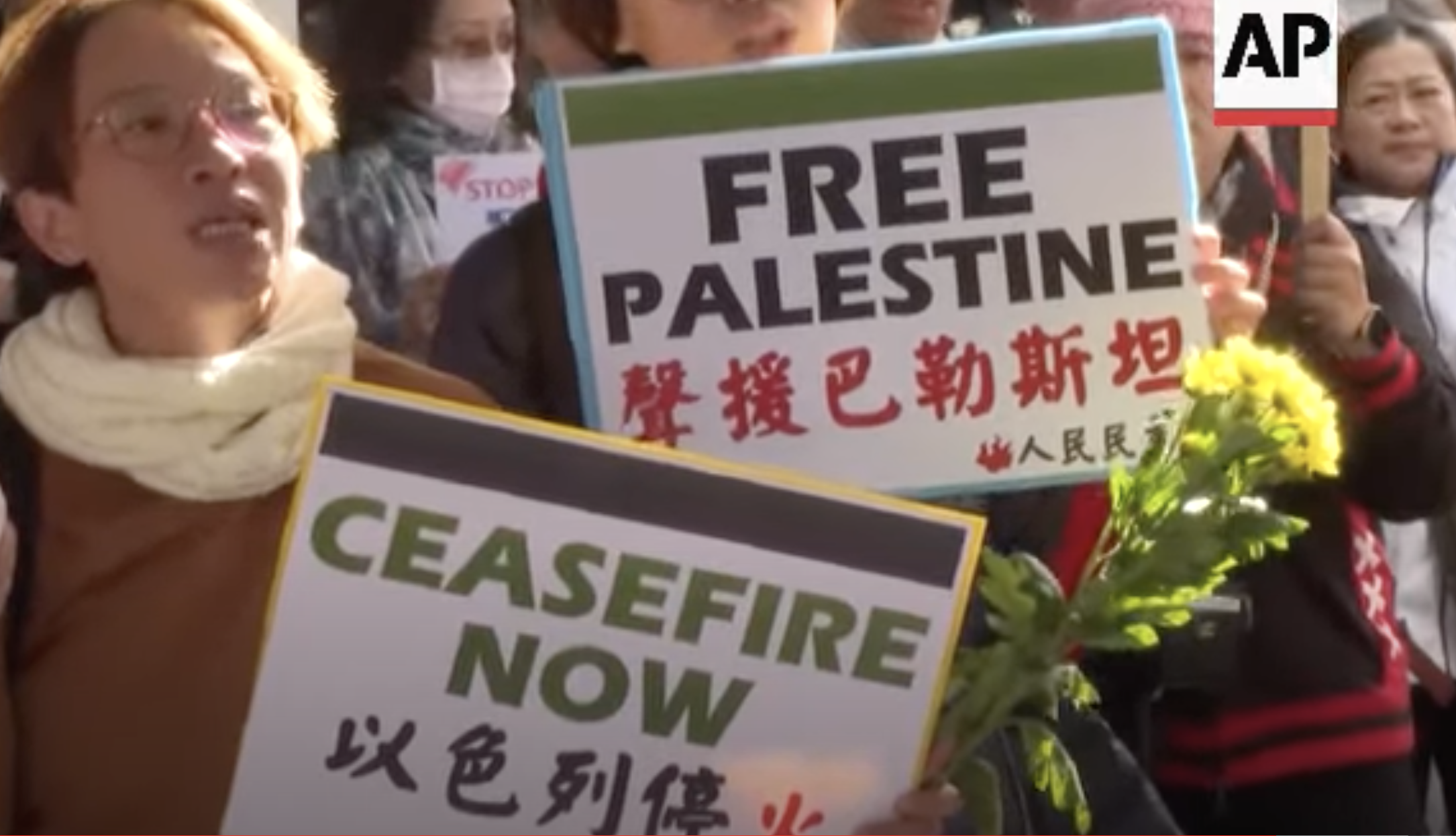





In the interest of the world and China, it should be split into smaller democratic countries, Tibet being one and Muslim nation second and certainly Taiwan. This will be similar to what happened to Soviet Union. By all accounts they are thriving now.
Let’s ask the President and other leaders to make their attendance at the Games contingent on Beijing allowing the Dalai Lama to attend the Games. (He said he’d like to go.)
That would be a huge concession by China, it calls their bluff on whether the Olympics should be “above politics”, and it lets them make the decision. Plus, it’s a cleaner test that “talk to the D.L.” (which would end as soon as the Olympics are over). Post on this, with White House, Presidential candidates’, and Pelosi and Reid’s contact info:
http://www.huffingtonpost.com/m.s.-bellows/activism-you-can-do-send_b_96043.html
In response to the comment above, I would say, China in totally different from Soviet Union or sth. Even when China was very weak in the early 20th century or during the Cultural Revolution, Tibet and Taiwan failed to seize the opportunity to allow them to be independent countries. How can state-subversion happen when China is enjoying its growing economic prosperity?
However, I have to admit that human rights in China are restrained by the government to some extent, but situation is changing in a positive way, in which process the Chinese citizens may suffer sth. I am sure China is on its way to democracy, although its a time-cosuming process.
George: I don’t know which country you belongs to. But I must tell you proudly I am a Chinese. For thousands of years, we Chinese love our country. It is none of your business whether China should be divided into smaller countries. You cannot benefit from this either. The response of most western countries is a reflection of that China has developed so rapidly that has already threatened you all. As a Chinese, I must tell you that we will love and support our country at any cost!
Hi George. My name is George too and I’m from Greece. You are right that the west sees china as a threat and they use human rights as the way to push china. But with this situation, the chinese government has been exposed for it’s oppression. It is for the advantage of the chinese public to improve human rights and indeed if you had succeded in proving the westerners wrong (by starting talks with the dalai lama), it would be like taking their gun from their hand. You would be doubly benefited: From showing a grown-up, pleasant image before the olympics(what better advertisement can a country get?) and by improving the quality of life of your citizens.
The other mistake your government makes is that tibet in a way is one of the greatest religious capitals of the world and a great cultural heritage. It needs to be free (even if that means greater autonomy as a part of china)and open to public. The whole world loses by access being restricted to Tibet. The Tibetan/ Buddist point of view as a religious voice is precious for the world because it is a voice for peace at the time of conflict between ‘christian’ and ‘muslim’ extremism.
I wish the chinese would use the bilion of brains they have to resolve this issue peacefully. I think it is to their advantage - both for the country and for the people. After all communism should be for the good of the public first.
India’s position on this issue (in the distant way i see it being from greece) is quite awkward. On one hand, religiously tibet is a holy place therefore it should be free. And on the other hand relations with china have improved and this issue is damaging them. I wouldn’t be surprised if the people believed that tibet should be free and the government the opposite.
I’M from China. First of all, I admit China have human rights problems, but not exactly the situation you saw
or heard from many western medias, like CNN. They are just using all their energe to slander Chinese goverment, including lying to their people…
Actually, hunman rights are improved since 1980s. I
borned here, living here till now, China is go on right
ways, and becoming better and stronger. But, sadly,
some of the western people don’t want to accept the truth.
If they do want to improve chinese hunman rights, they can talk to Chinese government, make some communions.
They treat China as a threaten, or another Soviet Union.
Some countries, when you are creating difficulties for China, you need a mirror look at yourself first.
how you treated black people, how you did to Indian,
how you did to China in 31st, May, 1900?
What is hunman right? we all have to think about it…
Hi George and George
Who has a higher moral high land? Think about.
Western government? Dalai Lama? or Chinese government?
I believe in NONE of them.
Western media is so biased. That is why so many OVERSEA chinese are so upset and they are trying to use their own time and effort to fight back on youtube and various forum. Check youtube.
Dailai Lama? A religious and political leader in the past Tibet? You need to know how the society looked like under Dalai Lama’s regime. Check youtube.
Chinese government? Apparently not because they dont want to lose control in Tibet. However, they have really done a lot to help the economics of Tibet. Check youtube.
If nobody has a higher moral high land, then no point to teach others on how to settle the problem.
One thing for sure, the recent development of Media bias and Olympic torch disturbance makes the hope of peace talk down to the drain. Chinese government and Chinese people will not give in under the pressure.
Sad, right? This is happening. Still, I believe in Mind Your Own Business.
Just because all countries commited wrong during some time of their history we cannot say they have no right to criticize when others commit atrocities at present.
China claims that Tibet was once part of a Chinese empire. If we apply the same logic then Japan has the right to claim sovereignty over China and Britain has the right to claim sovereignty over most of the world.
The truth is Tibet has a unique culture and it must be protected. The former Soviet Union gave importance to Russian culture at the expense of other cultures that were part of it and this was one of the key reasons for its disintegration. The Chinese are doing the same mistake. They invaded and occupied Tibet and they are trying to impose Chinese culture on Tibetans. If they are wise they would take these protests as an opportunity, revisit their ideologies, understand the need for greater autonomy for Tibet and grant it. Nothing else will solve this problem. Nationalistic outbursts are not going to help.
I have read many of the above comments. It seemed to me that most of you think Tibet was an independent country and then was occupied by China. I am so confused that I have to ask you how much do you know about Tibet? Could you tell me the name of the country when Tibet was an independent one?
Why the european and the american just mind their own business?? Tibet is and will be one providence of China forever and so as Taiwan. Why don’t people go out saying “Free Barcelona from Spain”?? or “Independent Hawaii from the states”?? all those countries just afraid of China become stronger and stronger. British sent out the troops to Iraq to kill innocent people, and they are having the olympic game in 2012?? If those countries now all saying they don’t want to be part of the olympic game in China, why did they vote for China in 2001???
布宜诺斯艾利斯告诉巴黎:什么是“文明”和“教养”
曾几何时,中国善良的人们把西方社会看成是现代文明社会,是我们的老师,巴黎更是民主和人权的旗手,是时尚的文明之都。然后这次的圣火传递,让我们看到这个国际文明礼仪的城市是如何玷污了民主和人权盛誉的。本来圣火传递,无论是支持者和抗议者都可以在和平法治的精神下平等地表达自己的诉求,这本身并无可厚非。然后,作为一个国家的行政机关——巴黎市政府居然鼓励“文革”式的武斗,公然暗示“人权斗士”可以去冲击中国的代表团和中国运动员,居然在市政府广场上筹备一场“批判会”,这样狂热的、失去人类基本理智的观点,玷污了人类的理性和良知,因为抽取了法治原则,那么民主就可能成为“暴民政治”,抽取了法治原则,人权恰恰可以被利用起来“侵犯人权”,怂恿无法无天的民主和人权,这在人类历史上不乏先例,法国的雅各宾专政和中国的文化大革命就是这样在民主旗帜下践踏人权的。而巴黎的闹剧正是演绎了一种新型的思想专制,反中国的可以,支持中国的不行;顺我者昌,逆我者亡。当巴黎街头一些人大声鼓噪“自由西藏”,而中国学生反驳到“自由科西嘉”时,马上就有人欲动拳脚。这样的暴戾之气十足的“民主和人权”充满着西式文革的气质。
而4月11日的布宜诺斯艾利斯,人们热情欢迎奥运圣火,拉丁美洲人特有的气质将奥运圣火传递演变成为一场嘉年华会,人们的热情将Party气氛推向高潮。当然也有抗议者,但是在文明法治的框架下,支持者和抗议者都在和平地表达自己的诉求。这里,没有煽动,没有暴戾,没有仇恨,而是最好地演绎了现代社会的文明理性的精神。我们常常认为西方社会是文明社会,人们有教养,懂得现代社会的理性诉求,但是在他们一旦面临别国民众特别是第三世界国家时,文明教养就消失了,野蛮就赤裸裸的表现出来。
4月11日布宜诺斯艾利斯告诉了巴黎,什么是文明,什么是教养。4月11日,布宜诺斯艾利斯告诉了整个西方世界应该学会尊重别人,哪怕是你并不喜欢的人。
I don’t care for it’s historical name. I would support these people the same if they had never been seperate from china as i support activists from every part of the world supporting causes that i consider just.
I admire tibetan philosophy and i think it should have a peacefull home.
What is your philosophy David?
To to Shaan:
Where r you from and why you hav to say that Tibet should be independent under your known-nothing-about tibet?
The truth that you possed Tibet has a unique culture and it must be protested is the very right way that China is on.China has done the best to help Tibet in its cultre protest and economic development,coz chinese people is living in a big family, while Tibet is administrated by the local gov in the same way as Hongkong of China and Chinese Taibei province.
I doubt how much you know about Tibet . Do you know where is it ? Do you know its history? Do you know the big difference between now and the Dalai Lama rigime in Tibet?
Plz use your brain and go youtube to see the truth we chinese post before your wrong way of thinking in this issue show up to make you “lose your face”–do you know its meaning?
The truth is people in Tibet lead a peacefull and happy life before the viot.
If you think the kill,robe,distroy and fire the Dalai group did in Tibet is a right performent ,then where is your brain?
Hi Shaan, see my comments on your message:
[shaan]Just because all countries commited wrong during some time of their history we cannot say they have no right to criticize when others commit atrocities at present.
[subj] Atrocities? Are you sure? Show evidence. If you ever visited TIbet in last 5 years and believed so, I would have no choice but agreed with you. But I doubt so.
[shaan] China claims that Tibet was once part of a Chinese empire. If we apply the same logic then Japan has the right to claim sovereignty over China and Britain has the right to claim sovereignty over most of the world.
[subj]It is not claimed by China, it is history. However, China has never been loyal to Japan. Never. The official government of China even in world war 2 never surrounded to Japan. Apparently you dont know that history.
[Shaann] The truth is Tibet has a unique culture and it must be protected. The former Soviet Union gave importance to Russian culture at the expense of other cultures that were part of it and this was one of the key reasons for its disintegration. The Chinese are doing the same mistake. They invaded and occupied Tibet and they are trying to impose Chinese culture on Tibetans. If they are wise they would take these protests as an opportunity, revisit their ideologies, understand the need for greater autonomy for Tibet and grant it. Nothing else will solve this problem. Nationalistic outbursts are not going to help.
[subj] What evidence you have to say Chinese culture was imposed on Tibetans? What I see on the video is numerous monks in the temple. What are they doing there? Can I say all the freespeech and pornographic culture are the culture western imposes on Chinese culture, which was beautiful as well? Where is the Nationalism outburst coming from this round? It is from oversea Chinese because they can see both sides of propaganda.
I wish to have a peaceful debate.
Quote: [subj] What evidence you have to say Chinese culture was imposed on Tibetans?
- - - -
It seems the concerns of many Tibetans is that there is only the Chinese view of education and history taught. This is a subtle but important point:
http://www.theatlantic.com/issues/99feb/tibet2.htm
Read paragraphs 12-13. This is an interesting article from 1999. This article mentions also other outside influences that have played a part in undermining Tibetan culture, such as the influx of money into Tibet:
“The more money we Tibetans have, the higher our living standard is, the more we forget our own culture. And with or without the Chinese, I think that would be happening.” (at the very end of the above linked article).
“The truth is people in Tibet lead a peacefull and happy life before the viot.
If you think the kill,robe,distroy and fire the Dalai group did in Tibet is a right performent ,then where is your brain?”
1) The fact is, we have no way of knowing how happy or not the Tibetan people are, given that no independent opinion polls, let alone elections, are permitted anywhere in China.
2) No one is defending the riots in Tibet.
3) We have no evidence that the Dalai Lama was involved in the recent violence in Tibet, and have no way of confirming or denying the allegation due to the Chinese government’s expulsion of all non-mainland Chinese media from the region.
Hell, this is frustrating. I thought global voices was a serious site that allows people to write their complete opinions without the restrictions of youtube for example. (like limitted number of letters allowed) I thought i was speaking to a more mature crowd.
I am dissapointed to see that we don’t tap the real issues here.
Like:
A: How can we get a clear image of what’s happening in tibet if reporters a re not allowed there?
B: What percentage of of the population of tibet are tibetans and what is their number. This should be compared to numbers before the chinese invasion to show the impact it had.
C: Find the specific things tibetans don’t like about the chinese. This could even help the chinese government resolve the issue peacefully without discussing the seperation of tibet.
D: What is the geostratigical inportance of tibet to china?
E: Are the populations who left tibet after the invasion allowed to return to their homes? Will they be compensated if their property has been confiscated?
F: Are there ways for the chinese public (including tibetans) to ask their government for changes without protesting and using violence? ( I believe violence is used as a last resort when all other way of communication fail. Therefore if there are effective paths people can use to be heard they don’t need to resolve to violence)
I’m sure there’s more but this will do for now.
Now my opinion on these:
A: Chinese activists could upload videos - already done but being amateur video it can easily be questioned as for it’s genuity. On the other hand, professionals are mostly seen as ‘foreign agents’.
B: No idea whatsoever - educate us please:p
C: As above
D: It definately has a lot of touristic value but the tibetan culture needs to be brought out(unused potential). Tibet had an export surplus of 330 million yuan ten years ago(sorry that’s the latest i could find). Trade route to india(?)(>1 billion buyers needing cheap products). Also a lot of investment has started for the last 10-15 years and a new train route started in 06
E: Please help us find out if you have any info
F: Please help with more specific info. (I believe communism is supperior to capitalism but has never been applied correctly. Communist parties in any country take up totalitarian approaches. With some democratic elements or ways the people can govern themselves and make political decisions, I think it could actually work and give the world a much needed alternative to capitalism. I was never a communist and i find them quite narrow minded but i realy think a new more ‘left’ approach to the world is very much needed right now globaly. As a very nice documentary about russia said: ‘after the fall of the ussr, russians realised that what they were told about communism was wrong but what they were told about capitalism was right’.)
For the chinese: Please help westerners who try to be objective with more info but without fanaticifm and extremism. Understand that people who are against you might just not know enough.
For the rest: Please avoid extremism on your side. It is not the average chinese person’s responsibility what their government does. Don’t forget that parts of china are impoverished and that the (economic) expansion of china is helping them too.
Especialy on americans: Many of you should just shut up, you’re making this worse for the tibetans because your government and media see china as a massive threat. At the same time, you are the greatest exporter of weapons, have started almost all the wars i’ve heard of and many that were never even known to the world, you are the only country that has ever used nuclear weapons on civilians and list goeas on and on and on and on. By shouting for tibet - even if that’s well intended which i don’t doubt - you make the chinese become even more defensive because they think this is the capitalists trying to break up their country like russia.
Hope this wasn’t too tireing,
Peace.
to schizomorph:
For the chinese: Please help westerners who try to be objective with more info but without fanaticifm and extremism. Understand that people who are against you might just not know enough.
The problem is:
westerns can’t hear voices fron Chinese medias (or they don’t want to. They just judge Chinese medias as monsters
and government’s tools. I agree to “Chinese medias are government’s tools” ,just like western medias are loyal
to its owners. Chinese medias’ boss is the gov.
Chinese medias usually report correctly ,but someties
they hide something or lie, just like western media like
CNN and BBC have done.
Now, hear some voices from ordinary people.
Oh come on gilbert. You stated the obvious. Tell me something i don’t know. And you stopped just when it was getting interesting. Where’s the voices of the ordinary people?
I am from India, and I fully support the fact that China should be broken up into Tibet and China. China should also give back the whole 25% of its territory back to Tibet. It should retain only what it had as historical kingdoms. Its completely false that Tibet was always a part of China. It was conquered only sometimes and then separated again.
Additionally, I have seen in all countries that Chinese people do not immediately mix up with other people. They mix up only after a very long duration of many years. They are also traditionally and historically back-stabbers. The Chinese culture though good is very alien and it is better kept off separate and on its own.
Thus, I feel that China should be broken apart into at least two countries of Tibet and China.
Ordinary people? I think I am, because I live outside China and was from China and work in Multinational corporation. I have to agree with Schizomorph.
Chinese media reports. But westerners chose not to believe.
The mindset of “Chinese government = evil” can not win Chinese’s consensus, but roots firmly in brains of westerners.
Just as Ms. Fu Ying said in the UK newspaper, western world can not wait to understand China.
M:, it is your own opinion, I dont want to comment. However, it surely will not happen. Common sense. Dreaming for that will lead in illusion and misunderstanding more.
Although i largely agree with you M, if what you say is taken literaly, it leads to prejudice and racism. I admit that I have similar thoughts but i don’t want to judge people based on race. Also i think isolating china will only make things worse. I believe efford should be put on freedom of speach and expression in china so that the chinese can take in ideas from the rest of the world.
I don’t see china as a homogenous thing. With freedom of speach, i believe it would play a totaly different role on the world chessboard. I’m not sure if that would be good or bad but it would definataly be different.
Thanks
Hi Elgin
I read the article you linked carefully. I thought it is an excellent article that everyone here should read.
Here is some of the quotes in para 11-13.
=================
But Tibetans feel that there is an overemphasis on Chinese, especially at the higher levels, which threatens their language and culture. All the classes taught by Han teachers are in Chinese or English, and most of the Tibetan teachers in the middle and high schools are supposed to use Mandarin (although the ones I spoke with said they often used Tibetan, because otherwise their students wouldn’t understand). In any case, important qualifying exams emphasize Chinese, and this reflects a society in which fluency is critical to success, especially when it comes to any sort of government job. Another, more basic issue is that Tibetan students are overwhelmed. One Han teacher told me that his students came primarily from nomad areas, where their families lived in tents; yet during the course of an average day they might have classes in Tibetan, Chinese, and English, three languages with almost nothing in common.
Political and religious issues are paramount. In Lhasa I met a twenty-one-year-old Tibet University student who was angered by his school’s anti-religious stance, which is standard for schools in Tibet. “They tell us we can’t believe in religion,” he said, “because we’re supposed to be building socialism, and you can’t believe in both socialism and religion. But of course most of the students still believe in religion — I’d say that eighty to ninety percent of us are devout.” One of his classmates, a member of the Communist Party, complained about the history courses. “The history we study is all Chinese history [of Tibet],” he said. “Most of it I don’t believe.” These students also adamantly opposed existing programs that send exceptional Tibetan middle and high school students to study in the interior, where there is nothing to offset the Chinese view of Tibet.
Such complaints reflect the results of recent education reforms. A series of them made in 1994, characteristically, represent both the good and the bad aspects of Chinese support. On the one hand, the government stepped up its campaign against illiteracy, and on the other, it resolved to control the political content of education more carefully, in hopes of pacifying the region. There has certainly been some success with this approach: I met a number of educated Tibetans who identified closely with China. Tashi, Mei Zhiyuan’s roommate, seemed completely comfortable being both Tibetan and Chinese: he had studied in Sichuan, he had a good job, and he had the government’s support to thank. When I asked him what was the biggest problem in Tibet, he mentioned language — but not in the way many Tibetans did. “So many [Tibetan] students can’t speak Chinese,” he said, “and if you can’t speak Chinese, it’s hard to find a good job. They need to study harder.”
==================
In the portion of article, it mentioned that 58% Tibetans are still can not read and write. ( It was >95% during Dalai Lamai regime.) It is literally hard to use Tibet language for Science etc, as compared to the Chinese. The overall education situation makes it impossible. How about Indians in US? Think about it.
As for religion, most of Chinese are not religious. Religion is totally allowed in China, as long as it is not against government. I see no major conflict rather than the street opinions.
Overall, the article painted a real picture. I strongly recommend everyone read it. It was not written by Chinese. Just be sure.
Let me show you all how Tibet is like under dalai’s ruling,
Can you see any “human rights” here?
This is an orphan of slaves:
[img]
http://bbs.cn.yimg.com/user_img/200706/19/yumeijian123_1182217716
907965.jpg[/img]
slaves wearing leg-iron, not for fashion purpose.
[img]
http://bbs.cn.yimg.com/user_img/200706/19/yumeijian123_1182218625
941952.jpg[/img]
a slave whose leg was cut by his owners:
[img]
http://bbs.cn.yimg.com/user_img/200706/19/yumeijian123_1182218659
152662.jpg[/img]
Come to Tibet, see the turth.
I hope this time I can post pics.
Show you all how Tibet is like under dalai’s ruling,
Can you see any “human rights” here?
This is an orphan of slaves:
[img]
http://bbs.cn.yimg.com/user_img/200706/19/yumeijian123_1182217716
907965.jpg[/img]
slaves wearing leg-iron, not for fashion purpose.
[img]
http://bbs.cn.yimg.com/user_img/200706/19/yumeijian123_1182218625
941952.jpg[/img]
a slave whose leg was cut by his owners:
[img]
http://bbs.cn.yimg.com/user_img/200706/19/yumeijian123_1182218659
152662.jpg[/img]
Sorry gilbert, I couldn’t see the links. I got a 404 error.
Wewe: I wish I could but i don’t think i’m allowed there.
http://www.theatlantic.com/issues/99feb/tibet2.htm
Elgin’s suggestion of link is in fact a very good article. It reminds of the aborginals in Australia and Indians in US…
I believe Dalai Lama has indicated he wants autonomy for Tibet, I havent checked the dictionary recently but I believe that doesnt mean independence. Every human on this planet has right to exist with their belief system regardless of whether the chinese government or any other government agrees with it or not. I know this is a dead end subject in many areas of the world however I thought chinese PEOPLE were at least intelligent enough (the ones who write here) to realize suppression doesnt work. Such an old ancient culture… how come its so difficult for you to understand this human trait? Tibetan buddhists are not asking for independence but autonomy to freely return to their homeland and practice their belief in peace. Is this so hard for chinese people to understand?
I don’t care if the old Tibetans were cannibals or bahinee-jud, it doesn’t justify the cultural genocide and human rights violations by China.
Old Tibet was a feudal society. The past 2 Dalai Lamas (13 and 14) were both trying actively to change that and meeting lots of resistance from the very entrenched power structure of Tibetan theocracy.
Only Hollywood believes that Tibet was some gentle mythic land. There are plenty of objective history books to read that recount the good, bad and ugly of old Tibet. Nothing justifies the treatment they have received.
Ok, gilbert and wewe are obliously the same user and have started spamming this conversation. Moderators, please do your job right!
Btw, I still cannot follow the links.
Is that because of chinese censorship?
-> I don’t care if the old Tibetans were cannibals or bahinee-jud, it doesn’t justify the cultural genocide and human rights violations by China.
I wonder what kind of “cultural genocide” you are speaking of? After 50 years of communist rule, at least 20-30 of which are without outside care, there are still monks and monestaries in some of the largest cities in Tibet? You think CCP is that inefficient?
I disagree with the Chinese Government on a lot of issues; but Tibet will never become independent. M above is more honest than I expected. It is the wishes of India and other foreign powers to see China broken apart and contained, which China, democratic or not, will never allow.
Sonia,
We understand the Tibetan, majority of Tibetan, who pre 1949, had nothing but freedom of religion! Today, majory of the Tibetan in Tibet are fine with Chinese government. Chinese government spends north of $150 million to build up infrastruture and local tourist industry, and lift al of Tibetan all of poverty. For any Human to have Human Rights, the first rights they need is food and shielter.
Besides, Chinese government over the 1949 through present period has limited religious practise for all Chinese, not only Tibetan (I am not saying it is right). The liberalization of such policy is going on as we speak. The government has acknowledge and encourage people to seek religious believe.
China is ruled by Chinese Communist Party, by definition, it is a none believer of any religion. Karl Marx said, “Religion is the opium of the Masses.” For the West to expect Chinese government to legitimize Dalai Lama, is like asking Pope to believe in Mahamad, the Muslim prophet. Not practical!
Especially, under current circumstances, even the government wants, it cannot answer to the 1.3 billion plus 1 (myself) nationalistic Chinese (the past 150 years of humiliation under the Western and Eastern superpower justifies their attitude).
Western media has done the Chinese government a great favor by their bias reporting over the past month. Never in my life time, that Chinese youth regarded the Chinese government highly than now. All educated Chinese (inside and outside China) realize that the Western media and government are as hypocritical as their own government.
With the onging Iraqi war, west has already lost its moral high ground. I do not think majority of the global population regarding Pelosi, Hillary, Gordon Brown, Angela Merkel high enough to care about what they think and do……
Hi Sonia
You said “…Such an old ancient culture… how come its so difficult for you to understand this human trait? Tibetan buddhists are not asking for independence but autonomy to freely return to their homeland and practice their belief in peace. Is this so hard for chinese people to understand?…”
There is two places in the world, one with Church or Temple to population ratio of 1300, another one is 3400 (forgive me the exact number). They are UK and Tibet. Guess which one is which?
Secondly, do you know how big the tibet area Dalai Lama requested during the negotiation is? It is much bigger than the current Tibet area.
Thirdly, relatively speaking most of Tibetans are less educated as compared to the overall level of Chinese races. That is why some of them are frustrated and believe that Chinese people take away their job. That is one of the main reasons of riots. However, do you know that if you are tibetans, you can enter university with about half of the scores of Chinese students. That is what Chinese government have done till now. But, globalization is the trend. Nobody can avoid. It does not justify the violence towards Chinese people there.
Four, clearly, they support their spiritual leader. And it seems that Chinese government never talked to Dalai Lama. That is not true. They have been in contact for years, just that it did not reach any consensus. Tricky and Complex.
Dalai Lama is political leader and religious leader. So does the leader in Iran and ex-Afganistan etc.
Latest recording from RFI, Radio France International
(See English Translation word by word below. Maybe the translate is not so good and has to be devoted to its original dialogue.)
If you understand Chinese language,
link here:
如果您懂中文,请链接
http://www.tudou.com/programs/view/A9BiOo1uW4o/
或
or the original link: (dialog starts from 6m10s)
http://www.rfi.fr/actucn/articles/100/article_6734.asp
达瓦才仁辩解藏独暴力杀害汉人的采访录音
2008年4月2日,法国国际广播电台(RFI, Radio France International)中文广播播出了记者采访“西藏流亡政府”中国事务负责人达瓦才仁的录音,截取片段如下:
记者:
……就以上一系列问题我们采访了“西藏流亡政府”中国事务负责人达瓦才仁,达瓦才仁先生你好!中国官方多次对达赖喇嘛的非暴力主张提出质问,并且提问说,如果达赖真的主张非暴力,那他为什么没有对“3.14”在西藏发生的藏人屠杀汉人的残暴行为做出谴责?
达瓦才仁:
首先必须要声明的是,藏人从头到尾使用的是非暴力,从藏人的角度来讲,暴力指的是对生命的伤害。(从头到尾藏人)从镜头里可以看打汉人,但都是打而已,打完以后那些汉人都会跑掉,仅仅是殴打,而不是伤害生命。那么那么那些被杀的人全部都是出于意外,从中共的报道里面都可以非常清楚的看到,他们(汉人)都是在藏人砸门的时候,跑到楼上躲起来,躲起来藏人放火烧的时候,他们都没有逃跑,而是藏起来,结果后来就意外的烧死了,而那些点火、放火的人他们根本不知道楼上有汉人躲藏。所以被烧死的人不仅有汉人,也有藏人,所以这些事情都是一种意外,不是屠杀。
For those who don’t understand Chinese:
Apr 2 Radio French International, its Chinese broadcast division phone-interviewed Dawa Tsering, the spokesman of China Affairs Dept. of ‘Tibet Government in exile’ about the riots in Lhasa Mar 14,
Interview: Hello, Mr Dawa Tsering. Chinese officials repeated their doubts on Dalai Lama’s claim for ‘non-violence’, and questioned that, if really like what Dalai Lama said, why there was no condemnation from him on the violent actions of Tibetans’ killing Han in Lhasa on March 14?
Dawa Tsering: First of all, what I must claim is, from start to end, the Tibetans used no violence. From the angle of Tibetans, violence means ‘to hurt one’s life’. (from the beginning to the end) From videos* you may watch Han people were hits/beats, but they were hits/beats only. After the hits/beats, those Hans ran away. It’s beat/hit only, not harming the life. Those, those who were killed, are all accidents. From Communist China’s report, you can clearly find out, they (Hans) all ran upstairs of their houses and hid themselves when Tibetans tamped the doors, and hid. When Tibetans burned their houses, they didn’t escape but hide themselves. The results were burned to death accidentally. While those, who lighted fire, and fired the houses, didn’t know at all that the Hans were hiding upstairs. Therefore, those, who were burned to death, were not only Hans but Tibetans. All of these were accidents, not killing or slaughters.
*Remarks: the videos mentioned above are from CCTV, China Central Television, the riots video links here:
video taken by police and citizens in Lhasa.
1. 14Mar, 18 innocent people (including some Tibetans) were hit by knife or burned to death, over 300 houses were burned, 382 were hit or injured by the Western said protests for peace. Police were attacked.
Fxxk those media and rascals in western countries!
http://english.cri.cn/4026/2008/03/21/1481@336560.htm
(open this link, wait for a while until the video plays)
2. 15Mar, Look at the dead people! The scene is horrible! Do you have humanity.
http://news.qq.com/a/20080409/001275.htm
to schizomorph:
the links of pics are (please copy the entire link and paste into IE address box and enter):
1 This is an orphan of slaves:
http://bbs.cn.yimg.com/user_img/200706/19/yumeijian123_1182217716907965.jpg
2 slaves wearing leg-iron, not for fashion purpose.
http://bbs.cn.yimg.com/user_img/200706/19/yumeijian123_1182218625941952.jpg
3 a slave whose leg was cut by his owners:
http://bbs.cn.yimg.com/user_img/200706/19/yumeijian123_1182218659152662.jpg
they showing Tibet situation under DL’s rule (around 55years ago). can’t beleive you saying free Tibet but let those people back to their SLAVE live.
please see the truth. Why China Gov. not allow if you just visit Tibet? so many foreigner have been to Tibet! simply excuse
@bill: Cool, I can see them now. But i have also seen recent footage and it makes me realy sad. What have these people gone through! It makes me respect tibetans even more bacause all of the tibetans I’ve met are very kind and modepate people. Even though they and their families have been though so much. It’s a shame, they(and any human) deserve better than this.
But they choose the Dalai Lama as their leader. Whether you like it or not.
@ Subjectivelistener: ‘Thirdly, relatively speaking most of Tibetans are less educated as compared to the overall level of Chinese races. That is why some of them are frustrated and believe that Chinese people take away their job. That is one of the main reasons of riots.’
It must be very hard for tibetans if they are not allowed to use tibetan language at their scools and businesses. They don’t have the same opportunities if they have to learn a second language to be educated and find work. This is why they say the chinese are taking their jobs.
Also I’ve heard ( from ‘dispatches’, a channel4 documentary from the UK) that their land and herds were confiscated and they were given houses by the chinese government. But these houses are practicaly jails to keep them in until they die. They cannot afford their food and they don’t have land to use anymore. What is an old farmer that speaks tibetan supposed to do in this case? Become a thief? Tao says: If you don’t want thieves, stop collecting things. Are the chinese forgeting their own culture?
China has definately invested a lot of money on tibet. But this money didn’t have much impact of the life of tibetans and doesn’t seem to have made them happier. Could it be because this money has been spent to encourage Han population to move to tibet?
Combined with forcefull sterilisation of tibetan women, we get true image of 21st century genocide. Maybe not like the nazis but the result will be the same 100 years from now. Can you find a viable solution for tibetans to keep their way of life and culture? I think this would solve the riot problem. Tibetans are your citizens china. If you respect them like the same way as Han, they will be proud chinese too. But having a bad history, you have to make big step to bring peace and keep it.
I think there are win-win solutions for the tibetan issue without the need for westerners to get involved and no need for violence. What’s missing is the will to solve the problem peacefuly.
Schizo:
1) Tibetans did not choose Dalai lama. It is part of their religion. He was the king and god in tibet before, with absolute power.
2) Tibet language in the school is not allowed? Not true. There are quite a lot of Tibetans who only speak their own language. Think, from market perspective. If China did not invest money there, wait and see how some people will say “China will treat them like trash.”
3) I believe Tibetan farmers have a better life than those in neighbor country. The economics grow in 12% for last 5 years, which is higher than the China average. When a railway is set up to there, Tibetans can have more jobs, isnt it obvious?
4) Forceful sterillisation of Tibetan woman? As I know, it only applies to Chinese woman, not to any minority race. Clearly you misunderstood it.
5) I agree with you about the win-win solution. If Dalai condemned the Riot, if Dalai condemned the disturbance of Olympic torch relay…
6) Dalai is not so naive as most of the western people. Absolutely not. When you see a bagger on the street, you can believe he is poor and give him food and money, or you can question is he belonging to any syndicate?
7) Peace comes from trust. If west and east can not trust each other, we can forget about Dalai and Tibet.
@subjective: “1) Tibetans did not choose Dalai lama. It is part of their religion. He was the king and god in tibet before, with absolute power.” Yes but still this is who they believe in, nobody has the right to change that. You can call the ‘backward’ but it is their choice. Can’t you see that this is like capitalists comming to china and saying: you are not thinking the right way, we need to ‘democratise’ you?
“2) Tibet language in the school is not allowed? Not true. There are quite a lot of Tibetans who only speak their own language. Think, from market perspective. If China did not invest money there, wait and see how some people will say “China will treat them like trash.”” So are you saying that they have the right to have a business selling stuff and speaking tibetan? Are they not going to be harassed by the police? I have to admit that i cannot go there and see for myself and half the people i hear say different things than the rest. Still, the videos i have seen describe a very ‘controlled’ siruation with heavy police presence and undercover cops observing who does what.
“3) I believe Tibetan farmers have a better life than those in neighbor country. The economics grow in 12% for last 5 years, which is higher than the China average. When a railway is set up to there, Tibetans can have more jobs, isnt it obvious?” You know, it seems quite funny to hear such a capitalist point of view. But even as such, it very general and only sees the surface. Does the tibetan polulation control this capital? Or is it spent to encourage the han to migrate to tibet and make tibetans a minority in their own country. Also do you think businessmen will prefer an uneducated tibetan or an educated han? This is a small part of what tibetans call ‘the cultural genocide’ and I believe that’s why the want more autonomy. (even if the americans are using this to push their own agenda). As I said in another topic on global voices, what I see is two superowers fighting and anyone who happens to be in their way gets fucked. But china is doing to tibet what the US is trying to do to china.
“4) Forceful sterillisation of Tibetan woman? As I know, it only applies to Chinese woman, not to any minority race. Clearly you misunderstood it.” No I haven’t, there are interviews of tibetan women online. I know it is not the official line, but as in every country, laws are often broken. Especialy when breaking them serves the interests of the powerfull. My country(greece) is fucked up like this.
“5) I agree with you about the win-win solution. If Dalai condemned the Riot, if Dalai condemned the disturbance of Olympic torch relay…” For any win-win solution, BOTH sides have to make an effort. Otherwise it is a win-lose solution.
“6) Dalai is not so naive as most of the western people. Absolutely not. When you see a bagger on the street, you can believe he is poor and give him food and money, or you can question is he belonging to any syndicate?” I have heard too that the D.L. was and maybe still is funded by the CIA. But what can you do in this case? Forget about the tibetans and push on with the han campaign? Maybe you should buy the D.L. back:) OR, maybe you should help the Iraqis and the afgans a bit! They need your help like the tibetans need help from the west. After all, the whole war in afganistan is made to control the oil supply to china and asia in general. Think outside the box!
“7) Peace comes from trust. If west and east can not trust each other, we can forget about Dalai and Tibet.” Generaly I agree with you, but the whole theory collapses when the americans come into the game
If anyone says i’m a racist westrener he is very stupid. I think I am much more critical of the west even than the chinese here! And you know what? The west IS treating the world like shit. We all know this. But until someone has a better idea, we are all stuck playing their dirty game. So think hard people and be fair!
@subjective: “1) Tibetans did not choose Dalai lama. It is part of their religion. He was the king and god in tibet before, with absolute power.” Yes but still this is who they believe in, nobody has the right to change that. You can call them ‘backward’ but it is their choice. Can’t you see that this is like capitalists coming to china and saying: you are not thinking the right way, we need to ‘democratise’ you?
“2) Tibet language in the school is not allowed? Not true. There are quite a lot of Tibetans who only speak their own language. Think, from market perspective. If China did not invest money there, wait and see how some people will say “China will treat them like trash.”” So are you saying that they have the right to have a business selling stuff and speaking tibetan? Are they not going to be harassed by the police? I have to admit that i cannot go there and see for myself and half the people i hear say different things than the rest. Still, the videos i have seen describe a very ‘controlled’ siruation with heavy police presence and undercover cops observing who does what.
“3) I believe Tibetan farmers have a better life than those in neighbor country. The economics grow in 12% for last 5 years, which is higher than the China average. When a railway is set up to there, Tibetans can have more jobs, isnt it obvious?” You know, it seems quite funny to hear such a capitalist point of view. But even as such, it is very general and only sees the surface. Does the tibetan polulation control this capital? Or is it spent to encourage the han to migrate to tibet and make tibetans a minority in their own country. Also do you think businessmen will prefer an uneducated tibetan or an educated han? This is a small part of what tibetans call ‘the cultural genocide’ and I believe that’s why the want more autonomy. (even if the americans are using this to push their own agenda). As I said in another topic on global voices, what I see is two superowers fighting and anyone who happens to be in their way gets destroyed. China is doing to tibet what the US is trying to do to china.
“4) Forceful sterillisation of Tibetan woman? As I know, it only applies to Chinese woman, not to any minority race. Clearly you misunderstood it.” No I haven’t, there are interviews of tibetan women online. I know it is not the official line, but as in every country, laws are often broken. Especialy when breaking them serves the interests of the powerfull. My country(greece) is f***ed up like this.
“5) I agree with you about the win-win solution. If Dalai condemned the Riot, if Dalai condemned the disturbance of Olympic torch relay…” For any win-win solution, BOTH sides have to make an effort. Otherwise it is a win-lose solution.
“6) Dalai is not so naive as most of the western people. Absolutely not. When you see a bagger on the street, you can believe he is poor and give him food and money, or you can question is he belonging to any syndicate?” I have heard too that the D.L. was and maybe still is funded by the CIA. But what can you do in this case? Forget about the tibetans and push on with the han campaign? Maybe you should buy the D.L. back:) OR, maybe you should help the Iraqis and the afgans a bit! They need your help like the tibetans need help from the west. After all, the whole war in afganistan is made to control the oil supply to china and asia in general. Think outside the box!
“7) Peace comes from trust. If west and east can not trust each other, we can forget about Dalai and Tibet.” Generaly I agree with you, but the whole theory collapses when the americans come into the game
If anyone says i’m a racist westrener he is very stupid. I think I am much more critical of the west even than the chinese here! And you know what? The west IS treating the world like s**t. We all know this. But until someone has a better idea, we are all stuck playing their dirty game. So think hard people and be fair!
Schizomorph,
On your 3rd point regarding discriminative hirings in Tibet, you asked a good question: “do you think businessmen will prefer an uneducated tibetan or an educated han?”
The answer to this rhetorical question should be obvious. However, you failed to mention that no one forced Tibetans to be uneducated. The fact that schools are taught in Mandarin is designed to facilitate Tibetans to integrate into businesses owned by both Tibetans and Hans. The fact that many Tibetans refused to go to school or learn Chinese have an obvious effect on their employment prospects, just as like Tibetan owned businesses refusing to sell to Hans although majority of the tourists are Hans. Also, I am not sure why you wrote in an earlier post that it’s illegal to for Tibetan businesses to speak Tibetan. Do you have proof of that?
Lastly, what I cannot understand is why can’t Tibetans learn both Tibetan AND Mandarin? From a business point of view those who do are ideal for the tourist industry. If many Chinese, including myself, can bring ourselves to learn English or a third language, why can’t the Tibetans? If many Tibetans view learning Chinese as insulting to their heritage, then they have made an active choice to prioritize their pride over their income. I don’t think anyone should be blamed for that.
Think of native americans as an example. They were forced to live under a different system than the one they were used to. In the beginning they didn’t integrate and were marginalised, had problems with alcoholism and crime. They had a great culture too i think but it was devoured by the white men as some people here say(I wonder what you would think if i called you yellow men). Don’t you think that was cultural cenocide? If you take a person who lived all his life raising animals on the mountains and put him in a room he will get depressed. It is not hard to understand. Since you are more ‘civilised’ and developed, you should give these people a chance to live in their own way. We live in a world were culture gets annihilated day by day. Even though some civilisations are different than ours doesn’t mean they don’t hold some wisdom. We shouldn’t underestimate them. The american propaganda is making china feel threatened but the ones who pay the price are always the weakest. I think it will be too late when we realise that our way of life is detructive. Preserve what is different.
Think of native americans as an example. They were forced to live under a different system than the one they were used to. In the beginning they didn’t integrate and were marginalised, had problems with alcoholism and crime. They had a great culture too i think but it was devoured by the white men as some people here say(I wonder what you would think if i called you yellow men). Don’t you think that was cultural cenocide? If you take a person who lived all his life raising animals on the mountains and put him in a room he will get depressed. It is not hard to understand. Since you are more ‘civilised’ and developed, you should give these people a chance to live in their own way. We live in a world were culture gets annihilated day by day. Even though some civilisations are different than ours doesn’t mean they don’t hold some wisdom. We shouldn’t underestimate them. The american propaganda is making china feel threatened but the ones who pay the price are always the weakest. I think it will be too late when we realise that our way of life is detructive. Preserve what is different. It is more precious than what is common.
a good artilce
The Unusual Suspect
by by Hilary Keenan http://21stcenturysocialism.com/article/the_unusual_suspect_01635.html
….
‘Cultural genocide’
For these reasons among others, the claims advanced by the Dalai Lama and the ‘Government in Exile’ are not usually subject to sceptical scrutiny. The most serious and frequently repeated charge, made again in the Dalai Lama’s statement on 18th March, issued to clarify his position on the “demonstrations and protests taking place in Tibet”, is that, by accident or design, China has been perpetrating ‘cultural genocide’ against the Tibetans:
Whether it was intended or not, I believe that a form of cultural genocide has taken place in Tibet, where the Tibetan identity has been under constant attack. Tibetans have been reduced to an insignificant minority in their own land as a result of the huge transfer of non-Tibetans into Tibet. The distinctive Tibetan cultural heritage with its characteristic language, customs and traditions is fading away. Instead of working to unify its nationalities, the Chinese government discriminates against these minority nationalities, the Tibetans among them.
The statement contained no condemnation of the destruction of property and the murders of ethnic Han Chinese and Hui Moslems. Indeed, for all the Dalai Lama’s well-known commitment to non-violence, his discourse in which the non-Tibetans in Tibet are the vehicles of ‘cultural genocide’ and ‘demographic aggression’ against the Tibetans very clearly has the effect of inciting- whether it is intended or not- feelings of resentment and hatred against the Han Chinese and Hui Moslems who are living in Tibetan areas. To use the terminology of the USIP report, this discourse encourages ’societal condemnation of the targeted ethnic group[s]‘.
The Dalai Lama’s allegations have been promoted by the US government, and not merely by broadcasting them into Tibet via its RFA radio station. For instance, as Barry Sautman has noted:
An echo of this charge [of 'ethnic swamping'] can be found in United States Secretary of State Colin Powell’s January 2001 statement that the “Chinese sending more and more Chinese in to settle Tibet . . . seems to be a policy that might well destroy that society.”
These accusations are not only incendiary; they are also untrue. Barry Sautman, who is Associate Professor of Social Science at the Hong Kong University of Science and Technology, has performed invaluable work in deconstructing the claims of the anti-Chinese Tibetan émigrés. Regarding the assertion that Tibetans have become a minority in Tibet, which the ‘Government in Exile’ has been disseminating for many years, Sautman explains:
This is a statistical trick based on including in Tibet areas at the eastern edge of the Eastern Plateau that have long been mainly non-Tibetan, especially Xining City and adjacent areas. These have not been ruled by ethnic Tibetans for a thousand years and had non-Tibetan majorities decades before the Communists came to power. Apart from these regions, about half the Eastern Plateau population was ethnic Tibetan in 1990. In the Tibetan Autonomous Region (the Central-Western Plateau), the 2000 census revealed that 2.41 million of the 2.61 million people who had resided there for six months or longer were ethnic Tibetans, up 15 percent from 1990. Tibetans thus comprise 92 percent of the TAR total, while Han are 5.9 percent and other ethnicities 1.9 percent. Taking into account very recent migrants and army deployments, ethnic Tibetans exceed 85 percent of the TAR population.
On the issue of language; as Barry Sautman points out, not only does the Chinese government actively promote the Tibetan language, but by international comparison it has been fairly successful in doing so:
No recent work on endangered languages deems Tibetan to be imperiled. Language maintenance among Tibetans contrasts with language loss in even remote areas of Western countries renowned for liberal policies. In the United States, all indigenous languages are now extinct in California, French is heading that way in southern Louisiana, and other ‘ethnic’ languages face official and popular hostility elsewhere in the country.
In most minority areas of China, including Tibet, local languages are used in grade schools, with putonghua [the language of the ethnic Han majority in China] used as a second language. Claims that primary schools in Tibet now teach in putonghua are in error. Tibetan is the main language of instruction in 98 percent of TAR primary schools, while putonghua is introduced in the early grades only in urban schools. Many parents want instruction to be in putonghua for the (mainly urban) children who go on to middle school; thus the TAR regulation that requires that middle schools use Tibetan has not been enforced. In 1999, however, secondary school Tibetan-language texts were introduced in the TAR and Tibetans now comprise about 50 percent of TAR secondary school teachers. In eastern Tibetan areas, parents can often choose the language of primary education, and secondary education is available in Tibetan.
Bilingualism is also promoted by policies that require that all laws, official notices, and commercial signs be bilingual; that allow Tibetans to interact with government in their own language; and that have created mass media with substantial Tibetan components. Official policies in Tibet go beyond the respect for minority languages required by international law or practiced in European ‘rights-based’ states.
And the notion that the religious element of Tibetan culture is ‘fading away’ is the reverse of the truth. During the the Cultural Revolution, from 1966 to 1976, religious thought and practices were suppressed in the whole area of the People’s Republic. In Tibet, the monasteries and mosques were closed down and religious artefacts destroyed, with the enthusiastic participation of many ethnic Tibetans.
Tibetans during the Cultural Revolution, holding copies of Chairman Mao’s ‘Little Red Book’.
Since that period, there has been a resurgence of religious activity in Tibet, and a huge number of Tibetans pursue the Buddhist religion as a full-time profession:
The 46,000 monks in the TAR are, as a percentage of adult males, more numerous than monks in all other Buddhist lands and far exceed the density of priests in Catholic Poland and Ireland. (Indeed, there are only 45,000 priests among America’s 61 million Roman Catholics.) China does limit the number of monks, but so too did the Dalai Lama when he was in power. In old Tibet, most monks were sent to monasteries by their parents at 7 to 10 years of age without regard to their wishes. It may not be unreasonable for the authorities today, when there are many more schools, to allow only adults to become monks. The degree of regulation of religion—whether to allow the display of Dalai Lama portraits and to conduct political campaigns in monasteries—mainly depends on the authorities’ perception of the degree of local separatist sentiment; thus a more liberal attitude can be found in the eastern Tibetan areas than in the TAR. Increased separatist activity that may be linked to the émigrés or the seeming successes of the émigré internationalization campaign typically generates tightened regulation of the monasteries through expulsions and political study sessions.
In a more recent article, Barry Sautman adds:
Western scholars of Tibetan literature and art forms have attested that it is flourishing as never before.
The false allegations by the Tibetan émigrés are used to support an aim that both ambiguous and ambitious. Radical elements, including activists in the Tibetan Youth Congress, are promoting national independence. The Dalai Lama’s objective is interpreted as being limited to the achievement of genuine ‘autonomy’. But the latter position is misleading, in two ways. Firstly, as Barry Sautman remarks:
However much he [the Dalai Lama] may characterize his own position as seeking only greater autonomy for Tibet… he is unwillingto recognize that Tibet is legitimately part of China, an act that China demands of him as a precondition to formal negotiations.
Secondly, the area to which all the factions around the ‘Government in Exile’ lay claim goes far beyond the area of the Tibetan Autonomous Region. As a BBC article notes:
Tibet’s government-in-exile, based in northern India, has a very different concept of its homeland. A term often used is Greater Tibet, which covers the TAR, the whole of Qinghai province, western parts of Sichuan, areas of Yunnan and a corner of Gansu.
The area of this ‘Greater Tibet’ is almost one quarter of the territory of the People’s Republic of China. The majority of the population in this vast area is ethnicly non-Tibetan.
Greater Tibet, as envisaged by the Dalai Lama’s ‘Government in Exile’.
De-facto independence
The legalistic justification put forward in support of the assertion that the Chinese Government’s authority in Tibet is not legitimate, is that the area which is now the Tibetan Autonomous Region enjoyed ‘de-facto independence’ from China for a period in the early to mid 20th Century. This, as Barry Sautman notes, has no basis in international law:
Tibet, from the fall of the Qing dynasty to the outset of Chinese Communist Party rule (that is, from 1913 to 1951), is often described as having had ‘de facto independence.’ Regions may slip outside the control of weak states that had governed them and that still assert claims to sovereignty over them, but no category of ‘de facto independence’ in international law entitles an alienated region to be deemed a state by other states…
Under international law, ‘de facto independence’ for a state only results when major states extend official recognition, as with Bangladesh in 1971 and the former Yugoslav republics in the early 1990s. Major states may do so when a prior claimant central government in fact or in law relinquishes its claim, as in the Soviet case… No major state recognized ‘de facto independent’ Tibet because China had a colorable claim to sovereignty. A United States State Department spokesman noted in 1999 that since 1942 the United States has regarded Tibet as part of China, and during the 1940s United States actions repeatedly affirmed that view.
Even though China remained a weak, divided and invaded country during the first half of the 20th Century, no major state ever gave official recognition to Tibet as a separate national entity. During World War 2, when China was a key ally of the United States against Japan, the USA made its position explicit: Tibet is part of China. Following the defeat of Japan, the Chinese communist and capitalist forces resumed their civil war, which continued until the communist victory in 1949. As Sautman remarks:
Forty years of civil wars and Japanese aggression had left much of China outside central control, even though these areas remained part of China in the view of the national government and other states. In the late 1940s and early 1950s, Beijing thus made agreements for ‘peaceful liberation’ with many local leaders in, for example, the Yunnan, Xinjiang, and Hunan regions. Unlike the agreements between the United States and Native Americans, which noted their nationhood but denied them the rights of citizens, China reincorporated errant regions on the basis of the legal equality of all ethnic groups…
Moreover, the recovery of alienated parts of China by the new regime was not tantamount to invasion or occupation any more than the armed action undertaken by United States President Abraham Lincoln after he declared in his First Inaugural Address in 1861 that the perpetuity of national integrity is a universally recognized principle.
Subsequent incumbents of the office once held by Abraham Lincoln have not all been consistent in recognising the national integrity of other countries as a universal principle.
The slaves of Shangri la
But having dismissed the Dalai Lama’s claim of ‘cultural genocide’, it must be conceded that there is a very significant aspect of the old Tibetan way of life that has been completely eradicated by the People’s Republic of China. The reforms of the late 1950s and early 1960s destroyed the former socio-economic structure of Tibet. The Dalai Lama has evoked a wistful nostalgia for this this bygone era, which was smashed by the communists:
Tibetan civilization has a long and rich history. The pervasive influence of Buddhism and the rigors of life amid the wide open spaces of an unspoiled environment resulted in a society dedicated to peace and harmony. We enjoyed freedom and contentment.
Under this regime of freedom and contentment, 95% of the population could not read or write in their own or any other language. Average life expectancy in 1951 was 35.5 years. As Michael Parenti has observed, not all the inhabitants of the wide open spaces of old Tibet enjoyed a Shangri-La lifestyle:
In 1953, the greater part of the rural population — some 700,000 of an estimated total population of 1,250,000 — were serfs. Tied to the land, they were allotted only a small parcel to grow their own food. Serfs and other peasants generally went without schooling or medical care. They spent most of their time laboring for the monasteries and individual high-ranking lamas, or for a secular aristocracy that numbered not more than 200 wealthy families. In effect, they were owned by their masters who told them what crops to grow and what animals to raise. They could not get married without the consent of their lord or lama. A serf might easily be separated from his family should the owner send him to work in a distant location. Serfs could be sold by their masters, or subjected to torture and death.
A Tibetan lord would often take his pick of females in the serf population, if we are to believe one 22-year old woman, herself a runaway serf: “All pretty serf girls were usually taken by the owner as house servants and used as he wished.” They “were just slaves without rights.” Serfs needed permission to go anywhere. Landowners had legal authority to capture and forcibly bring back those who tried to flee. A 24-year old runaway serf, interviewed by Anna Louise Strong, welcomed the Chinese intervention as a “liberation.” During his time as a serf he claims he was not much different from a draft animal, subjected to incessant toil, hunger, and cold, unable to read or write, and knowing nothing at all…
In addition to being under a lifetime bond to work the lord’s land — or the monastery’s land — without pay, the serfs were obliged to repair the lord’s houses, transport his crops, and collect his firewood. They were also expected to provide carrying animals and transportation on demand. “It was an efficient system of economic exploitation that guaranteed to the country’s religious and secular elites a permanent and secure labor force to cultivate their land holdings without burdening them either with any direct day-to-day responsibility for the serf’s subsistence and without the need to compete for labor in a market context.”
The common people labored under the twin burdens of the corvée (forced unpaid labor on behalf of the lord) and onerous tithes. They were taxed upon getting married, taxed for the birth of each child, and for every death in the family. They were taxed for planting a new tree in their yard, for keeping domestic or barnyard animals, for owning a flower pot, or putting a bell on an animal. There were taxes for religious festivals, for singing, dancing, drumming, and bell ringing. People were taxed for being sent to prison and upon being released. Even beggars were taxed. Those who could not find work were taxed for being unemployed, and if they traveled to another village in search of work, they paid a passage tax. When people could not pay, the monasteries lent them money at 20 to 50 percent interest. Some debts were handed down from father to son to grandson. Debtors who could not meet their obligations risked being placed into slavery for as long as the monastery demanded, sometimes for the rest of their lives.
The theocracy’s religious teachings buttressed its class order. The poor and afflicted were taught that they had brought their troubles upon themselves because of their foolish and wicked ways in previous lives. Hence they had to accept the misery of their present existence as an atonement and in anticipation that their lot would improve upon being reborn. The rich and powerful of course treated their good fortune as a reward for — and tangible evidence of — virtue in past and present lives.
This kind of social structure was not specific to Tibet. Much of Europe used to be organised in a not dissimilar way, until feudalism was replaced by capitalism. In Tibet, the Medieval order was not overturned until the late 1950s and early ’60s of the Twentieth Century.
On the founding of the People’s Republic of China (PRC) in 1949, the victorious communists made it clear that the the area which was under the control of the Dalai Lama (or to be more exact, given that the Dalai Lama was only 13 years old at the time, the theocratic lords around the Dalai Lama) and which since 1913 had enjoyed so-called ‘de-facto independence’ from Beijing, would be included in the territory of the PRC. When this area, which later became the Tibetan Autonomous Region (TAR) was re-taken into Chinese control in 1951, the communists did not for several years take action to change the structure of Tibetan society.
At the National People’s Congress, Beijing 1954: The Panchen Lama, Chairman Mao, and the Dalai Lama.
Tenzin Gyatso, the teenage boy who at the age of two had been annointed as the 14th Dalai Lama, retained his position at the top of this structure; on the basis of a treaty known as the ‘17 Point Agreement’, negotiated with the communist leaders, Gyatso co-operated with the Chinese government. In 1954, together with the Panchen Lama, he travelled to Beijing to attend the first National People’s Congress (NPC) of the People’s Republic of China; after his arrival he accepted the position of Vice-Chairman of the NPC Standing Committee. In 1956, at the age of 21, Tenzin Gyatso accepted another key position, as chair of the committee in charge of establishing the political structures of the Tibetan Autonomous Region of the People’s Republic of China.
When the communists began to implement social changes in Tibetan areas, they started them in places which had, prior to 1949, not been under the rule of the group around the Dalai Lama. As Professor Tom Grunfeld of the State University of New York explains, significant armed resistance did not begin until the communist party and the state began to reform the Tibetan social structures:
*[In] 1956… the Chinese began to impose revolutionary changes upon the Tibetans in Kham (eastern Tibet to the Tibetans, the province of Xikang to the Chinese). While Tibetans inside the TAR saw little change to their lives and therefore, for the most part, acquiesced to Chinese rule, Tibetans outside the TAR felt, quite rightly, that their traditional lives were under threat and a revolt against Chinese rule ensued. The Chinese responded harshly which further alienated the Tibetans and a war between Tibetans and Chinese broke out in eastern Tibet, eventually making its way westward into the TAR.
Military actions against Chinese government forces included an armed insurrection in Lhasa in 1959; it was only following the defeat of this uprising that the communist authorities seized their moment, and moved to abolish feudalism and theocracy in the TAR area, setting up in their place socialist institutions including collective ownership of the land. The Dalai Lama fled to India where he established his ‘Government in Exile’, and guerilla warfare in Tibet continued until 1969.
Thus, at least in its origins, the struggle to ‘free Tibet’ cannot with full accuracy be portrayed as a struggle against Chinese control. Chinese control was, however reluctantly, accepted by the Dalai Lama and his allies in ‘historic Tibet’. What they fought against was the abolition of the Medieval structures of Tibetan society.
Lying circus
There was also another very important factor. Prof Grunfeld adds:
The CIA became engaged sometime around 1956 and ended their participation in the late 1960s as far as we currently know. Washington’s monetary subsidies to the Dalai Lama personally continued, apparently, beyond this date, to, at least 1974.
Without this engagement with the CIA, the armed struggle of the Tibetan anti-communist forces could neither have had any significant impact, nor could it have been sustained. In a clandestine operation which was codenamed ‘ST Circus’, the CIA supplied weapons, radio equipment, other munitions, funding, and much more. Tibetan fighters were flown out for military training at various US bases, including the Saipan in the South Pacific and Camp Hale in the Colorado Rocky Mountains; the CIA set up and ran the base at Mustang, Nepal, from which many of the raids into Tibet were made; for other operations, fighters were dropped into Tibet by parachute from US military aircraft, and were re-supplied with equipment dropped by US aircraft. The Tibetan guerilla units contained American instructors and advisors.
The CIA’s most important agent within the emigre Tibetan political leadership was the Dalai Lama’s older brother. As John B. Roberts II wrote in an article in the American Spectator:
…by far the most important CIA asset was an agent named Gyalo Thondup, elder brother to the Dalai Lama. Although he has remained in his brother’s shadow, Thondup’s role in Tibet’s fight for freedom is unsurpassed. He was vital not only to CIA paramilitary operations in Tibet, but to the Dalai Lama’s safe flight into exile. Thanks to Thondup’s liaison with the CIA, the Chinese were prevented from capturing the Dalai Lama. ” Gyalo Thondup was a good agent,” says the retired CIA officer who met clandestinely with the Dalai Lama’s brother to plan the exodus from Tibet. ” He was smart, articulate.”
To describe all this merely as assistance by the USA to the anti-Chinese Tibetan struggle would be an understatement. Although the soldiers were Tibetans, it was the Americans who determined strategy and tactics, and who chose the targets for attack.
Of course, the US involvement was denied at the time; the Dalai Lama famously claimed that the only weapons his fighters possessed were those which were captured from the Chinese.
From the late 1990s onwards, newspaper articles and books began to appear, and a BBC documentary was produced; containing information released by the CIA, and from interviews with former CIA operatives and anti-Chinese Tibetan soldiers, about the ST Circus operation. Some of this material is contradictory, and also, given the obvious anti-communist and anti-Chinese bias of the providers of the information, some of the accounts of alleged atrocities perpetrated by the Chinese side may be unreliable. Nevertheless, much is clearly true- including the disillusionment which was felt when the USA decided to end the military aspect of its involvement. According to Tenzing Sonam, the maker of the documentary film ‘Shadow Circus: The CIA in Tibet’:
In late 1968, Gyalo Thondup [the Dalai Lama's brother] was unexpectedly informed by the CIA that it was pulling out of its Tibetan operations. The agency would provide funding for another three years, which would give the Mustang organization time to retrench and resettle the guerrillas. No explanations were given but it was becoming obvious in Washington that the Tibetans had long outlived their usefulness. Besides, secret rapprochement talks were already underway between America and China and the last thing the Americans needed was an aging guerrilla army under their patronage in the Himalayas. Gyalo Thondup saw the pullout as a complete betrayal. “The Americans had given me verbal assurances,” he says, “stating that if the Dalai Lama came to India, they would support Tibet’s struggle for independence until Tibet regained independence.”
Though able to cause death, destruction and severe inconvenience, the USA’s Tibetan partners had never stood any chance of regaining ‘independence’. On the battlefield inside Tibet, they were repeatedly defeated. Tenzing Sonam cites a fighter’s recollection of one incident:
“Then one day, the Chinese surrounded us. A Chinese aeroplane came in the morning and dropped leaflets which told us to surrender and warned us not to listen to the ‘imperialist’ Americans because nothing good would come of it. After that, every day, some fifteen jets came. They came in groups of five, in the morning, at midday and at 3 or 4 o’clock in the afternoon. Each jet carried fifteen to twenty bombs. We were in the high plains so there was nowhere to hide. The five jets made quick rounds and killed animals and men. We suffered huge casualties.”
Though the Chinese bombs killed many people, the message in the leaflets which preceded them was true. The Americans were imperialists, cynically manipulating their Tibetan footsoldiers. And nothing good came of it.
Following the termination of US involvement in the guerilla base at Mustang in Nepal, the Nepalese government in 1974 took military action to close down the base. Accepting the inevitable, the Dalai Lama sent a taped message to the Tibetan fighters, appealing to them to lay down their weapons. Most of the guerillas surrendered, some committed suicide, and others who fled or resisted were shot to death by the Nepalese Army.
That was the miserable end of an armed force which, for the US authorities, had never been anything more than a pawn in the USA’s overall Cold War strategy. As Tenzing Sonam’s account shows, the US side had deceived its Tibetan partners about the nature of the ST Circus operation:
Although it was never the official American policy, the Tibetans were led to believe – and perhaps their American mentors came to believe it themselves – that they were being trained for the fight to regain Tibet’s independence. Thinley Paljor, who worked as an interpreter at Camp Hale, recalls, “During the training period, we learned that the objective of our training was to gain our independence…” But Sam Halpern, a senior CIA officer at the time, has no illusions about what the aim of ST Circus was: “I think basically the whole idea was to keep the Chinese occupied somehow…keep them annoyed…keep them disturbed. Nobody wanted to go to war over Tibet, that’s pretty clear. I would think that from the American point of view it wasn’t going to cost us very much, either money or manpower. Anyway it wasn’t our manpower involved, it was the Tibetan manpower, and we would be willing to help the Tibetans become a running sore and a nuisance to the Chinese.”
The Americans told one lie to the world public and a different lie to their Tibetan allies; these Tibetan allies lied too, denying the US involvement. The people who had been telling the truth were the Chinese Communists.
When some of the facts about ST Circus began to emerge in the late 1990s, the Dalai Lama was put in an embarassing position. How could His Holiness explain his involvement in the conspiracy with the CIA, and how could he explain his denial of that conspiracy? In 1998, the Tibetan ‘Government in Exile’ issued a statement to clarify the matter, giving an explanation which relied on the assurance that there had been a deception within a deception- the Dalai Lama had, they insisted, been deceived by his loyal brothers… in order to protect him:
In sharp reaction to media reports about CIA’s secret financial support, from late ’50s till early ’70s, to the Tibetan resistance movement and the Dalai Lama following the release of certain declassified documents by the United States Senate department last month, Tibetan Minister of Information and International Relations T C Tethong said the Dalai Lama was nowhere involved in the CIA help, though the American intelligence wing had links with the early guerrilla operations waged by Tibetan freed